The Business of Boilers: How Boiler Performance Affects Profitability



This article has been supplied.
Boilers may operate out of sight, but they are closely tied to the cost of keeping an industrial site running. When heat transfer is compromised or water chemistry is poorly controlled, fuel use can rise, maintenance demands can increase and production reliability may suffer.
G-Chem Aquacare works with industrial sites to protect boiler systems through tailored water treatment programs, chemical management and ongoing monitoring. For businesses seeking to improve operational efficiency and reduce unplanned downtime, careful boiler water treatment and maintenance can support more reliable performance and better control of operating costs.
Where boilers fit into industrial operations
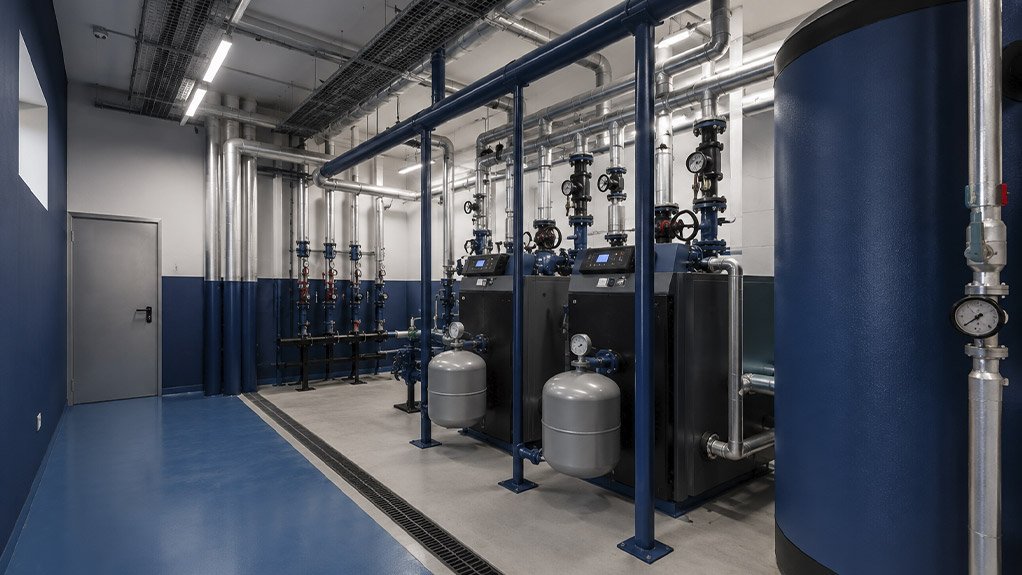
A boiler is a pressure vessel that transfers heat into water to produce steam or hot water. In a steam system, energy may come from fuel combustion or recovered process heat. The steam can then carry thermal energy from the boiler house to the point where it is needed.
Industrial boilers support a wide range of activities. In food and beverage production, steam may be used for heating, cleaning and processing. Hospitals and pharmaceutical facilities depend on reliable thermal systems for functions such as sterilisation and hot-water supply. Boilers also play an important role in mining, chemical production, pulp and paper operations, power generation and building HVAC systems. G-Chem Aquacare works across these sectors, including metal smelting and processing environments.
The demands placed on the boiler vary considerably from one site to another. A hospital boiler may need to provide a stable steam supply throughout the day, while a production plant may experience load shifts as different processes come online. In smelting operations, waste-heat boilers can recover energy from high-temperature process gases, placing the equipment within a particularly demanding operating environment. Research published by the Southern African Institute of Mining and Metallurgy describes waste-heat boilers as an important part of gas cooling, dust recovery and energy recovery in flash-smelting processes.
Boiler construction and the importance of heat transfer
The two basic boiler designs are firetube and watertube boilers. In a firetube boiler, combustion gases pass through tubes surrounded by water. In a watertube boiler, water moves through tubes exposed to hot gases. The appropriate design depends on factors such as required steam output, pressure and operating conditions.
Because boilers operate under pressure, their construction requires careful design, fabrication and inspection. Welding plays an important role in boiler manufacturing and repair, particularly when pressure-retaining components are joined. The ASME Boiler and Pressure Vessel Code includes requirements for the design, fabrication, assembly and inspection of boiler and pressure-vessel components.
Once a boiler is in service, the condition of its heat-transfer surfaces directly affects performance. Scale and deposits act as insulation, making it harder for heat to pass into the water. The boiler may then require more fuel to produce the same amount of steam. A US Department of Energy operations and maintenance guide notes that removing a deposit measuring 1/32 inch (approx. 0.7 mm) 1/8 inch (approximately 3.2 mm) from boiler heat transfer surfaces can reduce fuel use by between 2% and 7% depending on the type of scale formed. more than 8%.
The role of boiler water treatment
Water entering a boiler can carry dissolved minerals, oxygen and other impurities. Under high-temperature conditions, these can contribute to scale, corrosion and deposits within the system. Calcium and magnesium are among the minerals associated with hard scale on tube surfaces, while dissolved oxygen can cause pitting corrosion in feed tanks, lines, pumps and boilers.
A boiler water treatment system should therefore reflect the quality of the incoming water, the equipment design and the operating pressure. Boiler feedwater treatment may include softening, demineralisation or reverse osmosis, followed by the controlled dosing of suitable boiler water treatment chemicals.
Chemical management also needs to account for the water circulating within the boiler. As steam is produced, dissolved solids can become more concentrated. Blowdown removes a controlled amount of boiler water to limit this build-up. Insufficient blowdown can contribute to deposits and poor quality steam, while excessive blowdown wastes water, energy and treatment chemicals.
Types of chemicals for boiler treatment
The types of chemicals for boiler treatment will depend on the site and the risks identified within the system. Boiler feedwater treatment chemicals may include oxygen scavengers, which help remove residual dissolved oxygen and support corrosion management. Internal boiler treatment chemicals can assist with scale control, sludge conditioning and the dispersion of deposits. Steam and condensate treatment chemicals may be used to limit corrosion further along the system.
G-Chem Aquacare’s boiler water treatment range includes inorganic and organic oxygen scavengers, scale and corrosion control products, sludge conditioners, iron dispersants, anti-foams and steam or condensate treatments. Its internal treatment programmes include polymer, polymer-phosphate and polymer-chelate options, along with all-in-one programmes. The appropriate chemical programme needs to be selected according to the conditions at the individual facility.
Chemical management is most effective when it forms part of a wider monitoring programme. Water testing, automatic dosing equipment and controls for parameters such as total dissolved solids and pH can help teams respond to changing conditions before they begin to affect performance.
Preventative maintenance and the cost of poor performance
Boiler efficiency has a cumulative financial effect. Where heat-transfer surfaces become fouled, leaks go unnoticed or water chemistry moves outside the required parameters, the business may face higher fuel costs, added chemical consumption and more frequent maintenance work. Equipment lifespan can also be affected.
An effective preventative maintenance programme can help identify these issues early. For example, an unexplained increase in make-up water may point to unnecessary water loss due to a leak. The replacement water can will introduce additional minerals and oxygen into the system, increasing the treatment burden.
The difference between effective and poor boiler management is often visible in everyday operating data. Monitoring water use, chemistry, blowdown and fuel consumption can help maintenance teams identify changes before they lead to higher costs, repairs or avoidable outages.
Treating boilers as business assets
Boilers are long-term assets and essentially the “heart” of the factory closely linked to production performance. Their value depends on more than the original equipment specification. Water quality, chemical dosing, maintenance and monitoring all influence how reliably and efficiently the system performs over time.
When comparing boiler water treatment companies, businesses should consider whether the proposed programme takes account of site conditions, operating demands and the wider steam system. G-Chem Aquacare combines water treatment chemistry with equipment, maintenance support, descaling services and plant failure investigations, helping industrial sites identify practical opportunities for process optimisation.
Article Enquiry
Email Article
Save Article
Feedback
To advertise email advertising@creamermedia.co.za or click here
Research Reports

Projects


Latest Multimedia


Latest News


Showroom
Tsurumi Pumps Africa is a specialist supplier of Japanese-engineered submersible pumping solutions, serving customers across the African continent.
VISIT SHOWROOM
ATI systems comprises five divisions: electrical assemblies, drives and controls, feedback sensors, enclosures, and strip guiding.
VISIT SHOWROOM


Press Office
Announcements
What's On
Subscribe to improve your user experience...
Option 1 (equivalent of R125 a month):
Receive a weekly copy of Creamer Media's Engineering News & Mining Weekly magazine
(print copy for those in South Africa and e-magazine for those outside of South Africa)
Receive daily email newsletters
Access to full search results
Access archive of magazine back copies
Access to Projects in Progress
Access to ONE Research Report of your choice in PDF format
Option 2 (equivalent of R375 a month):
All benefits from Option 1
PLUS
Access to Creamer Media's Research Channel Africa for ALL Research Reports, in PDF format, on various industrial and mining sectors
including Electricity; Water; Energy Transition; Hydrogen; Roads, Rail and Ports; Coal; Gold; Platinum; Battery Metals; etc.
Already a subscriber?
Forgotten your password?
Receive weekly copy of Creamer Media's Engineering News & Mining Weekly magazine (print copy for those in South Africa and e-magazine for those outside of South Africa)
➕
Recieve daily email newsletters
➕
Access to full search results
➕
Access archive of magazine back copies
➕
Access to Projects in Progress
➕
Access to ONE Research Report of your choice in PDF format
RESEARCH CHANNEL AFRICA
R4500 (equivalent of R375 a month)
SUBSCRIBEAll benefits from Option 1
➕
Access to Creamer Media's Research Channel Africa for ALL Research Reports on various industrial and mining sectors, in PDF format, including on:
Electricity
➕
Water
➕
Energy Transition
➕
Hydrogen
➕
Roads, Rail and Ports
➕
Coal
➕
Gold
➕
Platinum
➕
Battery Metals
➕
etc.
Receive all benefits from Option 1 or Option 2 delivered to numerous people at your company
➕
Multiple User names and Passwords for simultaneous log-ins
➕
Intranet integration access to all in your organisation