Regional integration, standardised technology and ecosystems to lead to manufacturing growth

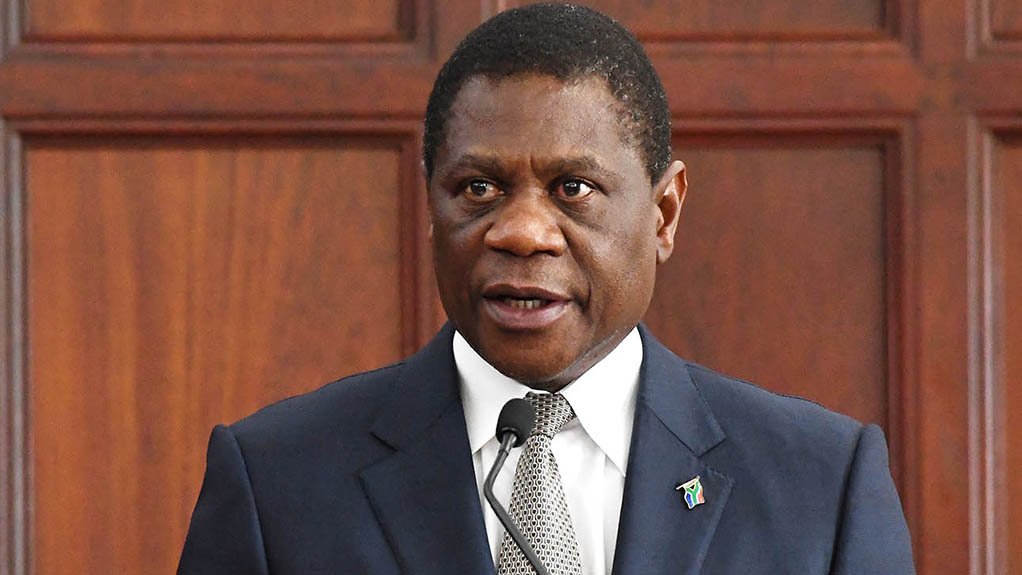


Manufacturing is the backbone of any successful industrial economy, but domestic demand is typically insufficient to develop sustainable industrial sectors. To achieve the industrial development Africa, and South Africa, is aiming for, industrial ecosystems must be created, speakers said during the first day of the thirteenth Manufacturing Indaba, held in Sandton, Gauteng, on July 14.
“In the future, we want to be processing our own resources, making higher-value products, expanding supply chains and creating industries and jobs and wealth. To achieve this, we need to develop stronger regional trade, form strategic partnerships and ensure sustained investment in productive capacity, modern technology and critical skills,” Deputy President Paul Mashatile told delegates.
Industry is the engine room that enables economies to transform raw materials into products, strengthens domestic capabilities and builds economic resilience, said Trade, Industry and Competition Deputy Minister John Steenhuisen.
All countries that have successfully industrialised have done so with government support, which is why governments deliberately support manufacturing.
However, South Africa's industrial future would not be built on domestic demand, and regional and continental markets presented the greatest growth prospects. The opening of markets created catalytic effects on industries but required local value chains to unlock these opportunities, he said.
For example, the 15-country Southern African Development Community bloc is an important platform to create regional value chains, cooperation and larger markets for products. Companies could achieve economies of scale through greater regional integration, which would support the different capabilities of countries.
Similarly, the African Continental Free Trade Area (AfCFTA) presented an opportunity to industrialise the continent through increasing trade, investment and manufacturing cooperation, said Steenhuisen.
The strategic vision for Africa must see it transform its resources to become a factory for the global green economy. This could be achieved through a unified continent-wide industrial ecosystem, facilitated by the AfCFTA.
Key initiatives would include integrating corridors, which were fundamentally important for industry. It was cheaper to transport maize from Mexico to the Democratic Republic of Congo (DRC) than to transport maize from Zambia to the DRC owing to a lack of corridor infrastructure to enable the seamless movement of goods and services around Africa, he stated.
“Through industry, innovation and inclusive growth, Africa can build a more prosperous and self-reliant future. Industrialisation is not only about increasing production, but about improving quality, competitiveness, sustainability and resilience. It is a pathway to economic sovereignty and expanding opportunities for our people,” said Mashatile.
Efficient transport corridors and logistics systems, railways and ports form the backbone of industrial growth by connecting producers to markets, lowering costs for businesses and strengthening regional integration.
Efficient transport corridors were also needed to unlock the potential of the AfCFTA by improving connections and reducing transport costs, he said.
“Investments to support industrial growth and development are about creating opportunities and improving the quality of life of people. Manufacturing creates employment, keeps value circulating and advances the vision of creating a more integrated and prosperous continent.”
To achieve industrial growth, Africa must invest in digital skills, robotics, coding, advanced engineering, data science and analytics, as well as modern artisan development programmes.
Smart manufacturing technologies would allow for the improvement of efficiencies, reduce waste and enable manufacturers to respond to changing market demands. AI would help supply chains to be more responsive and resilient, and automation would help strengthen industrial competitiveness, Mashatile said.
The future of manufacturing was highly reliant on the sustainability of manufacturing, which in turn relied on people that have the right skills, said industrial development nonprofit organisation the World Manufacturing Foundation scientific vice-chairperson and Professor of Advanced Manufacturing at the Tecnológico de Monterrey University, in Mexico, David Romero.
“Technology only creates value when it is incorporated into processes to support people. In terms of key enabling technologies, we need to look what tools people need to be more effective and efficient.
“Countries with similar capabilities should deploy the similar technologies, as differentiation in the way that it is used creates competitive advantages. Technology with the right skills will lead to differentiation and competitiveness,” he said.
It was not about developing more technology, but about the convergence of technologies, he added.
“To enable manufacturing to be more efficient and sustainable, we need to bundle technologies together in normative and differentiated systems to create new ways to manufacture products and thereby create competitive advantages,” said Romero.
To guide transformation efforts, the workforce had to be involved from the beginning, during the transition to a new way of working and afterwards, because each worker had to understand his or her role in the transition to digital, green and resilient manufacturing.
Each person, from the factory floor to the top managers, must recognise the value of technology to make manufacturing better, more efficient and more sustainable, he said.
Engaging operational stakeholders was important to ensure effective execution. The entire workforce, from top to bottom, needed to understand how a company aimed to use technology to benefit people and the planet, he said.
This would build competence and ownership of the technology and ensure effective use.
“True smart manufacturing comes from the marriage of information, technology and human ingenuity,” said Romero.
Article Enquiry
Email Article
Save Article
Feedback
To advertise email advertising@creamermedia.co.za or click here
Research Reports

Projects

Latest Multimedia
Latest News

Showroom
Established in 1933, EKATO is the world leader in agitation technology, supplying agitators for processes and applications such as chemicals and...
VISIT SHOWROOM
Columbus Stainless, based in Middelburg, Mpumalanga, is Africa’s only producer of stainless steel flat products. In addition, Columbus is the only...
VISIT SHOWROOM


Announcements
What's On
Subscribe to improve your user experience...
Option 1 (equivalent of R125 a month):
Receive a weekly copy of Creamer Media's Engineering News & Mining Weekly magazine
(print copy for those in South Africa and e-magazine for those outside of South Africa)
Receive daily email newsletters
Access to full search results
Access archive of magazine back copies
Access to Projects in Progress
Access to ONE Research Report of your choice in PDF format
Option 2 (equivalent of R375 a month):
All benefits from Option 1
PLUS
Access to Creamer Media's Research Channel Africa for ALL Research Reports, in PDF format, on various industrial and mining sectors
including Electricity; Water; Energy Transition; Hydrogen; Roads, Rail and Ports; Coal; Gold; Platinum; Battery Metals; etc.
Already a subscriber?
Forgotten your password?
Receive weekly copy of Creamer Media's Engineering News & Mining Weekly magazine (print copy for those in South Africa and e-magazine for those outside of South Africa)
➕
Recieve daily email newsletters
➕
Access to full search results
➕
Access archive of magazine back copies
➕
Access to Projects in Progress
➕
Access to ONE Research Report of your choice in PDF format
RESEARCH CHANNEL AFRICA
R4500 (equivalent of R375 a month)
SUBSCRIBEAll benefits from Option 1
➕
Access to Creamer Media's Research Channel Africa for ALL Research Reports on various industrial and mining sectors, in PDF format, including on:
Electricity
➕
Water
➕
Energy Transition
➕
Hydrogen
➕
Roads, Rail and Ports
➕
Coal
➕
Gold
➕
Platinum
➕
Battery Metals
➕
etc.
Receive all benefits from Option 1 or Option 2 delivered to numerous people at your company
➕
Multiple User names and Passwords for simultaneous log-ins
➕
Intranet integration access to all in your organisation