Vehicle emissions contribute to notable health burden in Johannesburg, study finds

A video of ICCT researcher Kaylin Lee discussing the consequences of vehicle emissions in Johannesburg. Video and Editing: Shadwyn Dickinson. 13-07-26
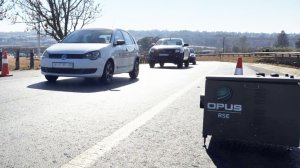


A new report compiled by global partnership The Real World Urban Emissions (TRUE) Initiative reveals unequal exposure to vehicle emissions and air pollution across Johannesburg.
The report was compiled by independent nonprofit research organisation International Council on Clean Transportation (ICCT) researchers Mallery Crowe, Kaylin Lee and Yoann Bernard, in collaboration with the City of Johannesburg, the University of Johannesburg Energy and Environmental Technology Station (UJ PEETS) and global climate and public health initiative Breathe Cities.
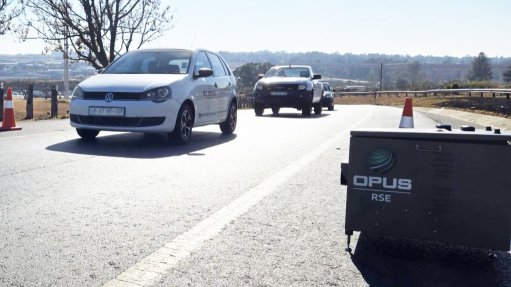
This initiative conducted its first real-world roadside remote sensing campaign in Africa, collecting more than 250 000 vehicle exhaust measurements in Johannesburg to provide a comprehensive picture of emissions from light- and heavy-duty vehicles across the region.
Petrol passenger cars registered before 2006 made up 4% of the fleet but contributed up to 24% of the fleet’s measured emissions, including nitrogen oxides, hydrocarbon, carbon monoxide and particulate matter.
Between July and September 2025, remote sensing technology situated at 11 different sites throughout the city captured the fleet’s emissions.
The researchers say transportation related emissions contributed to about 500 premature deaths and 200 new pediatric asthma cases within Johannesburg, and over 1 200 premature deaths and about 500 new pediatric asthma cases across the province.
This study also reveals that, in 2024 alone, residents of central and southern Johannesburg, who depend most heavily on public transit, faced the highest vehicle emission exposure in the city.
In these areas, minibus taxis accounted for 10% of the measured fleet, yet contributed 21% to 40% of total emissions, with particularly elevated carbon monoxide and hydrocarbon emissions.
The oldest vehicles, representing a small portion of the overall fleet, showed the highest measured emissions.
Petrol passenger cars registered before 2006 contributed between 12 and 24% of the fleet’s total 12% of total nitrogen oxide emissions, 21% of hydrocarbon, 22% of carbon monoxide, and 24% of particulate matter emissions, while petrol-powered minibus taxis, also registered before 2006, contributed 22% to 25% to the fleet’s total hydrocarbon and carbon monoxide emissions.
Diesel-powered minibuses exhibited particulate matter and nitrogen oxide emissions up to 18 and 44 times higher, respectively, than their petrol counterparts.
The increasing popularity of these diesel-powered vehicles, which accounted for 98% of all new minibus taxi registrations in 2025, up from 7% in 2001, could carry significant health impacts for residents if left unchecked, the TRUE Initiative highlights.
“This latest testing campaign has expanded our picture of vehicle emissions in Johannesburg and can help broaden our understanding of vehicle emissions across the larger region in Africa.
“We see that a small number of older vehicles emit a disproportionate amount, so targeted policies to quicken fleet turnover will be crucial to improve air quality,” Crowe says.
Breathe Cities South Africa portfolio manager Nokuthula Dubazane says the findings provide the evidence needed to support targeted air quality interventions and inform policymaking
“This report gives Johannesburg the evidence it needs to act. The city has already proposed clean air zones as a key policy solution, and findings like these, showing exactly where emissions are highest and who bears the greatest burden, are what turn recommendations into targeted, effective policy.
“At Breathe Cities, we believe cleaner air is achievable when cities have robust data to make informed decisions, and we hope this study accelerates that process in Johannesburg and across the continent,” Dubazane adds.
To reduce vehicle emissions, the TRUE Initiative has recommended the adoption of European regulatory standards for new vehicles, expanding and enforcing Johannesburg’s existing vehicle inspection and maintenance programme and the adoption of electric minibus taxis to reduce emissions and lifetime operating costs for owners, accomplished through financing schemes to reduce upfront costs.
Summarising the significance of the findings, Federation International del’Automobile (FIA) Foundation deputy director Sheila Watson says the results underscore the urgent need to tackle vehicle emissions as a public health priority.
“The TRUE Initiative has shown the shockingly high emissions of vehicles on Johannesburg’s streets. Hundreds of the city’s residents are sicker or dying each year because of dirty air, to which road vehicles are a major contributing factor.
“Real-world data such as this in Johannesburg is vital to understand, and then address a public health crisis. These findings point to the need for urgent action, not only to clean up the city’s air but to protect the health and lives of its residents,” Watson concludes.
Article Enquiry
Email Article
Save Article
Feedback
To advertise email advertising@creamermedia.co.za or click here
Research Reports
Projects

Latest Multimedia
Latest News

Showroom
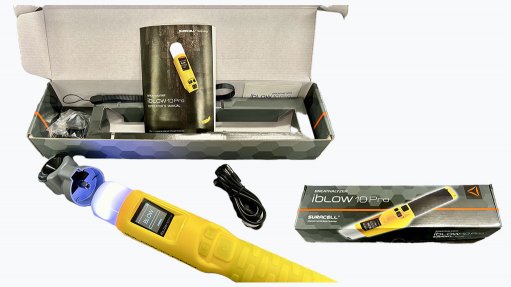
Supplier & Distributor of the Widest Range of Accurate & Easy-to-Use Alcohol Breathalysers
VISIT SHOWROOM


Press Office
Announcements
What's On
Subscribe to improve your user experience...
Option 1 (equivalent of R125 a month):
Receive a weekly copy of Creamer Media's Engineering News & Mining Weekly magazine
(print copy for those in South Africa and e-magazine for those outside of South Africa)
Receive daily email newsletters
Access to full search results
Access archive of magazine back copies
Access to Projects in Progress
Access to ONE Research Report of your choice in PDF format
Option 2 (equivalent of R375 a month):
All benefits from Option 1
PLUS
Access to Creamer Media's Research Channel Africa for ALL Research Reports, in PDF format, on various industrial and mining sectors
including Electricity; Water; Energy Transition; Hydrogen; Roads, Rail and Ports; Coal; Gold; Platinum; Battery Metals; etc.
Already a subscriber?
Forgotten your password?
Receive weekly copy of Creamer Media's Engineering News & Mining Weekly magazine (print copy for those in South Africa and e-magazine for those outside of South Africa)
➕
Recieve daily email newsletters
➕
Access to full search results
➕
Access archive of magazine back copies
➕
Access to Projects in Progress
➕
Access to ONE Research Report of your choice in PDF format
RESEARCH CHANNEL AFRICA
R4500 (equivalent of R375 a month)
SUBSCRIBEAll benefits from Option 1
➕
Access to Creamer Media's Research Channel Africa for ALL Research Reports on various industrial and mining sectors, in PDF format, including on:
Electricity
➕
Water
➕
Energy Transition
➕
Hydrogen
➕
Roads, Rail and Ports
➕
Coal
➕
Gold
➕
Platinum
➕
Battery Metals
➕
etc.
Receive all benefits from Option 1 or Option 2 delivered to numerous people at your company
➕
Multiple User names and Passwords for simultaneous log-ins
➕
Intranet integration access to all in your organisation