



Gains in SA’s economic freedom threatened by corruption, investment losses – index

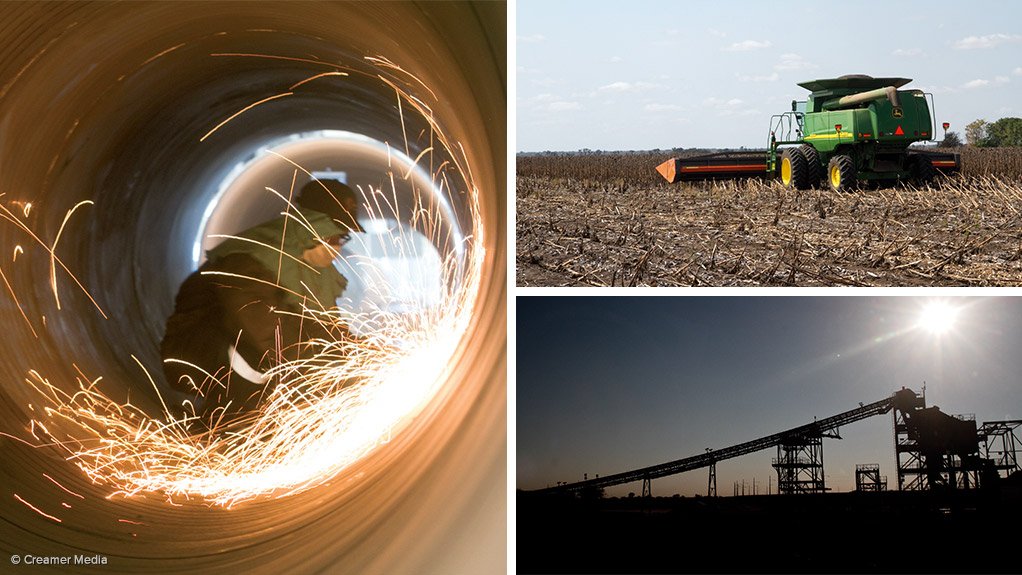



While South Africa continues to enjoy moderate, but improving, levels of economic freedom, gains in market openness – measured through trade freedom and financial freedom, as well as the management of public finance – have been corroded by declines in freedom from corruption, business freedom and investment freedom, the 2014 Index of Economic Freedom has reported.
Published yearly by think tank, the Heritage Foundation, in collaboration with The Wall Street Journal, the index recorded South Africa’s economic freedom score at 62.5, making its economy the seventy-fifth “freest” in this year’s index.
The country’s overall score, which had advanced by 1.8 points in the 20-year history of the index, remained unchanged from last year, ranking it sixth out of the 48 countries in the sub-Saharan Africa region.
Index co-author and Heritage Foundation Center for International Trade and Economics director Terry Miller cautioned that, despite these gains, the country was in danger of “falling away from economic freedom and prosperity.”
“The labour market remains rigid, exacerbating high unemployment throughout the country. The government should turn to economic freedom to jumpstart growth in the wake of falling commodity prices,” he commented.
REGIONAL HEADWAY
Sub-Saharan Africa was found to be the world’s second most improved region, despite its level of economic freedom remaining weaker than that of any other region.
“No other region has made greater strides in economic freedom than sub-Saharan Africa over the past two years,” the index found.
This was largely the result of an improvement in the region’s competitiveness, with several countries ensuring more sustainable fiscal policies, better managed inflation and more efficient markets.
“Yet, the region continues to lag behind the rest of the world in [terms of] economic freedom, as economic liberty in the region’s largest economy, South Africa, has declined over the past decade, dimming hopes for a more prosperous and stable future on the African continent’s southern tip,” said Miller.
Of the region’s 46 countries, 11 were rated in the lowest category, “repressed”, while 26 were in the next lowest, “mostly unfree”.
Mauritius remained the only one of the 48 countries in sub-Saharan Africa to rank among the ten “freest” economies in the world.
Zimbabwe was ranked second-worst in the world in terms of economic freedom, but posted an increase of 6.9 points, making it the most improved.
Liberia and Sierra Leone, meanwhile, posted gains of 3.1 points and 2.2 points respectively, lifting both into the “mostly unfree” category.
INTERNATIONAL RANKINGS
Launched in 1995, the index evaluated countries in four broad areas of economic freedom – rule of law, regulatory efficiency, limited government and open markets.
Based on an aggregate score, each country graded in 2014 was classified as “free” if it posted a combined score of 80 or higher; “mostly free” if its combined score was between 70 and 79.9; “moderately free” if its score was between 60 and 69.9; “mostly unfree” if its score was between 50 and 59.9; and “repressed” if its combined score was under 50.
Hong Kong and Singapore finished first and second in the rankings for 2014 for the twentieth consecutive year.
The world average score of 60.3 – seven-tenths of a point above the 2013 average – was the highest average in the two-decade history of the index, with 43 countries, including Singapore and Sweden, achieving their highest scores yet.
Among the 178 countries ranked, scores improved for 114 countries and declined for 59, while four recorded no score change.
Article Enquiry
Email Article
Save Article
Feedback
To advertise email advertising@creamermedia.co.za or click here
Research Reports

Projects


Latest Multimedia


Latest News
Showroom
Sulzer South Africa, established in 1922, partners with critical industries like power, oil & gas, water, mining, and chemicals to boost...
VISIT SHOWROOM
The Steel Tube Export Association of South Africa was established to develop sustainable, internationally competitive carbon steel tube and pipe...
VISIT SHOWROOM


Press Office
Announcements
What's On
Subscribe to improve your user experience...
Option 1 (equivalent of R125 a month):
Receive a weekly copy of Creamer Media's Engineering News & Mining Weekly magazine
(print copy for those in South Africa and e-magazine for those outside of South Africa)
Receive daily email newsletters
Access to full search results
Access archive of magazine back copies
Access to Projects in Progress
Access to ONE Research Report of your choice in PDF format
Option 2 (equivalent of R375 a month):
All benefits from Option 1
PLUS
Access to Creamer Media's Research Channel Africa for ALL Research Reports, in PDF format, on various industrial and mining sectors
including Electricity; Water; Energy Transition; Hydrogen; Roads, Rail and Ports; Coal; Gold; Platinum; Battery Metals; etc.
Already a subscriber?
Forgotten your password?
Receive weekly copy of Creamer Media's Engineering News & Mining Weekly magazine (print copy for those in South Africa and e-magazine for those outside of South Africa)
➕
Recieve daily email newsletters
➕
Access to full search results
➕
Access archive of magazine back copies
➕
Access to Projects in Progress
➕
Access to ONE Research Report of your choice in PDF format
RESEARCH CHANNEL AFRICA
R4500 (equivalent of R375 a month)
SUBSCRIBEAll benefits from Option 1
➕
Access to Creamer Media's Research Channel Africa for ALL Research Reports on various industrial and mining sectors, in PDF format, including on:
Electricity
➕
Water
➕
Energy Transition
➕
Hydrogen
➕
Roads, Rail and Ports
➕
Coal
➕
Gold
➕
Platinum
➕
Battery Metals
➕
etc.
Receive all benefits from Option 1 or Option 2 delivered to numerous people at your company
➕
Multiple User names and Passwords for simultaneous log-ins
➕
Intranet integration access to all in your organisation
