



Bringing water to parched rural Botswana



This article has been supplied.
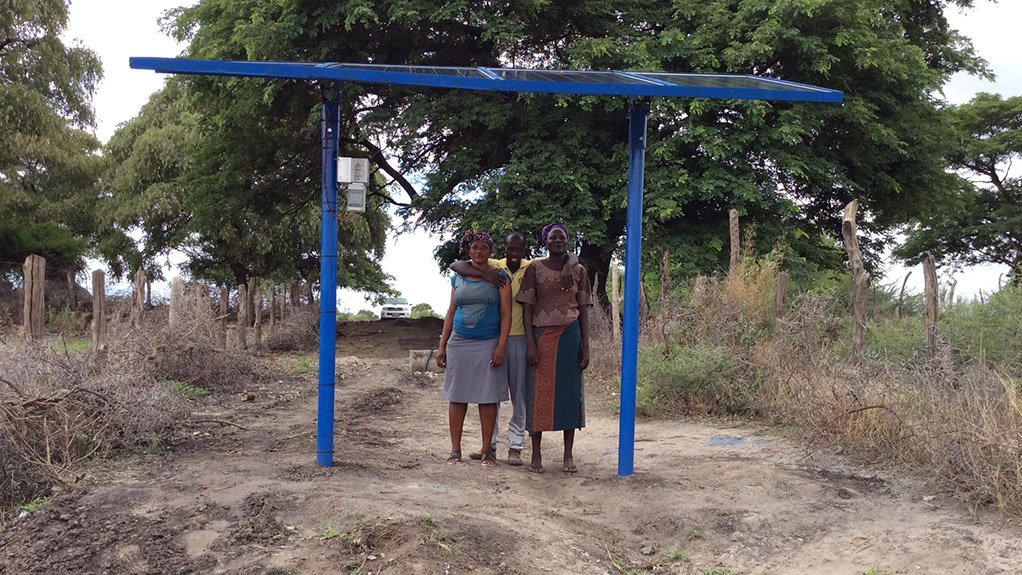
A unique project has brought a reliable supply of water to Habu, while providing a reference for the imminent roll-out of more water-security measures in other rural areas of Botswana.
The project serves about 1 500 people in north-west Botswana and was completed by JG Afrika’s Botswana office, in partnership with local firm, Initiatives, acting on behalf of the Paul G Allen Family Foundation through its Philanthropy programme.
Water, sanitation and health (WASH) development expert and an executive associate at JG Afrika Botswana, Robyn Tompkins, says that the project has again demonstrated that development initiatives in rural regions of southern Africa stand a greater chance of success when there is a larger overlap between the political, social and technical aspects.
This project has again demonstrated that when social considerations are allowed to lead, there is usually greater interplay between the social and the technical components, and buy-in from the community.
JG Afrika Botswana was appointed by Initiatives in December 2014 as the specialist WASH consultant to maximise the overall development impact of the project.
Work started on developing and negotiating an ownership model, as well as an operation and maintenance (O&M) model for the project, while establishing a formal hand-over protocol for what would be a first of its kind in the country.
This process was aligned with state’s new policies to introduce water-user associations and committees in rural areas.
The proposal for government to take ownership of the assets that would be operated and maintained by a water committee and financed from tariffs collected from the community was accepted in August 2016.
“Having now received the necessary political endorsement, we could proceed with the social components. They took the lead, as success relied on the development of an effective governance system and toolkit to train the committee. Technical training in the basic maintenance of the infrastructure also took place at installation,” Tompkins says.
An umbrella committee was established to communicate with the broader community, and comprised representatives from all relevant organisations, while a dedicated field-service support representative, fluent in Setswana, was appointed to regularly engage the public.
Communication was augmented with posters that explained the project’s benefits and operation, which were also discussed with the community during the implementation stages.
Importantly, budget was also allocated to the establishment of a separate team dedicated to community-relationship building, as well as communicating with other agencies operating in the area.
The simple system comprises five tanks on stands that supply taps located at a central point for each of the five wards, while the pumps are powered by solar energy with manual switches.
While a manual system does not intimidate community caretakers, it also ensures that they are in constant contact with the infrastructure.
The infrastructure can also be easily maintained and repaired by community members thus decreasing the overall unit costs of the infrastructure.
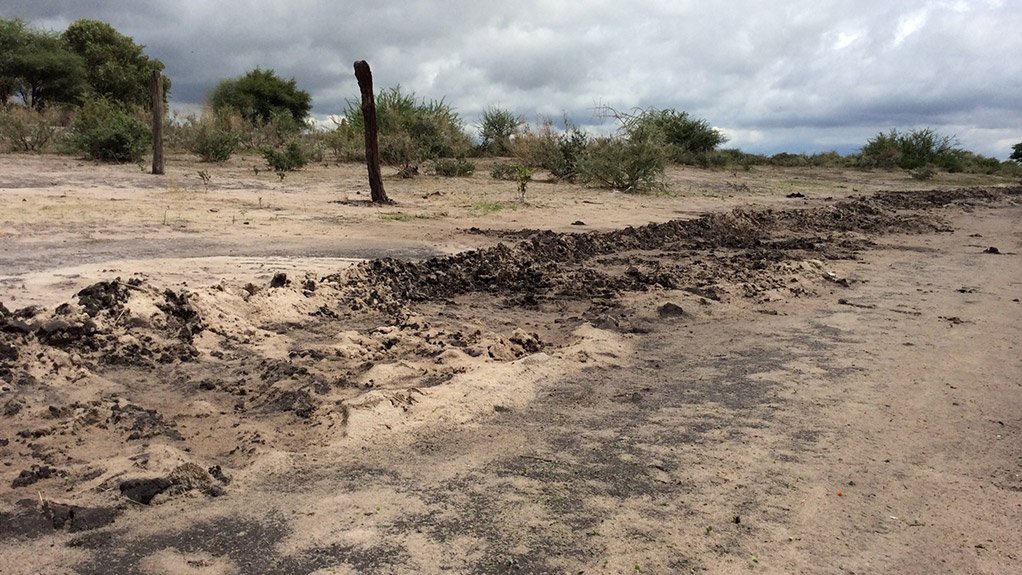
Labour-based construction methods were also used to excavate the trench for the pipeline. While creating many short-term employment opportunities in Habu, this approach ensured that the population knew exactly where the pipeline had been laid to help maintain and avoid damaging the infrastructure.
The water committee comprises two caretakers and five water monitors who manage the volume of water collected by each household. Community members pay for their consumption by registering with a water association.
Members of the community also approached the team to help develop a tariff system on their behalf.
Tompkins concludes that the Franklin Wells of the World Association was so impressed with the project that it donated the borehole infrastructure, allowing the project team to install two boreholes. This donation also meant that there was a slight underspend on the infrastructure allocation for the project, which was used to provide security fencing at the water point.
Article Enquiry
Email Article
Save Article
Feedback
To advertise email advertising@creamermedia.co.za or click here
Research Reports

Projects


Latest Multimedia


Latest News
Showroom

Design, Construction and Maintenance of Site Erected, Welded Bulk Storage Tanks for the Petrochemical, LNG, Ammonia and Sustainable fuel Sectors.
VISIT SHOWROOM
For over 15 years, Lilak Aluminium, a trusted leader in architectural extrusion supply, has delivered excellence to businesses like yours.
VISIT SHOWROOM



Press Office
Announcements
What's On
Subscribe to improve your user experience...
Option 1 (equivalent of R125 a month):
Receive a weekly copy of Creamer Media's Engineering News & Mining Weekly magazine
(print copy for those in South Africa and e-magazine for those outside of South Africa)
Receive daily email newsletters
Access to full search results
Access archive of magazine back copies
Access to Projects in Progress
Access to ONE Research Report of your choice in PDF format
Option 2 (equivalent of R375 a month):
All benefits from Option 1
PLUS
Access to Creamer Media's Research Channel Africa for ALL Research Reports, in PDF format, on various industrial and mining sectors
including Electricity; Water; Energy Transition; Hydrogen; Roads, Rail and Ports; Coal; Gold; Platinum; Battery Metals; etc.
Already a subscriber?
Forgotten your password?
Receive weekly copy of Creamer Media's Engineering News & Mining Weekly magazine (print copy for those in South Africa and e-magazine for those outside of South Africa)
➕
Recieve daily email newsletters
➕
Access to full search results
➕
Access archive of magazine back copies
➕
Access to Projects in Progress
➕
Access to ONE Research Report of your choice in PDF format
RESEARCH CHANNEL AFRICA
R4500 (equivalent of R375 a month)
SUBSCRIBEAll benefits from Option 1
➕
Access to Creamer Media's Research Channel Africa for ALL Research Reports on various industrial and mining sectors, in PDF format, including on:
Electricity
➕
Water
➕
Energy Transition
➕
Hydrogen
➕
Roads, Rail and Ports
➕
Coal
➕
Gold
➕
Platinum
➕
Battery Metals
➕
etc.
Receive all benefits from Option 1 or Option 2 delivered to numerous people at your company
➕
Multiple User names and Passwords for simultaneous log-ins
➕
Intranet integration access to all in your organisation
