



Africa needs to take developmental stance to combat terrorism

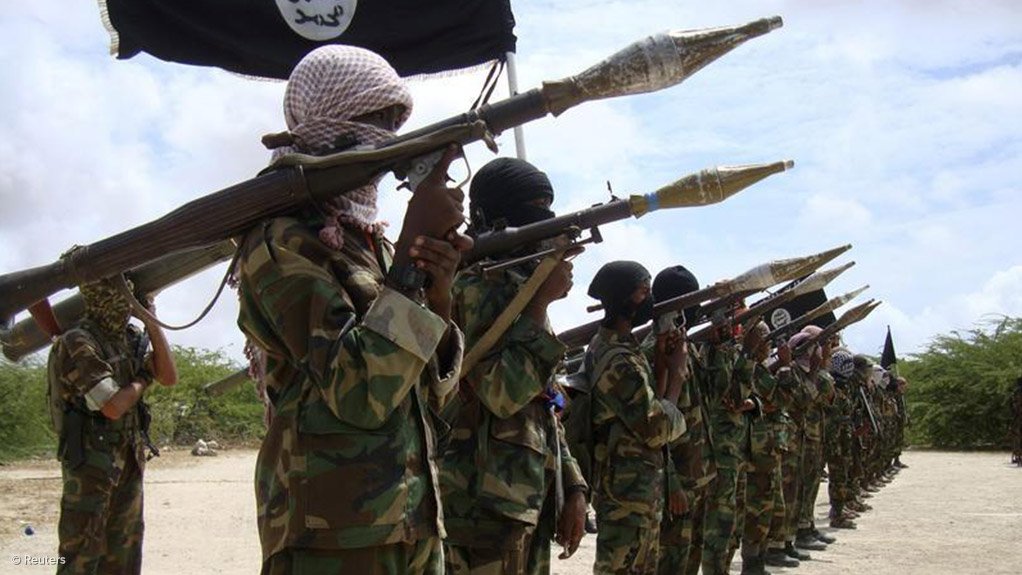


While Africa may not be the “global frontier” for terrorism, there are many red flags warning of the potential negative impacts that could sweep the continent.
However, the potential counter-measures adopted by the continent’s leaders could do the most harm, with a knee-jerk reaction to eliminating the radical extremist groups causing conflict, Institute for Security Studies MD Anton du Plessis said on Thursday.
Speaking at the fourth annual Africa Risk and Investment Forum, hosted by Frontier Advisory Deloitte, in Woodmead, Johannesburg, he said terrorism was a serious threat and Africa needed to shift its counter-terrorism approach to one that was developmental in nature.
Previous hardline counter-terrorism measures had failed to mitigate the increasing territory occupation and recruitment of underprivileged citizens, who were increasingly growing desperate amid failed States and rising inequality and poverty.
The continent was vulnerable to the prevalence of terrorists groups and leaders needed to consider the potential impact of this on the continent.
“There is a perfect storm coming,” he noted, stating that governance in Africa was deteriorating, leaving angry, young Africans with no access to service delivery “ripe for picking” by extremist groups.
Further, there were concerns of “blow-backs” from the thousands of African Islamic State (ISIS) fighters currently returning home to incite conflict, as was seen recently in Tunisia and Libya.
Du Plessis estimated that around 8 000 of the 30 000 ISIS fighters currently in Syria and surrounds were African.
In West Africa, Boko Haram, which Du Plessis deemed the most dangerous group on the continent, owing to the thousands killed during hundreds of attacks, had aligned itself to ISIS.
A combination of extremist groups, including ISIS, had terrorised North Africa, leaving Libya and Egypt in chaos, while Al-Shabaab, which was the grouping South Africa needed to be most wary of, was exploiting the “failed State situation” in Somalia, East Africa.
In Southern Africa, there were no “prominent” groups; however, the region was not immune, with 300 to 400 youths from the tip of Africa having joined forces with ISIS in Syria.
“It is not a big issue yet, but we need to watch out,” Du Plessis commented, particularly amid high levels of social discontent, which created “fertile soil” ripe for recruitment.
He noted that terrorism, which itself was difficult to accurately define, was caused by a range of factors, including weak and unconsolidated governance structures, growing corruption, poor service delivery and poverty, besides others.
“There is a lot we can do about it – and we need to act soon,” he said; however, the current heavy-handed military response to terrorism should be abandoned in favour of a more developmental model.
“We can not shoot ourselves out of the problem – it does not work,” he commented.
Repeated military crackdowns often involved serious human rights abuses, the ignoring of due process and rule of law and significant citizen casualties and had repeatedly backfired and - in some cases strengthening extremist groups, as was the case with Boko Haram.
Governments should opt for an approach within their own legal frameworks that respected the rule of law and prevented further radicalisation.
“The only sustainable response is to remove the conditions that make young angry people join terrorism groups to lash out and seek the promises they were made,” he said, noting the requirement to frame a response to inequality, marginalisation, and service delivery and governance failure, while holding leaders to account to prevent the plundering of resources that would enable States to effectively tackle terrorism.
Article Enquiry
Email Article
Save Article
Feedback
To advertise email advertising@creamermedia.co.za or click here
Research Reports

Projects

Latest Multimedia
Latest News

Showroom

Industrial Nozzles & Systems (Pty) Ltd (Est. 2000) exclusive representative in Southern Africa for LECHLER GmbH (Est. 1879) - Europe's leading...
VISIT SHOWROOM
ATI systems comprises five divisions: electrical assemblies, drives and controls, feedback sensors, enclosures, and strip guiding.
VISIT SHOWROOM


Press Office
Announcements
What's On
Subscribe to improve your user experience...
Option 1 (equivalent of R125 a month):
Receive a weekly copy of Creamer Media's Engineering News & Mining Weekly magazine
(print copy for those in South Africa and e-magazine for those outside of South Africa)
Receive daily email newsletters
Access to full search results
Access archive of magazine back copies
Access to Projects in Progress
Access to ONE Research Report of your choice in PDF format
Option 2 (equivalent of R375 a month):
All benefits from Option 1
PLUS
Access to Creamer Media's Research Channel Africa for ALL Research Reports, in PDF format, on various industrial and mining sectors
including Electricity; Water; Energy Transition; Hydrogen; Roads, Rail and Ports; Coal; Gold; Platinum; Battery Metals; etc.
Already a subscriber?
Forgotten your password?
Receive weekly copy of Creamer Media's Engineering News & Mining Weekly magazine (print copy for those in South Africa and e-magazine for those outside of South Africa)
➕
Recieve daily email newsletters
➕
Access to full search results
➕
Access archive of magazine back copies
➕
Access to Projects in Progress
➕
Access to ONE Research Report of your choice in PDF format
RESEARCH CHANNEL AFRICA
R4500 (equivalent of R375 a month)
SUBSCRIBEAll benefits from Option 1
➕
Access to Creamer Media's Research Channel Africa for ALL Research Reports on various industrial and mining sectors, in PDF format, including on:
Electricity
➕
Water
➕
Energy Transition
➕
Hydrogen
➕
Roads, Rail and Ports
➕
Coal
➕
Gold
➕
Platinum
➕
Battery Metals
➕
etc.
Receive all benefits from Option 1 or Option 2 delivered to numerous people at your company
➕
Multiple User names and Passwords for simultaneous log-ins
➕
Intranet integration access to all in your organisation
