



Women making progress in South African mining industry, but barriers remain

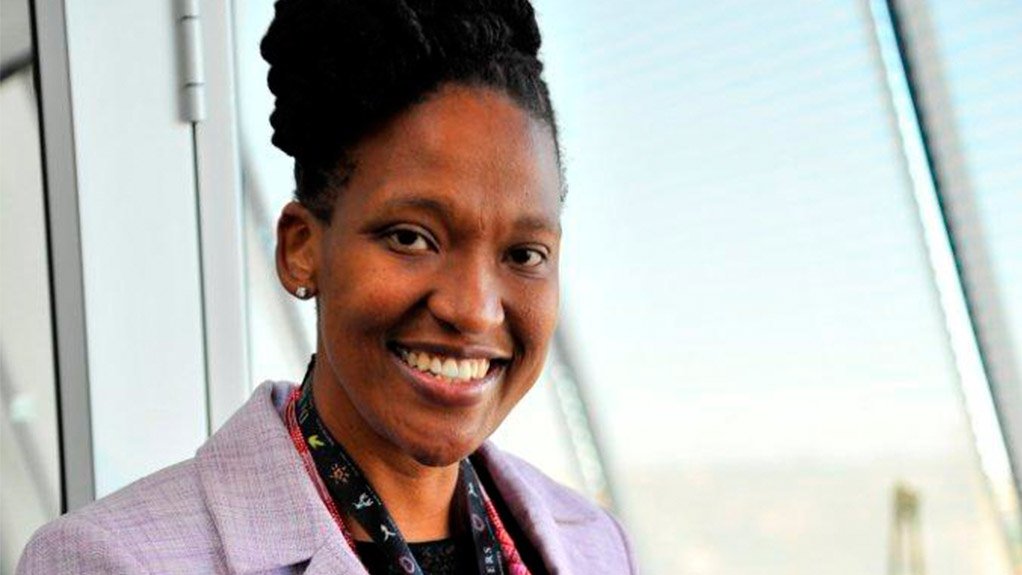
NOMPUMELELO ZIKALALA Radical cultural shifts are required at the organisational level by all mining companies to ensure the inclusion of women at all levels



Diamond company De Beers Consolidated Mines (DBCM) contends that it is “boldly confront- ing” its and the industry’s 140-year legacy of male domination in mines and in corpo- rate structures by executing a strategy to ensure equal opportunities for women in its own business.
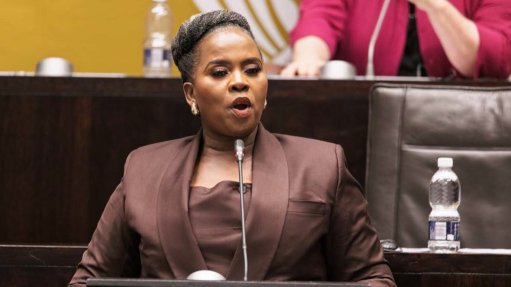
DBCM director and the company’s Sightholder Sales South Africa senior VP Nompumelelo Zikalala joined her colleague organisational effectiveness lead Varsha Morar, in addressing participants at train- ing and conference company Intelligence Transfer Centre’s recent seventh yearly Women in Mining conference, which was held in Johannesburg, to highlight this point.
Morar based her presentation on employee engagement surveys since 2011, interviews with exiting employees and focus group interviews of women working at DBCM. She noted that some employees, including those in exit interviews, felt that they faced a variety of challenges related to their working conditions at the company.
Morar said, with regard to issues of care, pregnancy was perceived by a few in the sample to be used as an excuse not to promote and develop employees. Further, they felt that the De Beers workplace was not “gender friendly” with respect to company benefits offered and facilities available in the workplace that support women with their families.
Mining-industrywide data compiled found that women in mining companies also felt excluded from some activities where senior leaders socialise and where key business decisions are made, such as in golf and other male-dominated activities.
Following the research analysis, DBCM adopted a transformation model that aims to instil principles of cultural inclusion, dig- nity, respect and the promotion of cultural diversity throughout the company.
The De Beers transformation committee, which is headed by the DBCM CEO Phillip Barton, adopted the model, which he says is “starting to bear fruit”, with the company being recently awarded the top gender empowered company in the resources industry at the twelfth annual Standard Bank Top Women Awards in 2015.
“This accolade is testament to the fact that even though De Beers has a long way to go, it is making determined strides in improving gender equality in the workplace in operations and in its small corporate centre,” states Barton.
Meanwhile, Zikalala in her presentation during the conference lamented that, in the broader mining industry, a perception existed among some that women who reach senior leadership positions may have “offered sexual favours” to male executives, remained widespread.
She added that the view existed that some women board members and executives were perceived to be token appointments and lacked the necessary skills and knowledge to effectively run technical heavy mining operations.
“These attitudes by male mineworkers in the operations and some executives have resulted in women themselves questioning whether they are good enough. This is an unacceptable and untenable position for women anywhere,” Zikalala stated.
She asserted that radical cultural shifts were required at the organisational level by all mining companies to ensure the inclusion of women at all levels. Zikalala noted that many capable women were often overlooked for promotion, owing to the perception that they were weak or would fall pregnant and be absent from work for long periods as a result.
She also pointed out that there was a shortage of women mentors in the local mining industry, which was a significant challenge to developing a new generation of women leaders in the mining sector.
Zikalala said, however, that the efforts of De Beers to transform challenged the per- ception that the industry remained “largely an all-boys club” at the board and executive levels of the company. She noted that women currently make up about a quarter of the senior management levels in the “better representative companies”.
Zikalala concluded by challenging women in mining to remain true to themselves, not to be distracted by negative perceptions and to identify mentors who can assist them with individual challenges.
Article Enquiry
Email Article
Save Article
Feedback
To advertise email advertising@creamermedia.co.za or click here
Research Reports

Projects


Latest Multimedia


Latest News
Showroom
Supplier & Distributor of the Widest Range of Accurate & Easy-to-Use Alcohol Breathalysers
VISIT SHOWROOM
M and J Mining are leading suppliers of physical support systems as used by the underground mining industry. Our selection of products are not...
VISIT SHOWROOM


Press Office
Announcements
What's On
Subscribe to improve your user experience...
Option 1 (equivalent of R125 a month):
Receive a weekly copy of Creamer Media's Engineering News & Mining Weekly magazine
(print copy for those in South Africa and e-magazine for those outside of South Africa)
Receive daily email newsletters
Access to full search results
Access archive of magazine back copies
Access to Projects in Progress
Access to ONE Research Report of your choice in PDF format
Option 2 (equivalent of R375 a month):
All benefits from Option 1
PLUS
Access to Creamer Media's Research Channel Africa for ALL Research Reports, in PDF format, on various industrial and mining sectors
including Electricity; Water; Energy Transition; Hydrogen; Roads, Rail and Ports; Coal; Gold; Platinum; Battery Metals; etc.
Already a subscriber?
Forgotten your password?
Receive weekly copy of Creamer Media's Engineering News & Mining Weekly magazine (print copy for those in South Africa and e-magazine for those outside of South Africa)
➕
Recieve daily email newsletters
➕
Access to full search results
➕
Access archive of magazine back copies
➕
Access to Projects in Progress
➕
Access to ONE Research Report of your choice in PDF format
RESEARCH CHANNEL AFRICA
R4500 (equivalent of R375 a month)
SUBSCRIBEAll benefits from Option 1
➕
Access to Creamer Media's Research Channel Africa for ALL Research Reports on various industrial and mining sectors, in PDF format, including on:
Electricity
➕
Water
➕
Energy Transition
➕
Hydrogen
➕
Roads, Rail and Ports
➕
Coal
➕
Gold
➕
Platinum
➕
Battery Metals
➕
etc.
Receive all benefits from Option 1 or Option 2 delivered to numerous people at your company
➕
Multiple User names and Passwords for simultaneous log-ins
➕
Intranet integration access to all in your organisation
