



Transnet’s Market Demand Strategy, South Africa



Name and Location
Transnet’s Market Demand Strategy (MDS), South Africa.
Client
Transnet.
Project Description
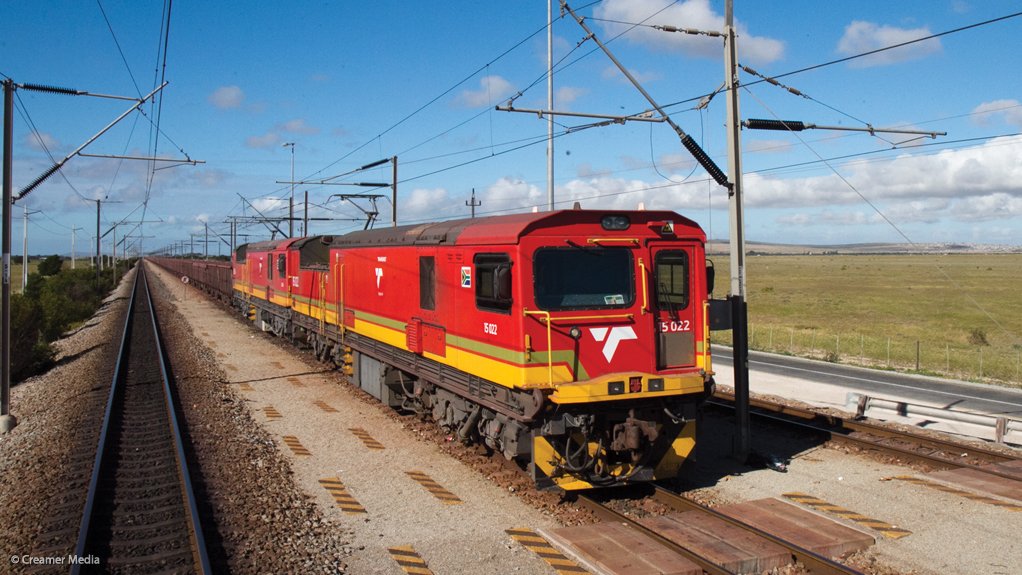
Transnet will shift its capital expenditure (capex) focus over the coming seven years from maintenance expenditure to expansionary investments on rail and port projects across South Africa.
The expansion of South Africa’s rail, port and pipeline infrastructure is expected to result in a significant increase in freight volumes, especially in commodities such as iron-ore, coal and manganese.
It will also lead to a significant modal shift from road to rail.
The bulk of the capex, R201-billion, will be allocated towards railway projects, which have been designed to increase freight volumes to 350-million tons a year, from the 202-million tons achieved in the year to March 31, 2012.
Supporting the rail-volume growth aspiration is a plan to materially increase the capacity of Transnet Freight Rail’s key commodity lines, which includes:
• increasing coal volumes by 44%, from 68-million tons last year to 98-million tons by 2018/19, which will be above the 92-million-ton-a-year nameplate capacity for the privately owned Richards Bay Coal Terminal, in KwaZulu-Natal;
• raising the capacity of the iron-ore export channel from Sishen, in the Northern Cape, to Saldanha, in the Western Cape, by 57%, from 53-million tons to 83-million tons; and
• increasing the capacity of the general freight business by a material 113%, from 80-million tons a year currently to 180.3-million tons a year.
The capital to be invested in the port system (R47-billion for the Transnet National Ports Authority and R33-billion for Transnet Port Terminals) should also enable Transnet to increase its container handling capacity by 76%, from 4.3-million twenty-foot equivalent units (TEUs) to 7.6-million TEUs.
Value
The cost of the MDS is estimated at R300-billion, including R201-billion for railways, R47-billion for harbours, R33-billion for port terminals, R11-billion for pipelines and R4-billion for rail engineering works.
The MDS will primarily be funded by Transnet’s own balance sheet. However, Transnet will still need to raise about R100-billion from domestic and international debt capital markets, development finance institutions and export credit agencies, as well as in the form of corporate paper between now and 2020.
Duration
Seven years to 2020.
Latest Developments
Transnet has awarded a R50-billion contract for the building of 1 064 locomotives to four global original-equipment manufacturers – CSR Zhuzhou Electric Locomotive and Bombardier Transportation South Africa for the supply 359 and 240 electric locomotives respectively. General Electric South Africa Technologies and CNR Rolling Stock South Africa will build and supply 233 and 232 diesel locomotives respectively.
The award follows an open and public tender process, overseen by the board of directors, through a subcommittee of independent directors. In addition, the evaluation of the bids was monitored by Transnet Internal Audit to ensure that the process complied with the highest standards of governance as required by the Public Finance Management Act. The evaluation had six stages, including broad-based black economic empowerment and supplier development; technical ability, including details of technical offers from the potential suppliers. The latter included pricing, total cost of ownership and contractual terms and compliance to the supply agreement.
The award has stringent local-content, skills development and training commitments, as dictated by the Supplier Development Programme – a government initiative led by the Ministry of Public Enterprises whose main goal is to localise the production of imported machinery and equipment.
In line with South Africa’s commitment to boost its manufacturing capacity, all the locomotives, except 70, will be built at Transnet Engineering’s plants in Koedoespoort, in Pretoria, and in Durban, driving South Africa’s regional integration objectives.
Transnet Engineering’s role in the agreement has been defined to ensure that it transforms into an original-equipment manufacturer over time. Transnet Engineering will share about 16% of the total build programme – about one-third of which will be outsourced to local emerging engineering and manufacturing firms. This will enable it to create export capability for locomotives and related products. The localisation elements are expected to contribute more than R90-billion to the economy.
The suppliers have complied with and exceeded the minimum local content criteria for rolling stock of 60% for electric locomotives and 55% for diesel locomotives. Once all these locomotives are delivered, Transnet will have met all its rolling stock requirements to successfully execute the MDS.
In terms of the agreements signed with the successful bidders, the last locomotive will roll off the production line within three and a half years, meaning that at the project’s peak, 480 locomotives a year will be produced.
The majority of the locomotives will be deployed in Transnet Freight Rail’s general freight business (GFB), which is all cargo – excluding the dedicated heavy haul lines for iron-ore and coal. Freight Rail, which accounts for about 50% of Transnet’s revenue and capital expenditure requirements, will increase its volumes to 350-million tonnes from the current 207-million tonnes. More than 60% of the growth will be from the GFB.
Key Contracts and Suppliers
None stated.
On Budget and on Time?
Too early to state.
Contact Details for Project Information
Transnet spokesperson Mboniso Sigonyela, tel +27 11 308 2458, cell +27 83 463 7701 or email mboniso.sigonyela@transnet.net; or Transnet group corporate and public affairs, Viwe Tlaleane, tel +27 11 308 2384, cell +27 83 979 0707, fax +27 11 308 2465 or email Viwe.tlaleane@transnet.net.
Article Enquiry
Email Article
Save Article
To advertise email advertising@creamermedia.co.za or click here
Research Reports

Projects


Latest Multimedia

Latest News

Showroom

The SAIMM started as a learned society in 1894 after the invention of the cyanide process that saved the South African gold mining industry of the...
VISIT SHOWROOM
ECG provides specialised electrical engineering services to the Mining, Utilities, Materials Handling and Industrial industries, with extensive and...
VISIT SHOWROOM



Press Office
Announcements
What's On
Subscribe to improve your user experience...
Option 1 (equivalent of R125 a month):
Receive a weekly copy of Creamer Media's Engineering News & Mining Weekly magazine
(print copy for those in South Africa and e-magazine for those outside of South Africa)
Receive daily email newsletters
Access to full search results
Access archive of magazine back copies
Access to Projects in Progress
Access to ONE Research Report of your choice in PDF format
Option 2 (equivalent of R375 a month):
All benefits from Option 1
PLUS
Access to Creamer Media's Research Channel Africa for ALL Research Reports, in PDF format, on various industrial and mining sectors
including Electricity; Water; Energy Transition; Hydrogen; Roads, Rail and Ports; Coal; Gold; Platinum; Battery Metals; etc.
Already a subscriber?
Forgotten your password?
Receive weekly copy of Creamer Media's Engineering News & Mining Weekly magazine (print copy for those in South Africa and e-magazine for those outside of South Africa)
➕
Recieve daily email newsletters
➕
Access to full search results
➕
Access archive of magazine back copies
➕
Access to Projects in Progress
➕
Access to ONE Research Report of your choice in PDF format
RESEARCH CHANNEL AFRICA
R4500 (equivalent of R375 a month)
SUBSCRIBEAll benefits from Option 1
➕
Access to Creamer Media's Research Channel Africa for ALL Research Reports on various industrial and mining sectors, in PDF format, including on:
Electricity
➕
Water
➕
Energy Transition
➕
Hydrogen
➕
Roads, Rail and Ports
➕
Coal
➕
Gold
➕
Platinum
➕
Battery Metals
➕
etc.
Receive all benefits from Option 1 or Option 2 delivered to numerous people at your company
➕
Multiple User names and Passwords for simultaneous log-ins
➕
Intranet integration access to all in your organisation
