



Telkom operational earnings flat, promises dividend by 2015

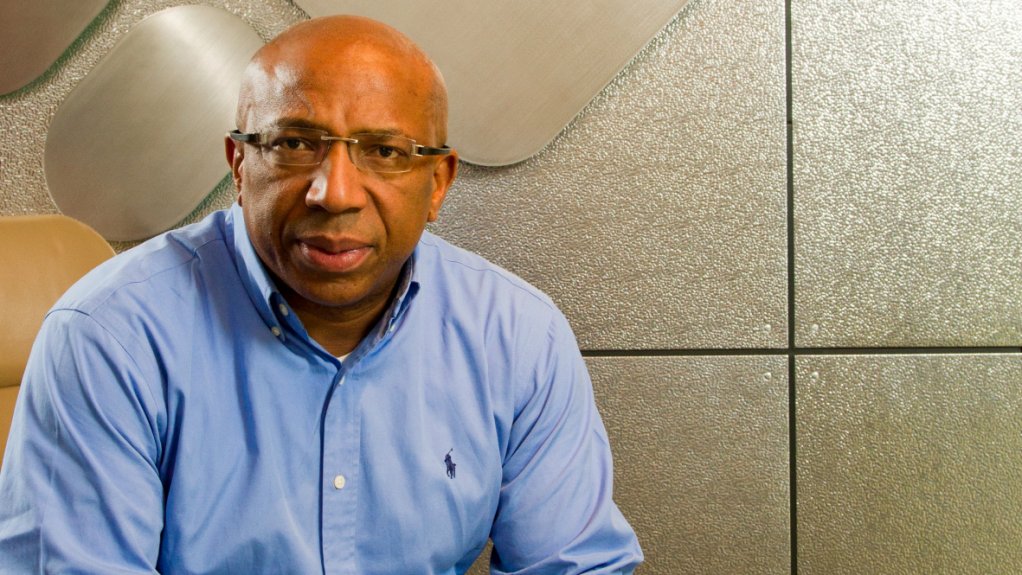


Telkom CEO Sipho Maseko envisaged paying out a yet-to-be-determined dividend in the 2015 financial year, as the company boosted revenue and pretax earnings over the next three years.
The proposed reinstatement of dividend payouts was unveiled after, the group said, years of declining revenue and contractions in growth had been arrested and Telkom’s foundation “stabilised for future growth” during the six months to September.
Speaking at Telkom’s interim results presentation in Pretoria on Monday, Maseko said the embattled group was targeting an estimated 1% to 2% revenue growth, with a focus next year on further stabilising the amount of revenue generated before pursuing revenue growth by 2016.
The group’s earnings before interest, tax, depreciation and amortisation (Ebitda) margin, which had reached 23.9% during the first half of 2013, was expected to increase between 1% and 2% a year over the next three years.
Telkom had already resolved several long-term issues obstructing the beleaguered group’s path to profitability through the R12-billion impairment of a large portion of the groups legacy assets in March, the conclusion of multiyear labour agreements, the settling of Competition Commission matters, successfully dealing with "unfair and uncompetitive" mobile termination rates (MTR) and reviewing postretirement medical aid liability.
But underlying operational earnings remained under pressure as the fixed voice business continued to wane and the mobile business continued to face the challenge of gaining market share in a highly competitive market.
The interim period had registered relatively flat pretax earnings, excluding positive, but nonrecurring items, with Ebitda remaining steady at R3.9-billion.
Basic earnings a share increased from 94c during first half of last year, to 140.6c in the interim period under review, while headline earnings a share jumped to 224.2c in the six months to September, from the 101.1c reported in the corresponding period the year before.
This was attributed to lower payments to mobile operators resulting from the R55-million reduction in MTRs and higher fair-value gains as a result of the weakening rand.
“It [Telkom’s results] is a start to gaining momentum into the final six months of the year and into next year,” he said.
Including a gain of the R2.1-billion net curtailment recognised on the postretirement medical aid liability and a R389-million provision for the Competition Commission fine, Telkom registered a profit after tax of R2.9-billion, up from the R159-million achieved in the first half of last year.
Operating revenue ticked up 0.3% to R16.2-billion on the back of higher mobile and information technology (IT) business services revenue, partially offset by lower fixed-line voice revenue.
Mobile data revenue increased 50% to R303-million on the back of increasing data subscribers, data deals and promotional products, while the IT unit generated revenue of R103-million – a 110.2% rise on the prior corresponding period last year.
However, despite total revenue from the mobile operations increasing 55.4%, mobile voice and subscriber revenue decreased 20.2% and interconnection revenue decreased 10.8%, with Ebitda declining to a loss of R733-million for the six months to September.
The group was currently exploring the options to derisk the mobile business and indicated that talks were under way with various undisclosed parties to develop a solution for the mobile unit, which continued to register losses. Maseko declined to provide further information, saying that the discussions were at a sensitive stage.
Fixed-line voice use revenue continued – and would continue – to decline, falling 7.7% to R4-billion during the period under review. The number of lines also declined by 4.6%, but fixed-line subscriptions revenue increased 1.1% to R3.9-billion.
“We must redefine our future,” he said, adding that the current status quo of poor brand perception and customer service, a legacy of underinvestment in fixed-access network and start-up mobile network, a high-cost base, an uncertain regulatory and policy environment, a rapidly declining core and a lack of execution capacity needed to be shifted.
The group would focus investment in the “right technologies” and derisk the mobile environment, implement sustainable cost reduction measures, create a new affinity with customers through the delivery of superior customer service, effectively manage the regulatory process, find growth in other profit pools and shift the right people into the right positions to do the right things.
“We continue to invest in modernising our network to provide high-speed, -quality and reliable broadband to South Africans,” he said.
However, capital expenditure (capex) going forward would be capped to R6.5-billion during the 2014 financial year, while the group “reviews its options”, particularly in mobile.
Group capex for the interim period under review increased 49.5% to R3.1-billion – 19.6% of group operating revenue.
By 2015, capex would be limited to between 14% and 17% of revenue.
“Telkom is instilling a disciplined approach to capital allocation. We will invest in areas where we have leadership and place a greater emphasis on productivity and returns. Infrastructure investment in particular will be returns-driven,” Maseko explained.
Group operating expenses increased 2.4% to R12.5-billion during the six months to September, mostly owing to a 6.8% average salary increase for bargaining unit employees and a 3.6% average salary increase for management employees, as well as the impairment of legacy and technologically-aged spare parts.
Free cash flow decreased 97.8%, from R1.5-billion in the first half of 2012 to R33-million during the first half of 2013, owing to early debt settlement, a 50.3% increase in additions to property plant and equipment, higher capital investment, the payout of R67-million to the Competition Commission and a 11.9% decrease in cash generated from operations, besides others.
Article Enquiry
Email Article
Save Article
Feedback
To advertise email advertising@creamermedia.co.za or click here
Research Reports

Projects


Latest Multimedia


Latest News


Showroom
Axiom Hydraulics is a trusted leader in South Africa’s hydraulic industry, delivering world-class components, systems, and engineering expertise...
VISIT SHOWROOM
As a reticulator, Egoli Gas provides natural gas to homes and businesses via underground pipes.
VISIT SHOWROOM



Press Office
Announcements
What's On
Subscribe to improve your user experience...
Option 1 (equivalent of R125 a month):
Receive a weekly copy of Creamer Media's Engineering News & Mining Weekly magazine
(print copy for those in South Africa and e-magazine for those outside of South Africa)
Receive daily email newsletters
Access to full search results
Access archive of magazine back copies
Access to Projects in Progress
Access to ONE Research Report of your choice in PDF format
Option 2 (equivalent of R375 a month):
All benefits from Option 1
PLUS
Access to Creamer Media's Research Channel Africa for ALL Research Reports, in PDF format, on various industrial and mining sectors
including Electricity; Water; Energy Transition; Hydrogen; Roads, Rail and Ports; Coal; Gold; Platinum; Battery Metals; etc.
Already a subscriber?
Forgotten your password?
Receive weekly copy of Creamer Media's Engineering News & Mining Weekly magazine (print copy for those in South Africa and e-magazine for those outside of South Africa)
➕
Recieve daily email newsletters
➕
Access to full search results
➕
Access archive of magazine back copies
➕
Access to Projects in Progress
➕
Access to ONE Research Report of your choice in PDF format
RESEARCH CHANNEL AFRICA
R4500 (equivalent of R375 a month)
SUBSCRIBEAll benefits from Option 1
➕
Access to Creamer Media's Research Channel Africa for ALL Research Reports on various industrial and mining sectors, in PDF format, including on:
Electricity
➕
Water
➕
Energy Transition
➕
Hydrogen
➕
Roads, Rail and Ports
➕
Coal
➕
Gold
➕
Platinum
➕
Battery Metals
➕
etc.
Receive all benefits from Option 1 or Option 2 delivered to numerous people at your company
➕
Multiple User names and Passwords for simultaneous log-ins
➕
Intranet integration access to all in your organisation
