


STB control battle to be resolved by Dec 4




The issue of the control of set-top boxes (STBs), which would be required to receive a digital terrestrial signal when South Africa moves from analogue broadcasting to digital terrestrial television (DTT), would be resolved by December 4.
Government and broadcasters were currently at an impasse surrounding the conditional access functions of the STBs, resulting in several delays to the country’s digital migration.
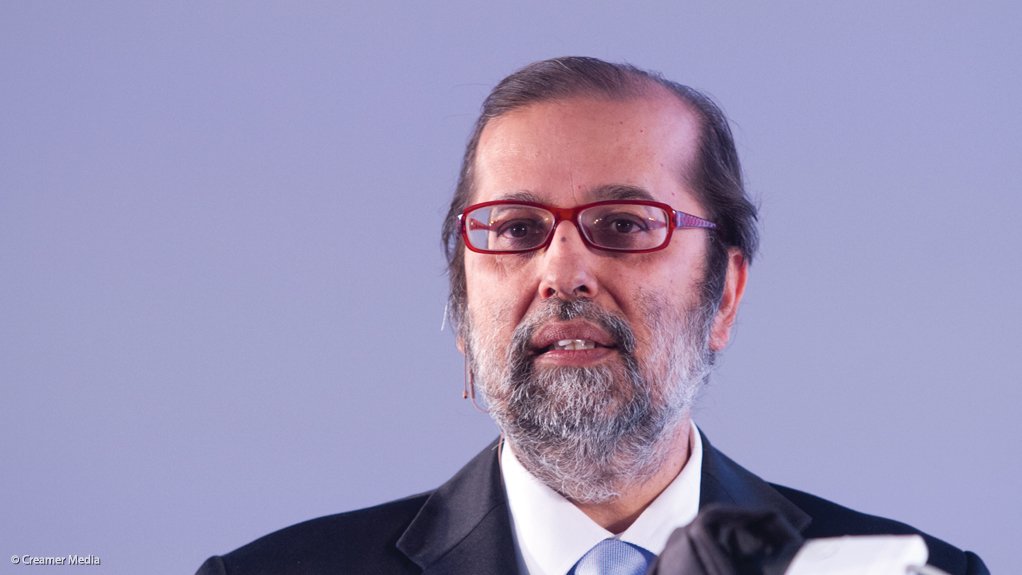
Communications Minister Yunus Carrim, speaking on the sidelines of an international broadband policy workshop, in Pretoria, on Monday, said Cabinet would decide the fate of the much-contested STB conditional control access.
“The facilitation process on STB control began in mid-September. The facilitation team has finalised its report and it is being processed [for Cabinet],” Carrim said last week, when outlining to Parliament the progress made by the Department of Communications (DoC) since he assumed the role of Communications Minister earlier this year.
The much-delayed awarding of the tender for the manufacture of five-million subsidised STBs for terrestrial television was halted last year after broadcaster e.tv launched a court bid to oppose Sentech’s appointment by the DoC to manage conditional access to the STBs.
By December 2012, the South Gauteng High Court had ruled that broadcasters other than Sentech should also be granted conditional access control.
The DoC appealed the ruling but, in February, withdrew its appeal in an effort to fast-track the roll-out of DTT.
The department, the South African Broadcasting Corporation and e.tv, besides others, continued with court-ordered Independent Communications Authority of South Africa- (Icasa-) led talks into the role of each party in the implementation of the conditional access, the continuation of the STB tender, and the delivery to the DoC of the STBs for the market.
Carrim indicated that the department was “ready to go”, despite the delays caused by the broadcasters, but a “massive” collaborative effort, from President Jacob Zuma to civil society at grassroots level, would be required to ensure South Africa meets its committed deadline of transitioning by June 2015.
South Africa had made a commitment to the International Telecommunications Union to migrate from an analogue to a digital signal by the middle of 2015, after which analogue broadcasting frequencies’ exclusivity, or protection, will be lifted, resulting in signal interruptions.
“There is a reasonable possibility [that] working together, we will meet the deadline,” he said, adding “it would not be the end of the world if we didn’t.”
As the DoC moves to finalise its National Broadband Policy, the completion of digital migration would be a step forward in the department achieving its aim of ensuring broadband for all by 2020, with the release of much-needed spectrum.
The additional spectrum released from the analogue broadcasting signals would allow the telecommunications industry to effectively mitigate next-generation long term evolution networks, which use considerable bandwidth to reach download speeds of 100 Mb/s, and close the digital divide.
Currently, mobile operators were using refarmed spectrum, as they awaited finalisation by Icasa on the allocation and policy of spectrum.
Meanwhile, the much-revised draft broadband plan was unveiled to participants at a final consultation workshop on the long-awaited National Broadband Policy last month prior to its submission to Cabinet for approval in December.
The DoC had initiated international participation in the country’s broadband plans with a consultative follow-up workshop to gain global perspectives and enable South Africa to benchmark its broadband policy and learn from other countries how broadband policies were developed and implemented.
The two-day workshop was attended by 16 international experts from 14 countries.
Article Enquiry
Email Article
Save Article
Feedback
To advertise email advertising@creamermedia.co.za or click here
Research Reports

Projects


Latest Multimedia


Latest News
Showroom

Rooted in the hearts of South Africans, combining technology and a quest for perfection to bring you a battery of peerless standing. Willard...
VISIT SHOWROOM
The Steel Tube Export Association of South Africa was established to develop sustainable, internationally competitive carbon steel tube and pipe...
VISIT SHOWROOM



Announcements
What's On
Subscribe to improve your user experience...
Option 1 (equivalent of R125 a month):
Receive a weekly copy of Creamer Media's Engineering News & Mining Weekly magazine
(print copy for those in South Africa and e-magazine for those outside of South Africa)
Receive daily email newsletters
Access to full search results
Access archive of magazine back copies
Access to Projects in Progress
Access to ONE Research Report of your choice in PDF format
Option 2 (equivalent of R375 a month):
All benefits from Option 1
PLUS
Access to Creamer Media's Research Channel Africa for ALL Research Reports, in PDF format, on various industrial and mining sectors
including Electricity; Water; Energy Transition; Hydrogen; Roads, Rail and Ports; Coal; Gold; Platinum; Battery Metals; etc.
Already a subscriber?
Forgotten your password?
Receive weekly copy of Creamer Media's Engineering News & Mining Weekly magazine (print copy for those in South Africa and e-magazine for those outside of South Africa)
➕
Recieve daily email newsletters
➕
Access to full search results
➕
Access archive of magazine back copies
➕
Access to Projects in Progress
➕
Access to ONE Research Report of your choice in PDF format
RESEARCH CHANNEL AFRICA
R4500 (equivalent of R375 a month)
SUBSCRIBEAll benefits from Option 1
➕
Access to Creamer Media's Research Channel Africa for ALL Research Reports on various industrial and mining sectors, in PDF format, including on:
Electricity
➕
Water
➕
Energy Transition
➕
Hydrogen
➕
Roads, Rail and Ports
➕
Coal
➕
Gold
➕
Platinum
➕
Battery Metals
➕
etc.
Receive all benefits from Option 1 or Option 2 delivered to numerous people at your company
➕
Multiple User names and Passwords for simultaneous log-ins
➕
Intranet integration access to all in your organisation
