



Spectrum crunch to hit again in ten years, GMSA lobbies for four bands


With the upcoming World Radiocommunication Conference 2015 (WRC-15) to be held in November, spectrum for mobile will be at the top of indus- try body GMSA’s agenda as it lobbies for increased allocations on four bands to meet an unprecedented rise in demand.
Despite continued mass roll-out of infrastructure and the deployment of technology to enable more efficient use of spectrum, mobile operators currently face a spectrum crunch that will likely be repeated in ten years’ time, unless the industry gains access to the much-coveted spectrum, GMSA Africa director Mortimer Hope tells Engineering News.
The WRC-15, which will be held in Geneva, Switzerland, from November 2 to 27, will identify additional harmonised spectrum for mobile broadband, with the global conference’s outcomes set to determine how the telecommunications industry will meet the growing demand for affordable, ubiquitous, high-speed mobile broadband services.
The International Telecommunications Union (ITU) expects a 44- to 80-fold increase in mobile data traffic between 2010 and 2020, while the number of mobile connections is expected to surge from 7.3-billion in 2014 to 10-billion by 2020, with nearly 70% comprising data-hungry mobile broadband connections.
Further, the number of smartphones, which generates 37 times more mobile data, is expected to grow from 2.6-billion in 2014 to about 6-billion by 2020.
This means that mobile operators will need to expand capacity and, while more efficient use of the current spectrum can deliver some of the required capacity, the reallocation of spectrum to mobile use will be critical to sustain the forecast demand growth.
The ITU believes that Region 1, comprising Europe, the Middle East and Africa, will face a spectrum shortfall of between 779 MHz and 979 MHz, while, globally, an average of 1 340 MHz to 1 960 MHz will be needed by the telecommunications industry for the provision of mobile broadband by 2020.
Only around 1 000 MHz has been identified and allocated for mobile broadband, leaving a shortfall of more than half, even when taking into account all other “capacity enhancing measures”, such as new technologies and new network architectures.
To fill this gap, Hope says the GMSA is eyeing the reallocation of portions of the sub-700 MHz UHF, C-band, L-band and the S-band frequency ranges for mobile operator use.
According to a GMSA position paper, published in June, these bands would satisfy the need for the additional 600 MHz to 800 MHz of spectrum for potential use by 2020.
The sub-700 MHz UHF, with frequencies in the 470 MHz to 694/698 MHz range and is currently used for traditional free-to-air broadcast, can enable high-quality, wide-area coverage for mobile broadband services, while the S-band, covering the 2 700 MHz to 2 900 MHz range and used for civilian and military radars, will provide extra, cost-effective mobile capacity.
Mobile allocations on the L-band, which currently support aeronautical telemetry, military and civilian radar systems and fixed-link transmission systems, will deliver additional capacity and coverage over relatively large areas, including inside buildings.
However, it is the coveted C-band that can deliver the “best possible” mobile broadband experience and support busy urban areas where mobile traffic is growing fastest.
The C-band is currently used by satellite operators, which are protesting the telecommunications industry’s play for the satellite broadband spectrum to protect the vast range of services provided by satellite operators through this frequency.
Earlier this year, the Global VSAT Forum called on all African countries to adopt a “no change” stance against the move, claiming that the split of the C-band satellite spectrum would jeopardise thousands of services across the African continent and threaten billions of dollars in investment, as more than 70 satellites provided critical and essential services to sub-Saharan Africa through the band.
However, Hope points out that only a portion of the C-band will be required, with the telecommunications industry seeking the 3 400 MHz to 4 200 MHz frequencies on the band, with studies indicating that co-primary allocation or sharing is feasible.
Article Enquiry
Email Article
Save Article
Feedback
To advertise email advertising@creamermedia.co.za or click here
Research Reports

Projects


Latest Multimedia

Latest News
Showroom

Columbus Stainless, based in Middelburg, Mpumalanga, is Africa’s only producer of stainless steel flat products. In addition, Columbus is the only...
VISIT SHOWROOM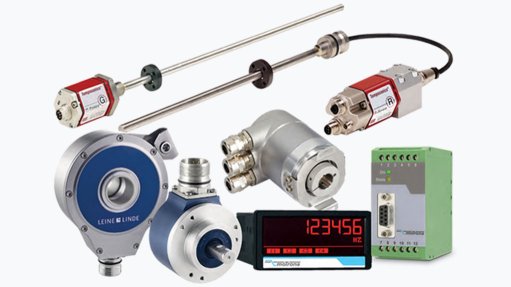
ATI systems comprises five divisions: electrical assemblies, drives and controls, feedback sensors, enclosures, and strip guiding.
VISIT SHOWROOM



Announcements
What's On
Subscribe to improve your user experience...
Option 1 (equivalent of R125 a month):
Receive a weekly copy of Creamer Media's Engineering News & Mining Weekly magazine
(print copy for those in South Africa and e-magazine for those outside of South Africa)
Receive daily email newsletters
Access to full search results
Access archive of magazine back copies
Access to Projects in Progress
Access to ONE Research Report of your choice in PDF format
Option 2 (equivalent of R375 a month):
All benefits from Option 1
PLUS
Access to Creamer Media's Research Channel Africa for ALL Research Reports, in PDF format, on various industrial and mining sectors
including Electricity; Water; Energy Transition; Hydrogen; Roads, Rail and Ports; Coal; Gold; Platinum; Battery Metals; etc.
Already a subscriber?
Forgotten your password?
Receive weekly copy of Creamer Media's Engineering News & Mining Weekly magazine (print copy for those in South Africa and e-magazine for those outside of South Africa)
➕
Recieve daily email newsletters
➕
Access to full search results
➕
Access archive of magazine back copies
➕
Access to Projects in Progress
➕
Access to ONE Research Report of your choice in PDF format
RESEARCH CHANNEL AFRICA
R4500 (equivalent of R375 a month)
SUBSCRIBEAll benefits from Option 1
➕
Access to Creamer Media's Research Channel Africa for ALL Research Reports on various industrial and mining sectors, in PDF format, including on:
Electricity
➕
Water
➕
Energy Transition
➕
Hydrogen
➕
Roads, Rail and Ports
➕
Coal
➕
Gold
➕
Platinum
➕
Battery Metals
➕
etc.
Receive all benefits from Option 1 or Option 2 delivered to numerous people at your company
➕
Multiple User names and Passwords for simultaneous log-ins
➕
Intranet integration access to all in your organisation
