



Social cost of using fossil fuels much higher than govt gains, study shows

IISD discusses the social cost of fossil fuel subsidies in South Africa
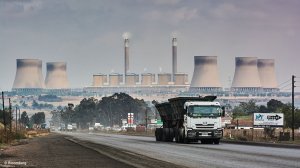


The International Institute for Sustainable Development (IISD) finds in a report on South Africa’s energy fiscal policies that the social cost of fossil fuel combustion for South Africa is at least R550-billion a year and exceeds, by five times, the revenues government earns from fossil fuel combustion.
The social cost includes deaths, disease and working days lost due to air pollution and greenhouse-gas (GHG) emissions.
The report explores the extent to which South Africa's current energy fiscal policies are aligned with the country’s goal to develop a robust domestic energy system that can provide low-carbon energy at a fair cost to all.
Comparing government’s fossil fuel subsidies, tax and nontax revenues with the social cost, it is evident that the public is paying a much greater bill as far as fossil fuel combustion is concerned in South Africa, said IISD policy adviser Chido Muzondo during a webinar hosted by Trade and Industry Policy Strategies (TIPS).
She explained that subsidies and taxes constituted a key economic policy lever that governments could use to influence energy production and consumption.
Muzondo noted that, despite some renewable energy policy efforts and carbon tax initiatives, national government still supported the ongoing combustion of coal with its R67-billion and R55-billion worth of bail-outs to Eskom in 2020/21 and 2019/20 respectively.
The State-owned enterprise also received R45-billion worth of carbon tax exemptions in 2020/21, despite being the country’s biggest polluter.
Muzondo further pointed out that renewable energy only has six supportive policies in South Africa, of which two can be quantified in terms of support.
The single biggest source of tax revenue in South Africa is the general fuel levy (another fossil fuel energy source), which generated R82-billion in 2020/21 and constitutes about 6% of tax revenue.
“Fossil fuel subsidies are too high in South Africa, amounting to R172-billion a year. The IISD suggests that there needs to be a phase-out of fossil fuel subsidies that have no or little potential for energy access, and instead have targeted subsidies aimed at clean energy access,” stateedMuzondo.
Alternatively, fossil fuel subsidies can be shifted to investments in renewable energy and energy efficiency.
The IISD also suggested fewer bail-outs to Eskom, and a phasing out of exemptions from the carbon tax, since it isproving to be ineffective in curbing GHG emissions at the necessary scale.
“It is imperative that government increases transparency around energy fiscal policies – we need to be aware of where our tax money is going to,” added Muzondo.
TIPS senior economist Gaylor Montmasson-Clair said that the urgency to reform is evident and says continuing with business as usual is not an option.
He added that inequalities are persisting in South Africa, with about 43% of households in the country being energy poor. “We need to gear towards energy access, and clean energy at that. We are part of a global ecosystem, which, if we do not start shifting, will shift us, at our expense.”
There are already carbon taxes to be introduced at the borders of some countries, such as the European Union, within the next few years.
Montmasson-Clair reckons that government subsidies should be supportive of energy access and the focus should rather be on incentivising support for cleaner energy, such as electric vehicles, than keeping up subsidies for fossil fuel energy.
“An inclusive transition for energy need not push the burden once more on low-income consumers, when we should be putting it on polluters,” he said.
Government Perspective
National Treasury economist Memory Machingambi affirmed South Africa’s commitment to phasing out fossil fuel subsidies and increasing carbon tax efficacy.
She explained that the carbon tax took more than a decade to get in place, and its design today still allows for exceptions and exemptions, owing to South Africa having a developing economy and there being a need for reliable baseload electricity to advance industrialisation.
“We are nonetheless hoping to create incentives to leapfrog development through the early adoption of low-carbon technologies.
“The National Treasury regards climate change as the biggest risk facing humanity. Announcements on the second-phase carbon tax proposals will be made in the 2022 Budget speech,” she confirmed.
Machingambi added that the Treasury is also targeting other initiatives related to energy-sector reforms relating to cleaner energy and transport across government.
Speaking about whether South Africa’s carbon tax is effective in curbing GHG emissions, she conceded that carbon pricing should be closer to $25/t of carbon dioxide (CO2), instead of the current level of between $0.50/t and $3.60/t of CO2.
Machingambi said the 2019 Budget recognised the need to position the electricity sector to embrace clean technology and respond to changes taking place in this regard, as well as the need to diversify the generation of electricity across multiple power producers.
Article Enquiry
Email Article
Save Article
Feedback
To advertise email advertising@creamermedia.co.za or click here
Research Reports

Projects


Latest Multimedia

Latest News
Showroom

Columbus Stainless, based in Middelburg, Mpumalanga, is Africa’s only producer of stainless steel flat products. In addition, Columbus is the only...
VISIT SHOWROOM
ATI systems comprises five divisions: electrical assemblies, drives and controls, feedback sensors, enclosures, and strip guiding.
VISIT SHOWROOM



Announcements
What's On
Subscribe to improve your user experience...
Option 1 (equivalent of R125 a month):
Receive a weekly copy of Creamer Media's Engineering News & Mining Weekly magazine
(print copy for those in South Africa and e-magazine for those outside of South Africa)
Receive daily email newsletters
Access to full search results
Access archive of magazine back copies
Access to Projects in Progress
Access to ONE Research Report of your choice in PDF format
Option 2 (equivalent of R375 a month):
All benefits from Option 1
PLUS
Access to Creamer Media's Research Channel Africa for ALL Research Reports, in PDF format, on various industrial and mining sectors
including Electricity; Water; Energy Transition; Hydrogen; Roads, Rail and Ports; Coal; Gold; Platinum; Battery Metals; etc.
Already a subscriber?
Forgotten your password?
Receive weekly copy of Creamer Media's Engineering News & Mining Weekly magazine (print copy for those in South Africa and e-magazine for those outside of South Africa)
➕
Recieve daily email newsletters
➕
Access to full search results
➕
Access archive of magazine back copies
➕
Access to Projects in Progress
➕
Access to ONE Research Report of your choice in PDF format
RESEARCH CHANNEL AFRICA
R4500 (equivalent of R375 a month)
SUBSCRIBEAll benefits from Option 1
➕
Access to Creamer Media's Research Channel Africa for ALL Research Reports on various industrial and mining sectors, in PDF format, including on:
Electricity
➕
Water
➕
Energy Transition
➕
Hydrogen
➕
Roads, Rail and Ports
➕
Coal
➕
Gold
➕
Platinum
➕
Battery Metals
➕
etc.
Receive all benefits from Option 1 or Option 2 delivered to numerous people at your company
➕
Multiple User names and Passwords for simultaneous log-ins
➕
Intranet integration access to all in your organisation
