



San Jose mine, Mexico


Name: San Jose mine.
Location: The San Jose mine is located in the southern portion of the state of Oaxaca, in Mexico.
Controlling Company: Fortuna Silver Mines.
Brief History: The earliest recorded activity in the San Jose de Progreso area dates back to the 1850s when the mines were exploited on a small scale. By the early 1900s, several silver- and gold-bearing deposits were being exploited in the San Jeronimo Taviche and San Pedro Taviche areas. Mining activity in the district diminished substantially with the onset of the Mexican Revolution in 1910 and resumed intermittently in the 1920s.
Mining was restarted on a small scale in the 1960s and again in 1980 when the property was worked by Minerales de Oaxaca (MIOXSA) until the end of 2006, when Fortuna Silver Mines purchased a 76% in the San Jose project. In 2009, Fortuna Silver Mines completed the 100% acquisition of the San Jose project and an environmental- impact study was approved for the project. In 2010, construction at San Jose began and commercial operations began in September 2011.
Brief Description: San Jose is a high-grade silver and gold mine.
Mining Method: Underground.
Products: Silver and gold.
Major Infrastructure and Equipment: The mine hosts a con- ventional slurry tailings facility to process five-million tons of tailings during the mine life.
A full range of services and supplies required to support the mine are available within a 100 km radius of the mine.
Electrical power for the mine is supplied from the existing electrical grid system.
Nonprocess facilities for the mine include newly constructed buildings for mine operations, project staff and management offices and metallurgical testing activities. Other service buildings include warehousing, a clinic/security/fire station and a cafeteria. A fuelling station and a weighing station are also included.
Geology/Mineralisation: The San Jose occurs within the Oaxaca Terrane, one of a series of structurally bounded, lithostratigraphic blocks, in southern Mexico, distinguishable on the basis of its diagnostic stratigraphy, structural patterns and tectonic history. Basement rocks in the vicinity of San Jose comprise Proterozoic-age amphibolite to granulite facies migmatite and gneiss, overlain by a sequence of Mesozoic and Tertiary sedimentary and volcanic rocks. Bedrock in the project area is dominated by subhorizontal andesitic to dacitic volcanic and volcaniclastic rocks of Tertiary age. These units have been cut by north- and north-northwest-trending extensional faults.
Silver and gold mineralisation in the Trinidad deposit is hosted by steeply dipping hydrothermal breccias, crackle breccias and sheeted or stockworked quartz/carbonate veins, emplaced along north- trending, north-northwest-trending and east-northeast-dipping faults. The ‘east side down’ faults exhibit dip-slip motion, with cumulative displacements of up to 300 m recorded between the footwall and the hanging wall of the mineralised structural corridor.
The mineralised structural corridor extends for more than 3 km in a north-south direction and has been subdivided into the Trinidad deposit area and the San Ignacio area.
The major vein systems recognised in the Trinidad deposit area are identified as the Trinidad, Fortuna and the Bonanza structures. In addition, a prominent zone of mineralised sheeted and stockwork quartz/carbonate veins has been identified in the zone between the Trinidad and Bonanza vein systems. Drilling has defined the Trinidad and Bonanza vein systems over a strike length of about 700 m.
Minerals of economic interest are mainly acanthite and silver-rich electrum. These occur with pyrite in distinctively banded crustiform-colloform veins, with quartz, chalcedony, calcite and local adularia. Sulphide contents are typically low, from less than 1% to 5% of the rock in the upper portion of the deposit to somewhat higher at depth, where sphalerite, galena and chalcopyrite appear. Hydrothermal alteration includes regional propylitic alteration of the volcanic host rocks, grading to proximal alteration zones consisting of quartz, illite, illite/smectite, iron-carbonates and pyrite around the mineralised zones. The Trinidad silver/gold deposit has been assigned to the low- sulfidation epithermal deposit classification.
Reserves: Total proven and probable reserves as at June 30, 2012, were 3.335-million tons, grading 190 g/t silver and 1.58 g/t gold.
Resources: Total measured and indicated resources as at June 30, 2012, were 56 000 t, grading 74 g/t silver and 0.61 g/t gold.
Prospects: Development of the underground mine continues at San Jose, in preparation for the projected 50% expansion of production from 1 000 t/d to 1 500 t/d in the second half of this year. Further increases in the mineral reserves are expected from a three-drill rig underground in-fill programme, advancing during the first half of the year for the conversion of inferred resources to measured and indicated resources. The San Jose mineralised structure remains open to the north and at depth and exploration drilling is being conducted to follow-up on mineralised intercepts encountered in the second half of 2012.
The 2013 exploration programme at San Jose includes 20 000 m of exploration drilling, with the principal targets being the northern and southern extensions of the Trinidad vein system. Additional drilling is also planned on other targets identified on the company’s 64 400 ha property position in the San Jose area.
Contact Person: Investor relations manager, Carlos Baca.
Contact Details:
Fortuna Silver Mines tel +51 1 616 6060, fax +51 1 422 9108,
email info@fortunasilver.com, and
website http://www.fortunasilver.com
.
Article Enquiry
Email Article
Save Article
Feedback
To advertise email advertising@creamermedia.co.za or click here
Research Reports

Projects


Latest Multimedia


Latest News

Showroom

Industrial Nozzles & Systems (Pty) Ltd (Est. 2000) exclusive representative in Southern Africa for LECHLER GmbH (Est. 1879) - Europe's leading...
VISIT SHOWROOM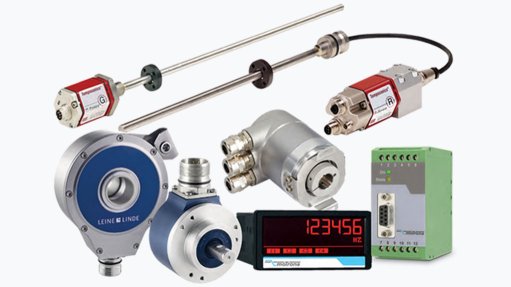
ATI systems comprises five divisions: electrical assemblies, drives and controls, feedback sensors, enclosures, and strip guiding.
VISIT SHOWROOM



Press Office
Announcements
What's On
Subscribe to improve your user experience...
Option 1 (equivalent of R125 a month):
Receive a weekly copy of Creamer Media's Engineering News & Mining Weekly magazine
(print copy for those in South Africa and e-magazine for those outside of South Africa)
Receive daily email newsletters
Access to full search results
Access archive of magazine back copies
Access to Projects in Progress
Access to ONE Research Report of your choice in PDF format
Option 2 (equivalent of R375 a month):
All benefits from Option 1
PLUS
Access to Creamer Media's Research Channel Africa for ALL Research Reports, in PDF format, on various industrial and mining sectors
including Electricity; Water; Energy Transition; Hydrogen; Roads, Rail and Ports; Coal; Gold; Platinum; Battery Metals; etc.
Already a subscriber?
Forgotten your password?
Receive weekly copy of Creamer Media's Engineering News & Mining Weekly magazine (print copy for those in South Africa and e-magazine for those outside of South Africa)
➕
Recieve daily email newsletters
➕
Access to full search results
➕
Access archive of magazine back copies
➕
Access to Projects in Progress
➕
Access to ONE Research Report of your choice in PDF format
RESEARCH CHANNEL AFRICA
R4500 (equivalent of R375 a month)
SUBSCRIBEAll benefits from Option 1
➕
Access to Creamer Media's Research Channel Africa for ALL Research Reports on various industrial and mining sectors, in PDF format, including on:
Electricity
➕
Water
➕
Energy Transition
➕
Hydrogen
➕
Roads, Rail and Ports
➕
Coal
➕
Gold
➕
Platinum
➕
Battery Metals
➕
etc.
Receive all benefits from Option 1 or Option 2 delivered to numerous people at your company
➕
Multiple User names and Passwords for simultaneous log-ins
➕
Intranet integration access to all in your organisation
