



Platinum bosses plead with AMCU to return to work


The heads of South Africa’s Big Three platinum-mining companies last week pleaded publicly with the Association of Mineworkers and Construction Union’s (AMCU’s) leadership to urge striking members to return to work and accept the already unaffordable offer that would mount to the R12 500 a month demanded over a three-year period.
Anglo American Platinum CEO Chris Griffith, Impala Platinum CEO Terence Goodlace and Lonmin CEO Ben Magara spoke collectively at an afternoon media conference as the protected AMCU strike entered its fourth week.
This followed the strike starting simultaneously at all of the companies’ operations on January 23.
Magara made the point that nobody was benefiting from the strike and employees stood to lose 2% of their salaries a week while on strike.
“We are appealing to AMCU. Our employees cannot afford the strike any longer and our loved ones cannot afford it any more,” he said, adding that the offer on the table represented an increase in wages and benefits of R2-billion in the next year.
The total employee complement of the three companies had already fallen from 145 000 in December 2011 to fewer than 134 000 by December 2013 and prolonged strike action could result in further job losses and possible mine closures.
“The extent of further job losses and possible mine closures is, in fact, in the hands of the union,” said Goodlace, who kicked off the media conference by thanking the government in general and the Deputy President Kgalema Motlanthe, Mineral Resources Minister Susan Shabangu, Labour Minister Mildred Oliphant and the Council for Conciliation, Mediation and Arbitration (CCMA) in particu- lar for seeking to resolve the impasse between the parties.
However, he said that extreme disappointment remained as the facilitation had not yielded any progress but for the still unaccepted revised offer that had been put on the table by the three platinum producers.
“The platinum industry finds itself in an extremely precarious position,” Goodlace said, adding that half of the industry was unprofitable even before the strike began, after platinum producers lost 900 000 oz of production as a result of earlier strikes.
That resulted in losses of revenue of R12.5-billion and a loss of employee wages of R1.2-billion.
“These losses will never be recovered,” Goodlace said.
In 2013, the three companies generated revenues of R50.7-billion and paid R22-billion in salaries and wages, R23-billion on consumables and power and R8-billion in capital expenditure.
“That R8-billion is far too low and just shows the state of the industry. We can’t afford to invest in the future and, if we don’t invest in the future, there is no future,” he added.
Taxes and royalties totalled R2-billion and dividends amounted to only R100-million.
The net result was a net cash loss of R4.3-billion, which was clearly not sustainable and excluded any of the pay increases being demanded.
In the last five years, the average cost of a platinum-group- metal ounce had increased at a rate of 18% a year and productivity continued to slide.
Labour had increased by 12% a year, way in excess of inflation, and the latest demands would effectively result in an increase in the basic rate of more than 150%.
The mining mix had changed with more upper group two reef being mined than the greater-platinum-yielding Merensky reef.
While the average mine pay in 1990 was R60 000 a year, the average today was R170 000 a year, or R14 400 a month per person.
But while pay had gone up astronomically, metal grades and productivity had fallen appreciably.
Griffith said that, in spite of all the challenges, the three companies had continued to negotiate with AMCU since the beginning of June 2013, seeking a settlement that would give employees higher wages, preserve jobs and provide sustainability.
“Negotiation by its definition is a process of give and take and an endeavour by both parties to seek a win-win solution.
“Since the start of negotiations in mid-2013, the platinum producers have made a number of consecutive improvements on their wage offer, in the spirit of good-faith collective bargaining and in a genuine attempt to find a fair settlement.
AMCU has stuck resolutely to its opening demand and has not moved at all. The union refuses to accept the economic circumstances facing this industry and refuses to take into consideration the cost structures.
“It clearly has no or little interest in preserving jobs through economic means and it has displayed widespread disregard for the collective bargaining process.
“For example, it has disrespected the rights of nonstriking employees attempting to go to work.
As a consequence, it has shown scant regard for the letter and spirit of good-faith collective bargaining and, to this end, it’s simply not possible to negotiate an affordable and sustainable solution because there is only one party that’s committed to good-faith collective bargaining,” Griffith said.
When the CCMA-facilitated process started, the CCMA commissioners requested that the companies be bold and be seen to be negotiating in good faith.
In response, the employers increased their offer, which, “if truth be told”, none of the three companies can afford.
“That means that we’re all going to have to go back to the drawing board and once again look for further cost savings in our businesses to try to pay for the increased offer that we’ve made.
“We simply cannot grant any increase that will ultimately result in the demise of our companies and the platinum group metals industry,” Griffith concluded.
Additionally, platinum producers expressed concern about the safety of employees who were working or who wished to work.
There have been extensive reports of both overt and covert intimidation at the various operations, with a fatality after a skirmish between protestors and the police, as well as damage to property.
Several employees have been injured while attempting to make their way to work and dis- regard for picketing rules has been flagrant.
“A timely resolution would be in the best interests of all parties involved. But this impasse cannot be resolved at the expense of the industry. We have a responsibility to our shareholders, our communities, our country and – most of all – our own employees.
“We take this responsibility very seriously and seek to act in pursuit of the broad interests of all,” the three companies said in a release handed to media representatives.
“The offer made by our negotiating team on January 29 pushes the boundary of what is affordable and sustainable as far as we possibly can. We cannot and do not contemplate anything above this,” they added.
The three companies have proposed a three-year agreement with increases of 9% for the lowest-paid employees, 8.5% for the second-lowest paid and 7.5% for C-level employees.
In year two, there is 8% on offer for A-level, 7.5% for B-level and 7.0% for C-level, with the third year made up of 7.5% for A-level, 7.5% for B-level and 7.0% for C-level, all above the current 5.4% inflation rate.
The proposed increase would take the current monthly minimum wage of between R5 000 and R5 700 to between R6 300 and R7 200 by 2015, excluding benefits and bonuses.
Article Enquiry
Email Article
Save Article
Feedback
To advertise email advertising@creamermedia.co.za or click here
Research Reports

Projects


Latest Multimedia


Latest News
Showroom
Complete range of security sealing solutions including security seals bags and labels.
VISIT SHOWROOM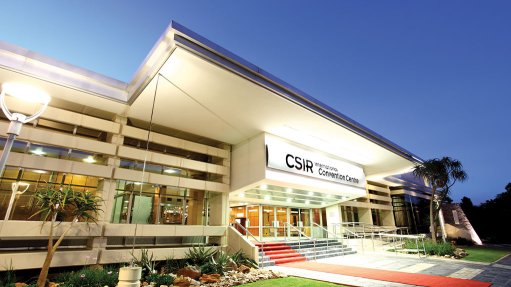
CSIR International Convention Centre (CSIR ICC) - the leading conference and events venue in Pretoria/Tshwane.
VISIT SHOWROOM



Press Office
Announcements
What's On
Subscribe to improve your user experience...
Option 1 (equivalent of R125 a month):
Receive a weekly copy of Creamer Media's Engineering News & Mining Weekly magazine
(print copy for those in South Africa and e-magazine for those outside of South Africa)
Receive daily email newsletters
Access to full search results
Access archive of magazine back copies
Access to Projects in Progress
Access to ONE Research Report of your choice in PDF format
Option 2 (equivalent of R375 a month):
All benefits from Option 1
PLUS
Access to Creamer Media's Research Channel Africa for ALL Research Reports, in PDF format, on various industrial and mining sectors
including Electricity; Water; Energy Transition; Hydrogen; Roads, Rail and Ports; Coal; Gold; Platinum; Battery Metals; etc.
Already a subscriber?
Forgotten your password?
Receive weekly copy of Creamer Media's Engineering News & Mining Weekly magazine (print copy for those in South Africa and e-magazine for those outside of South Africa)
➕
Recieve daily email newsletters
➕
Access to full search results
➕
Access archive of magazine back copies
➕
Access to Projects in Progress
➕
Access to ONE Research Report of your choice in PDF format
RESEARCH CHANNEL AFRICA
R4500 (equivalent of R375 a month)
SUBSCRIBEAll benefits from Option 1
➕
Access to Creamer Media's Research Channel Africa for ALL Research Reports on various industrial and mining sectors, in PDF format, including on:
Electricity
➕
Water
➕
Energy Transition
➕
Hydrogen
➕
Roads, Rail and Ports
➕
Coal
➕
Gold
➕
Platinum
➕
Battery Metals
➕
etc.
Receive all benefits from Option 1 or Option 2 delivered to numerous people at your company
➕
Multiple User names and Passwords for simultaneous log-ins
➕
Intranet integration access to all in your organisation
