



On site in the 1980s


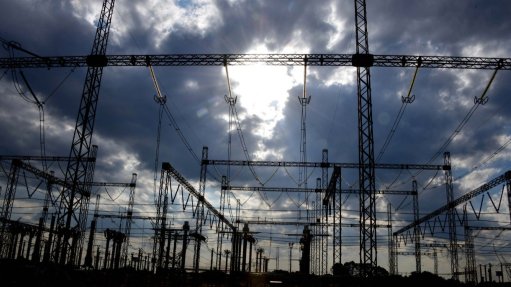
South Africa of the 1980s had many important construction projects on the go: Sasol III, the Matimba power station, Highveld Steel, Southern Cross Steel, Middelburg Iron & Steel, a number of coal mines . . . a long list.
Since the then government did not (unlike the present government) interfere in the workings of Eskom, electricity was cheap and any investment in industry was bound to do well.
All large projects required construction and commissioning crews, and these formed a vast travelling circus that went from one site to the next, like soldier ants. Every site had a nearby town and every construction crew had to eat, sleep and drink somewhere. Accommodation costs were high, food was pricey and liquor expensive.
For my sins, I was part of the crew and thus travelled all over Gauteng, the North West, Mpumulanga and KwaZulu-Natal, working as a commissioning engineer. I learned a lot. Testing all the big electrical stuff terrified me (still does).
Owing to the isolation of South Africa (economic embargoes were in place), local engineers and contractors had no choice but to do it themselves. Owing to a lack of international experience, contractors and engineers assumed that standards in the rest of the world were higher than what they actually were. As a result, South African projects were brilliantly done – to this day, you can visit the Matimba power station and admire the engineering.
The most interesting thing was the people. There was a foreman of Vecor who did skydiving as a hobby. He wore skydiving overalls on site, all light and flappy, in exciting colours. We called him The Fairy Queen and you could get a pretty good fight going if you referred to this to a Vecor fitter. The Germans (from Siemens) and the French (from Alstom) provided their own entertainment. The Germans kept a locked fridge in their site hut and drank beer at lunchtime. The French drank wine. When the project manager found out, he forbade drinking on site. The Germans then changed to drinking coffee at lunchtime, as did the French. The coffee was laced with spirits – schnapps for the Germans and cognac for the French. The German site hut was accurately built and could withstand a Force 10 gale. The French had a sort of tent with a garden.
I worked for GEC. One of the big problems on site was communication with head office. Very often, there were only one or two phones on site and you could not have one in the site office. I told the GEC guys working with me that we were all called Bruce (as in Money Python). So, if the site phone rang, all the head office person had to do was to ask for Bruce. Sooner or later, one of the GEC guys would get to the phone. Project after project, skills improved until the travelling circus could more or less build anything.
The odd thing was that the situation in the country at the time was a political disaster. A state of emergency was declared, effectively muzzling the press and allowing the detention of thousands. An Australian newspaper headline read: ‘The lid is about to blow off’. But it did not. The projects went on and were finished, and well finished. The investments did not stop.
By contrast, the situation regarding the more recent South African projects is not very good. It seems every project is behind and way over budget. Many projects have overt and covert involvement of the ruling party and politicians. In every single project I become involved with, I meet some new contractor called something like Tula Baba Contracting, only to find that it is a politician-owned contractor through whose hands the money must filter on its way to the people who do the work. Then the workers themselves seem to strike all the time, seemingly in the belief that they will not be replaced by machines in the next contract.
With little budget control, the chances of ‘Phase 2’ of the project are small. What has happened? I would want to return to the previous government but the engineering was better then. So why?
Article Enquiry
Email Article
Save Article
Feedback
To advertise email advertising@creamermedia.co.za or click here
Research Reports

Projects
Latest Multimedia
Showroom
Rio Carb is an OEM (Original Equipment Manufacturer) of R-C700 Chromium Carbide (CrC) alloy clad wear plates and pipes used for heavy materials...
VISIT SHOWROOM
Industrial Nozzles & Systems (Pty) Ltd (Est. 2000) exclusive representative in Southern Africa for LECHLER GmbH (Est. 1879) - Europe's leading...
VISIT SHOWROOM

Press Office
Announcements
What's On
Subscribe to improve your user experience...
Option 1 (equivalent of R125 a month):
Receive a weekly copy of Creamer Media's Engineering News & Mining Weekly magazine
(print copy for those in South Africa and e-magazine for those outside of South Africa)
Receive daily email newsletters
Access to full search results
Access archive of magazine back copies
Access to Projects in Progress
Access to ONE Research Report of your choice in PDF format
Option 2 (equivalent of R375 a month):
All benefits from Option 1
PLUS
Access to Creamer Media's Research Channel Africa for ALL Research Reports, in PDF format, on various industrial and mining sectors
including Electricity; Water; Energy Transition; Hydrogen; Roads, Rail and Ports; Coal; Gold; Platinum; Battery Metals; etc.
Already a subscriber?
Forgotten your password?
Receive weekly copy of Creamer Media's Engineering News & Mining Weekly magazine (print copy for those in South Africa and e-magazine for those outside of South Africa)
➕
Recieve daily email newsletters
➕
Access to full search results
➕
Access archive of magazine back copies
➕
Access to Projects in Progress
➕
Access to ONE Research Report of your choice in PDF format
RESEARCH CHANNEL AFRICA
R4500 (equivalent of R375 a month)
SUBSCRIBEAll benefits from Option 1
➕
Access to Creamer Media's Research Channel Africa for ALL Research Reports on various industrial and mining sectors, in PDF format, including on:
Electricity
➕
Water
➕
Energy Transition
➕
Hydrogen
➕
Roads, Rail and Ports
➕
Coal
➕
Gold
➕
Platinum
➕
Battery Metals
➕
etc.
Receive all benefits from Option 1 or Option 2 delivered to numerous people at your company
➕
Multiple User names and Passwords for simultaneous log-ins
➕
Intranet integration access to all in your organisation
