



NPA creates state capture 'task force' after Zondo finds it failed to prosecute corruption

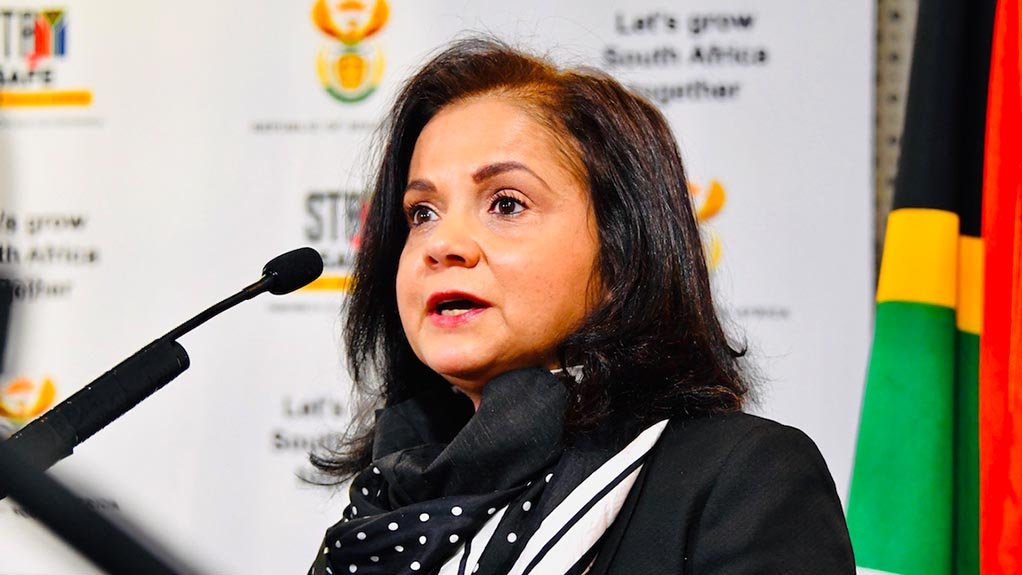


More than a week after the Zondo Commission slammed the National Prosecuting Authority (NPA) for its failure to take on state capture, the state has finally responded: with the announcement that a new "task force" would focus on these cases.
In a joint statement released on Wednesday, the NPA and the Hawks promised that they would "systematically [be] reviewing the commission's findings and recommendations, with a view to investigating and building cases for criminal prosecution against those who broke the law, be they from the public or private sectors".
This, they said, "will include, where appropriate, the freezing and forfeiture of the proceeds of crimes".
While cautious about promising that there would be successful prosecutions of alleged state capture corruption, the NPA said it was "exploring options to boost its capacities, capabilities and resources" - with the help of "National Treasury, DPSA and the Solicitor General's Office, and with the support of the Minister and the DG of Justice".
The prosecuting authority welcomed offers made by a number of business and civil society organisations to assist it in the investigation and prosecution of complex corruption matters, but stressed that it would insulate itself "from any perceptions of external influence".
"In response to the commission's first report, the NPA has created a dedicated task force, coordinated at the highest levels within the NPA."
"An urgent review of all cases covered in the report, including those already proclaimed by the NPA's Investigating Directorate (ID) will be conducted. The task force's main focus is on progress and impact. It builds on the work already done within the NPA over the past few years, in collaboration with the Zondo Commission and other law enforcement partners."
The prosecuting authority also said it "noted" the commission's finding that its failure to respond "adequately, or at all" to the challenges of state capture corruption "points to a fundamental failure of a sovereign state function" and that its institutional weaknesses must be addressed.
The NPA further stated that National Director of Public Prosecutions Shamila Batohi had "publicly acknowledged the challenges facing the NPA, including in its efforts to prosecute high-level corruption matters" and had "highlighted the associated challenges facing the NPA's law enforcement counterparts, and the impact this has on the NPA's ability to prosecute complex crimes".
"Rebuilding the NPA after years of being undermined by state capture actors was never going to be quick or easy. Yet, significant progress has been made, and the NPA is slowly but surely being rebuilt to enable it to deliver on its vital mandate. The NPA will also continue prioritising internal processes to ensure that any prosecutors engaged in acts of criminality or improper conduct, including in the context of state capture, are dealt with effectively and fairly.
"Furthermore, given the importance of avoiding the future capture of the NPA, or any other state institution, which brought South Africa close to financial collapse, it is crucial that the NPA's de jure and de facto independence be assured, including in terms of its relationship with the Executive and in the manner in which the NPA's senior leadership is appointed.
"As the NPA ramps up the prosecution of those implicated in state capture, it is crucial that its actions are, and are seen to be, independent of any undue influence. Anything short of this, will undermine South Africans' trust and confidence in the rule of law and due process, which is, for various reasons, already at concerningly low levels."
In other words, the NPA's response to criticism that it failed to prosecute state capture corruption had seemingly been to stress the importance of its independence. But, while the independence of the NPA was imperative to its successful functioning, it certainly cannot be a mechanism that protects it from justified criticism about its failure to do its job.
The State Capture Inquiry did not hold back when it addressed the state's failure to do anything about the mountains of procurement corruption and violations of the Public Finance Management Act that it had been presented with.
The Zondo Commission's first report stated, "It is of course well known that for many years the NPA has failed to prosecute cases of corruption, and specifically cases of corruption in the procurement process. The extent of that failure can be measured by reference to the almost complete absence of cases brought under the legislation applicable to crimes of this sort."
The commission had recommended that a new independent anti-procurement corruption agency be established to monitor and police government tender processes, which had been profoundly compromised by corruption and irregularity.
Acting Chief Justice Raymond Zondo contended that the Public Procurement Anti-Corruption Agency (PPACA) should have almost all the same powers as the NPA, barring the ability to try cases in court.
Those powers would include being able to conduct search and seizure operations, negotiate "deferred prosecution agreements" with corporates who come clean about their role in procurement corruption, litigate to recover money looted through tender corruption and block non-compliant companies from being able to tender.
While neither the NPA or the Hawks have commented specifically on Zondo's recommendation for the creation of such an agency, they had stated that the "commission's recommendations will allow for the strengthening of the rule of law in South Africa, ensuring that no one irrespective of their position or wealth is above the law".
The statement, however, promised that the Investigating Directorate (ID), which was set up specifically to deal with high-level corruption matters, had begun a "process to proactively prepare to respond appropriately to the recommendations which fall within its mandate" and was currently taking over the commission's crucial investigative resources.
It also stated that the ID's clear capacity constraints were being addressed.
"The commission's reports highlight the extent of suspected criminality flowing from state capture, and the scale and nature of the task at hand to hold those responsible to account.
"South Africans deserve to see justice being done for heinous crimes that have undermined our country's development prospects, that have disproportionately affected the poor and the vulnerable, and ruined the lives and dreams of many people.
"We are under no illusions about the enormity of the task at hand, and the challenges that we face; but we give you, the people of South Africa, our commitment, that, guided by the evidence and the values enshrined in our Constitution, we will not rest until the rule of law once again lights our way in South Africa."
"The NPA and DPCI are committed to ending impunity for high-level corruption and other crimes in South Africa," the statement concluded.
Article Enquiry
Email Article
Save Article
Feedback
To advertise email advertising@creamermedia.co.za or click here
Research Reports

Projects


Latest Multimedia


Latest News
Showroom
SafeQuip is a leading distributor and manufacturer of fire safety solutions, offering a comprehensive range of products designed to meet all...
VISIT SHOWROOM
The Beneficiation Academy is a certified training institution that follows all compliance legislation and is accredited with various Sector...
VISIT SHOWROOM



Press Office
Announcements
What's On
Subscribe to improve your user experience...
Option 1 (equivalent of R125 a month):
Receive a weekly copy of Creamer Media's Engineering News & Mining Weekly magazine
(print copy for those in South Africa and e-magazine for those outside of South Africa)
Receive daily email newsletters
Access to full search results
Access archive of magazine back copies
Access to Projects in Progress
Access to ONE Research Report of your choice in PDF format
Option 2 (equivalent of R375 a month):
All benefits from Option 1
PLUS
Access to Creamer Media's Research Channel Africa for ALL Research Reports, in PDF format, on various industrial and mining sectors
including Electricity; Water; Energy Transition; Hydrogen; Roads, Rail and Ports; Coal; Gold; Platinum; Battery Metals; etc.
Already a subscriber?
Forgotten your password?
Receive weekly copy of Creamer Media's Engineering News & Mining Weekly magazine (print copy for those in South Africa and e-magazine for those outside of South Africa)
➕
Recieve daily email newsletters
➕
Access to full search results
➕
Access archive of magazine back copies
➕
Access to Projects in Progress
➕
Access to ONE Research Report of your choice in PDF format
RESEARCH CHANNEL AFRICA
R4500 (equivalent of R375 a month)
SUBSCRIBEAll benefits from Option 1
➕
Access to Creamer Media's Research Channel Africa for ALL Research Reports on various industrial and mining sectors, in PDF format, including on:
Electricity
➕
Water
➕
Energy Transition
➕
Hydrogen
➕
Roads, Rail and Ports
➕
Coal
➕
Gold
➕
Platinum
➕
Battery Metals
➕
etc.
Receive all benefits from Option 1 or Option 2 delivered to numerous people at your company
➕
Multiple User names and Passwords for simultaneous log-ins
➕
Intranet integration access to all in your organisation
