



Maths, science upgrade key to SA’s long-term competitiveness – Motlanthe

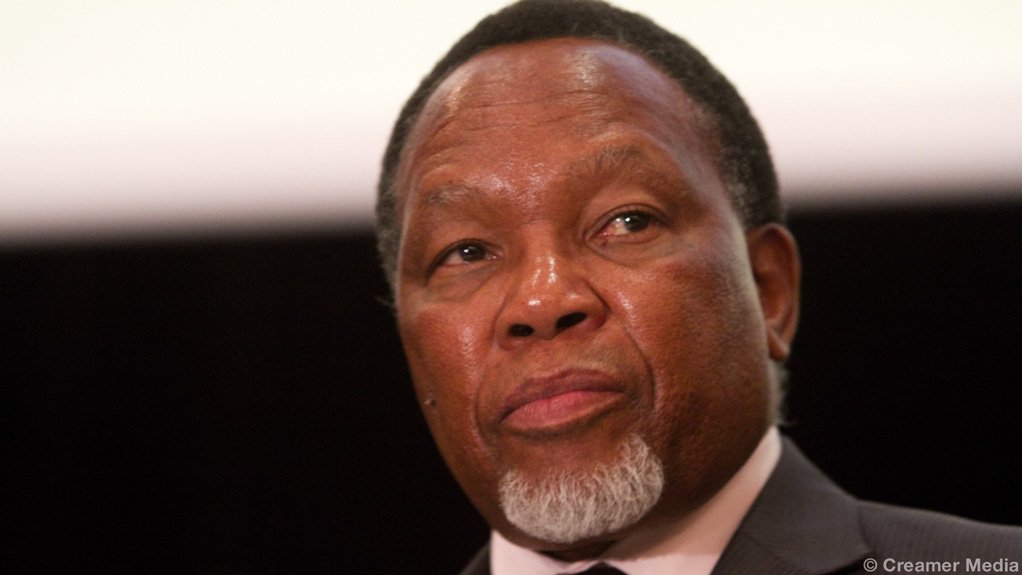


Deputy President Kgalema Motlanthe has acknowledged that achieving sustainable competitiveness has never been a more pressing challenge for South Africa, while stressing the disproportionate importance of mathematics and science education in attaining that goal.
Speaking at the inaugural Competitiveness Forum, organised by Brand South Africa, Motlanthe said “harnessing the force of science and technology to meet our developmental needs is among the empirically proven ways for societies to move forward”.
The pace and scale of national development corresponded, he added, with the number of graduates in science, mathematics and technology.
“We must pay more attention to producing a capable generation of young people, armed with the requisite skills geared to the needs of the economy,” he added.
Speaking from the same podium, Goldman Sachs MD Colin Coleman, who earlier released a 20-year review of South Africa’s performance since its attainment of democracy, said that school access had improve markedly, but quality remained a problem.
In aggregate, 77% of South Africa’s 11.4-million learners were receiving a poor to medium quality of education, potentially reproducing another generation of poorly educated children.
Coleman noted that of the $21-billion being spent yearly on basic education, 71% of that budget was spent on salaries for teachers, administrators, principals and inspectors. Therefore, government had a right to insist upon greater accountability and should consider ways of incentivising good performers and “weeding out” those individuals who were not delivering.
A direct correlation was also drawn between improved educational outcomes and South Africa’s overall competitiveness and investment attractiveness.
The Deputy President argued that a solid education system was a prerequisite for higher levels of research and development (R&D), itself a necessary condition for greater innovation.
“Only a sound and quality education system with strong emphasis on mathematics and science can serve as a reliable feeder for tertiary institutions, which will, in turn, be able to produce top-notch graduates geared to the needs of the country.”
The Goldman Sachs study found that South Africa’s R&D spending, which did not exceed 1% of gross domestic product (GDP), lagged the rest of the world, with South Korea investing 3.6%, Japan 3.4%, China 1.7% and the US 2.9%.
Good strides had been made in positioning South Africa as a stable, investor-friendly democracy, but Motlanthe acknowledged that the country’s development trajectory had fallen short when compared with many of its competitors.
South Africa’s competitiveness as ranked by the World Economic Forum declined to position 53 in 2013 from 36 in 2006.
“These glaring challenges show themselves through high rates of inequality, poverty and unemployment, especially amongst young people who constitute the majority of our population,” Motlanthe said.
Coleman argued that South Africa needed to take action that increased its growth rate from the 3.3% level achieved over the past 20 years to at least 5%, which would enable it to grow from a $400-billion economy currently to a $1-trillion economy over the coming 20 years.
HIGHER LEVELS OF FDI NEEDED
Such growth, which would help ease a number of socioeconomic burdens, would require higher levels of foreign direct investment (FDI) and exports.
In fact, the study suggests that South Africa required net yearly FDI of $7.5-billion, which would be a material improvement on the average yearly level of $1.9-billion achieved since 1994.
Coleman did not comment directly on the decision of the South Africa government to terminate its bilateral investment treaties with a range of European countries in favour of a comprehensive investment protection law.
But he stressed that it was important not to send mixed messages particularly if it hoped to alter the current investment balance in favour of FDI as opposed to portfolio investment.
South Africa, which was running a large current account deficit of around 6.5% of GDP, was particularly in need of FDI into the exporting sectors of manufacturing and mining.
“South Africa needs to work hard on improving the framework and picture for FDI by welcoming investors, improving the labour environment and by decreasing the overall costs and complexity of doing business,” Coleman concluded.
Article Enquiry
Email Article
Save Article
Feedback
To advertise email advertising@creamermedia.co.za or click here
Research Reports

Projects


Latest Multimedia


Latest News
Showroom

Complete range of security sealing solutions including security seals bags and labels.
VISIT SHOWROOM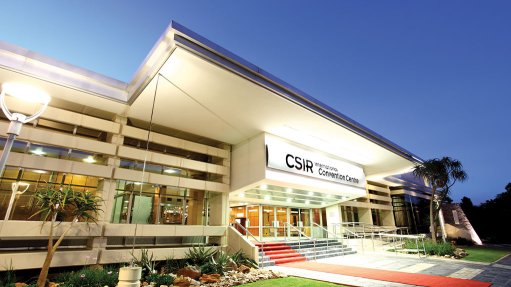
CSIR International Convention Centre (CSIR ICC) - the leading conference and events venue in Pretoria/Tshwane.
VISIT SHOWROOM



Press Office
Announcements
What's On
Subscribe to improve your user experience...
Option 1 (equivalent of R125 a month):
Receive a weekly copy of Creamer Media's Engineering News & Mining Weekly magazine
(print copy for those in South Africa and e-magazine for those outside of South Africa)
Receive daily email newsletters
Access to full search results
Access archive of magazine back copies
Access to Projects in Progress
Access to ONE Research Report of your choice in PDF format
Option 2 (equivalent of R375 a month):
All benefits from Option 1
PLUS
Access to Creamer Media's Research Channel Africa for ALL Research Reports, in PDF format, on various industrial and mining sectors
including Electricity; Water; Energy Transition; Hydrogen; Roads, Rail and Ports; Coal; Gold; Platinum; Battery Metals; etc.
Already a subscriber?
Forgotten your password?
Receive weekly copy of Creamer Media's Engineering News & Mining Weekly magazine (print copy for those in South Africa and e-magazine for those outside of South Africa)
➕
Recieve daily email newsletters
➕
Access to full search results
➕
Access archive of magazine back copies
➕
Access to Projects in Progress
➕
Access to ONE Research Report of your choice in PDF format
RESEARCH CHANNEL AFRICA
R4500 (equivalent of R375 a month)
SUBSCRIBEAll benefits from Option 1
➕
Access to Creamer Media's Research Channel Africa for ALL Research Reports on various industrial and mining sectors, in PDF format, including on:
Electricity
➕
Water
➕
Energy Transition
➕
Hydrogen
➕
Roads, Rail and Ports
➕
Coal
➕
Gold
➕
Platinum
➕
Battery Metals
➕
etc.
Receive all benefits from Option 1 or Option 2 delivered to numerous people at your company
➕
Multiple User names and Passwords for simultaneous log-ins
➕
Intranet integration access to all in your organisation
