



Mathematics and science education conundrum in South Africa - Physicists call for better teacher training


This article has been supplied.
So the Executive Opinion Survey of the World Economic Forum ranked South Africa’s science and mathematics education last out of the 148 economies surveyed and the SA Department of Basic Education is ambivalent about the ranking. “Are we going to spend our energy on fighting each other on this or agreeing on workable interventions?” said Dr Igle Gledhill, President of the South African Institute of Physics. “Let’s get on with coordinatingeffective actions and solving the problems.”In a review of undergraduate physics teaching and learning, SAIP found that university departments agree unanimously on the poor level of preparedness of students entering first-year physics. This is disastrous for a country where so much depends on geology, mineralogy, chemistry, and technology. Health professionals,engineers and technologists require training in physics by virtue of its nature as a fundamental discipline.
SAIP has advocated for a well-structured long-term teacher professional development programme ideally suited to adequately cater for the critical professional development needs of teachers. Even experienced teachers can gain from constructive peer coaching and innovative mentorship programmes. It has become evident that university physics departments should play a pivotal role in teacher trainingin order to turn the tide against inadequate physics mastery and collaborations between education and science faculties are already starting to crystallize. SA’s science and mathematics education system can immensely benefit from a vast array of possible innovative interventions. There are individual initiatives in tutoring and usage of science kits up to the level of engagement in writing textbooks which ought to be sustained to a significant extent. There’s significant investment in TV shows, films and social media advice aimed at learners. Many teachers make significant personal investment in science clubs, good teaching practice and innovative teaching, and their commitment to education should be afforded the recognition it deserves. Companies add laboratory endowments, expos, Science Centres, Exploratoria, and indeed open daysthrough their social responsibility initiatives.
Government is active in policy, governance and in major school projects. The University of Johannesburg Soweto Science Centre coordinates a learner enrichment programme as well as the Teacher Development Project in partnership with SAIP and the Institute of Physics (UK).Commensurate with the need to consolidate teacher professional development within a broader South African context, 600 teachers from Gauteng are set to be trained at the Soweto Campus of the University of Johannesburg during July 2014. Textbook provision, curriculum development, and teacher training are acknowledged as key areas of concern where profound, evidence-based development is needed on an unprecedented scale. SAIP is calling for support from government departments for teachers to be trained at universities, in-service or relevant Further Education and Training institutions in order to ensure appropriate physics mastery.
South Africa’s second Nobel Prize in medicine was for the maths behind the Computed Tomography X-ray scan so widely used in hospitals to diagnose tumours, trauma and diseases. South Africa’s next Nobel Prize winner in physics may well be in school as we speak. It’s time for authentic engagement, get some facts straight, fight ignorance, and fix the problems at hand.
Article Enquiry
Email Article
Save Article
Feedback
To advertise email advertising@creamermedia.co.za or click here
Research Reports

Projects


Latest Multimedia


Latest News
Showroom

Stewarts & Lloyds is a leading steel, tube, and engineering product supplier in South Africa.
VISIT SHOWROOM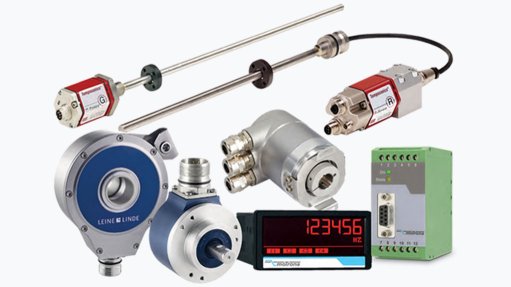
ATI systems comprises five divisions: electrical assemblies, drives and controls, feedback sensors, enclosures, and strip guiding.
VISIT SHOWROOM



Press Office
Announcements
What's On
Subscribe to improve your user experience...
Option 1 (equivalent of R125 a month):
Receive a weekly copy of Creamer Media's Engineering News & Mining Weekly magazine
(print copy for those in South Africa and e-magazine for those outside of South Africa)
Receive daily email newsletters
Access to full search results
Access archive of magazine back copies
Access to Projects in Progress
Access to ONE Research Report of your choice in PDF format
Option 2 (equivalent of R375 a month):
All benefits from Option 1
PLUS
Access to Creamer Media's Research Channel Africa for ALL Research Reports, in PDF format, on various industrial and mining sectors
including Electricity; Water; Energy Transition; Hydrogen; Roads, Rail and Ports; Coal; Gold; Platinum; Battery Metals; etc.
Already a subscriber?
Forgotten your password?
Receive weekly copy of Creamer Media's Engineering News & Mining Weekly magazine (print copy for those in South Africa and e-magazine for those outside of South Africa)
➕
Recieve daily email newsletters
➕
Access to full search results
➕
Access archive of magazine back copies
➕
Access to Projects in Progress
➕
Access to ONE Research Report of your choice in PDF format
RESEARCH CHANNEL AFRICA
R4500 (equivalent of R375 a month)
SUBSCRIBEAll benefits from Option 1
➕
Access to Creamer Media's Research Channel Africa for ALL Research Reports on various industrial and mining sectors, in PDF format, including on:
Electricity
➕
Water
➕
Energy Transition
➕
Hydrogen
➕
Roads, Rail and Ports
➕
Coal
➕
Gold
➕
Platinum
➕
Battery Metals
➕
etc.
Receive all benefits from Option 1 or Option 2 delivered to numerous people at your company
➕
Multiple User names and Passwords for simultaneous log-ins
➕
Intranet integration access to all in your organisation
