



Makhura reiterates plans to develop Gauteng into an inclusive province

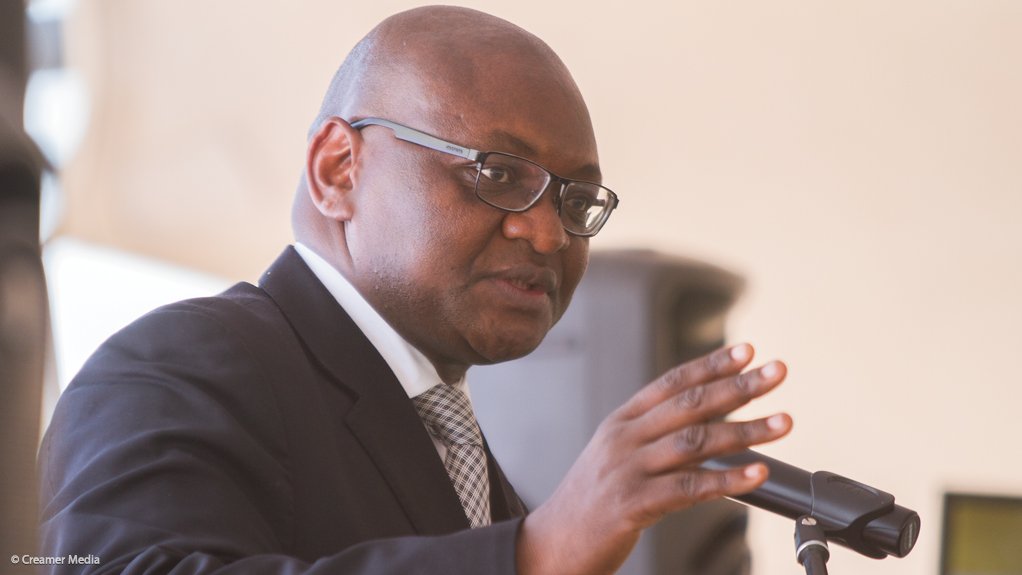


Government is aiming for Gauteng to become a seamlessly integrated, economically inclusive, socially cohesive and locally competitive province, Premier David Makhura said at the Gauteng City Region Spatial Planning Summit, in Johannesburg, on Tuesday.
The summit was a follow-up event to the Gauteng Infrastructure Investment Conference held in July, during which the provincial government discussed the cost of undertaking a 15-year province-wide infrastructure upgrade.
Discussions at the summit centred around the key elements of the Gauteng Spatial Development Framework 2030, which focused on how the province should be developed.
“Spatial transformation is one of the pillars of the Gauteng City Region’s ten-pillar programme of transformation, modernisation and reindustrialisation,” stated Makhura.
He noted that the summit formed part of Gauteng’s efforts to address the spatial legacy of apartheid – where oppressed people were settled far from their workplaces and economic opportunities.
This included structured planning between municipalities and the provincial government in building human settlements, public transport systems, economic hubs, social amenities and environmental systems, the Premier pointed out.
“We want Gauteng to be a smart, knowledge-based innovative economy. Gauteng is a highly urbanised and densely populated province, with an increasingly integrated cluster of cities and towns and a constellation of industries that constitute a single economy,” he noted.
He said the best way to govern the province was to do so as a single entity, noting that the Gauteng provincial government had a single plan for the entire province and had to work together as a single government.
“This is the best way to enhance our global competitiveness, spatial efficiency and to build a more responsive government. In the past year, we have placed emphasis on the need for Gauteng to be more inclusive, equitable and sustainable,” he said, noting that many city regions in the province were highly unequal and spatially inefficient, as well as being ecologically unsustainable geographic and economic entities.
“This is not where we want to be. Spatial justice, economic equity and environmental sustainability are key principles that must be included in our spatial vision and plan,” he asserted.
Cooperative Governance and Traditional Affairs Minister Pravin Gordhan added that the initiative of a new development framework to achieve spatial transformation was welcome and timeous.
He noted that one of the key objectives of the summit was to open new avenues of thinking, which should be done within the context and guidelines of the National Development Plan (NDP).
“South Africa needs to rethink its urban [landscape]. We must grapple with this task and deal intelligently with social exclusion, economic inefficiencies, logistical bottlenecks, urban insecurity, decaying infrastructure and the impacts of new technology.”
He added that the NDP outlined that government should contain and possibly reverse urban sprawl, while focussing on new urban developments and economic nodes.
“We need to create economic hubs within historically disadvantaged townships and integrate these townships into the wider economic function of the province, as well as upgrade informal settlements.”
He stressed that is was time to progress in terms of spatial planning in the province and deal with the spatial patterns that were a legacy of apartheid.
“We should also be honest about our shortcomings and realise what we have not been able to focus on the obstacles we face. This includes understanding the short-term imperatives and the long-term challenges of planning.
“I think the world is moving towards a ‘short-termist’ approach to the decision-making process and we need to realise that planning has positive effects in the long term,” he said.
He stated that government needed to shift from reactive planning to proactive planning.
“South Africa is becoming famous for developing plans and policies that have very little impact on ground level. Our Achilles heel is implementation and we need to become more agile in our approaches.”
He added that spatial change was a long-term process that required focus and discipline.
Gordhan noted that the community should support activity that provided them with opportunities and added that retail and service industries relied on the buying power of communities.
“During apartheid, people were locked into spatial ghettos and there were few businesses in townships providing valid goods and services. There were few options for people to start businesses and get jobs,” he said, stating that the legacy that apartheid left was a stubborn one.
He further suggested that urban densities should to be increased and that mixed-use land development should be pursued to reduce urban sprawl. He added that access to public transport and other social and economic opportunities needed to be realised.
“Over ten years, a sprawling city will cost R57-billion more [to run and develop] than a compact city. This is equal to 1.4% of projected gross domestic product. This essentially means that sprawling cities are bad for economic efficiency and growth,” he concluded.
Article Enquiry
Email Article
Save Article
Feedback
To advertise email advertising@creamermedia.co.za or click here
Research Reports

Projects
Latest Multimedia

Showroom

Complete range of security sealing solutions including security seals bags and labels.
VISIT SHOWROOM
CSIR International Convention Centre (CSIR ICC) - the leading conference and events venue in Pretoria/Tshwane.
VISIT SHOWROOM

Press Office
Announcements
What's On
Subscribe to improve your user experience...
Option 1 (equivalent of R125 a month):
Receive a weekly copy of Creamer Media's Engineering News & Mining Weekly magazine
(print copy for those in South Africa and e-magazine for those outside of South Africa)
Receive daily email newsletters
Access to full search results
Access archive of magazine back copies
Access to Projects in Progress
Access to ONE Research Report of your choice in PDF format
Option 2 (equivalent of R375 a month):
All benefits from Option 1
PLUS
Access to Creamer Media's Research Channel Africa for ALL Research Reports, in PDF format, on various industrial and mining sectors
including Electricity; Water; Energy Transition; Hydrogen; Roads, Rail and Ports; Coal; Gold; Platinum; Battery Metals; etc.
Already a subscriber?
Forgotten your password?
Receive weekly copy of Creamer Media's Engineering News & Mining Weekly magazine (print copy for those in South Africa and e-magazine for those outside of South Africa)
➕
Recieve daily email newsletters
➕
Access to full search results
➕
Access archive of magazine back copies
➕
Access to Projects in Progress
➕
Access to ONE Research Report of your choice in PDF format
RESEARCH CHANNEL AFRICA
R4500 (equivalent of R375 a month)
SUBSCRIBEAll benefits from Option 1
➕
Access to Creamer Media's Research Channel Africa for ALL Research Reports on various industrial and mining sectors, in PDF format, including on:
Electricity
➕
Water
➕
Energy Transition
➕
Hydrogen
➕
Roads, Rail and Ports
➕
Coal
➕
Gold
➕
Platinum
➕
Battery Metals
➕
etc.
Receive all benefits from Option 1 or Option 2 delivered to numerous people at your company
➕
Multiple User names and Passwords for simultaneous log-ins
➕
Intranet integration access to all in your organisation
