


Lack of competition stifles fixed-line broadband

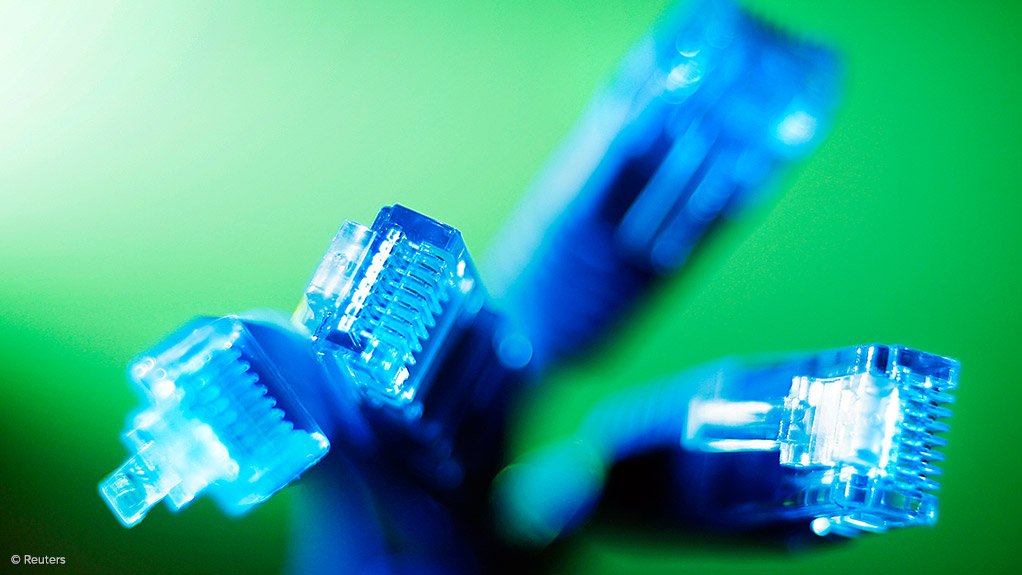



The lack of competition in the fixed-line broadband market was leading to the demise of consumer use of fixed-line technologies such as asymmetric digital subscriber line (ADSL), World Wide Worx MD Arthur Goldstuck said on Monday.
"The foundation of broadband is a computer and a fixed line," he stated at the IWeek conference, in Johannesburg.
However, despite a dramatic rise in fixed-line broadband users in South Africa, from 15 700 in 2003, to 875 000 in 2012, the number of fixed-line broadband users would start declining – without ever having breached the one-million mark.
"This is down to the fact that there is only one ADSL provider," he mused.
He pointed to the number of mobile broadband subscriptions, which had grown from 3.5-million in 2004, to over 6.4-million by 2012, on the back of several providers.
The proportion of ADSL subscriptions compared with wireless broadband subscriptions was 6:1, he noted, adding that, similarly, there was an almost 6:1 proportion of wireless broadband and fixed-line broadband providers.
"There has to be greater [and more] effective competition [in the fixed-line broadband market to grow demand]," he said.
Further, fixed-line broadband in Africa had "not taken off" with a subscription penetration of less than 0.3% on the back of 1.4-million fixed-line connections in 2012, which was down from the 1.5-million recorded in 2005. Europe had a 40% fixed-line penetration, with a fixed-line broadband penetration of 27% by 2012.
However, Goldstuck noted that the continent was catching up in terms of mobile penetration, which had reached 63% by 2013, compared with 12.4% in 2005. This number was, more realistically, closer to 50%, as the research undertaken did not take into account multiple subscriptions, he added.
Most other regions, including Europe, had mobile penetration in excess of 100%.
However, the cost of mobile broadband was expected to stifle South Africa's 10% mobile broadband subscription penetration and was accessible to the affluent.
While the volume of mobile data demand had doubled during the period from the first quarter of 2012 to the first quarter of 2013, and while the number of smartphones sold in South Africa would account for more than half – for the first time – of the expected ten-million cellphones reaching the market this year, there remained a "massive digital divide" with the Internet still being "out of reach" for the average South African.
He pointed out that the contract packages on offer allowed the "haves" to buy large data bundles that worked out to about 2c/MB. Out-of-contract, smaller data bundles, particularly for the basic-feature phones owned by the "have nots", often cost between R1/MB and R2/MB.
Goldstuck also pointed out that 13.2-million people were expected to be able to access the Internet in 2013; however, only 4.6-million would have been "online" for more than five years – the number of years the average user took to get comfortable browsing the Web.
Of these, only an estimated 1.5-million dabbled in e-commerce, limiting the potential of online shopping.
By 2018, it was expected that about 18.4-million people would have some form of access to the Internet, and about 13.2-million would have had access for more than five years.
However, he averred that, if the high cost of broadband was not resolved, the number of those using the Internet would flatten and South Africa would further lag other countries in terms of Internet penetration.
Meanwhile, Goldstuck said that, while top speeds were not the "be all and end all" of Internet access – basic, affordable access was – he pointed out that only 1.5% of South Africa's population had access to speeds of more than 10 Mb/s and 8% connecting at more than 4 Mb/s.
The nation had an average speed of 2.1 Mb/s, compared with countries such as South Korea and Japan, which had average speeds of 14.2 Mb/s and 11.7 Mb/s respectively.
Article Enquiry
Email Article
Save Article
Feedback
To advertise email advertising@creamermedia.co.za or click here
Research Reports

Projects


Latest Multimedia


Latest News


Showroom

As a reticulator, Egoli Gas provides natural gas to homes and businesses via underground pipes.
VISIT SHOWROOM
ATI systems comprises five divisions: electrical assemblies, drives and controls, feedback sensors, enclosures, and strip guiding.
VISIT SHOWROOM



Press Office
Announcements
What's On
Subscribe to improve your user experience...
Option 1 (equivalent of R125 a month):
Receive a weekly copy of Creamer Media's Engineering News & Mining Weekly magazine
(print copy for those in South Africa and e-magazine for those outside of South Africa)
Receive daily email newsletters
Access to full search results
Access archive of magazine back copies
Access to Projects in Progress
Access to ONE Research Report of your choice in PDF format
Option 2 (equivalent of R375 a month):
All benefits from Option 1
PLUS
Access to Creamer Media's Research Channel Africa for ALL Research Reports, in PDF format, on various industrial and mining sectors
including Electricity; Water; Energy Transition; Hydrogen; Roads, Rail and Ports; Coal; Gold; Platinum; Battery Metals; etc.
Already a subscriber?
Forgotten your password?
Receive weekly copy of Creamer Media's Engineering News & Mining Weekly magazine (print copy for those in South Africa and e-magazine for those outside of South Africa)
➕
Recieve daily email newsletters
➕
Access to full search results
➕
Access archive of magazine back copies
➕
Access to Projects in Progress
➕
Access to ONE Research Report of your choice in PDF format
RESEARCH CHANNEL AFRICA
R4500 (equivalent of R375 a month)
SUBSCRIBEAll benefits from Option 1
➕
Access to Creamer Media's Research Channel Africa for ALL Research Reports on various industrial and mining sectors, in PDF format, including on:
Electricity
➕
Water
➕
Energy Transition
➕
Hydrogen
➕
Roads, Rail and Ports
➕
Coal
➕
Gold
➕
Platinum
➕
Battery Metals
➕
etc.
Receive all benefits from Option 1 or Option 2 delivered to numerous people at your company
➕
Multiple User names and Passwords for simultaneous log-ins
➕
Intranet integration access to all in your organisation
