


Geophysical techniques touted as ideal for alluvial diamond exploration

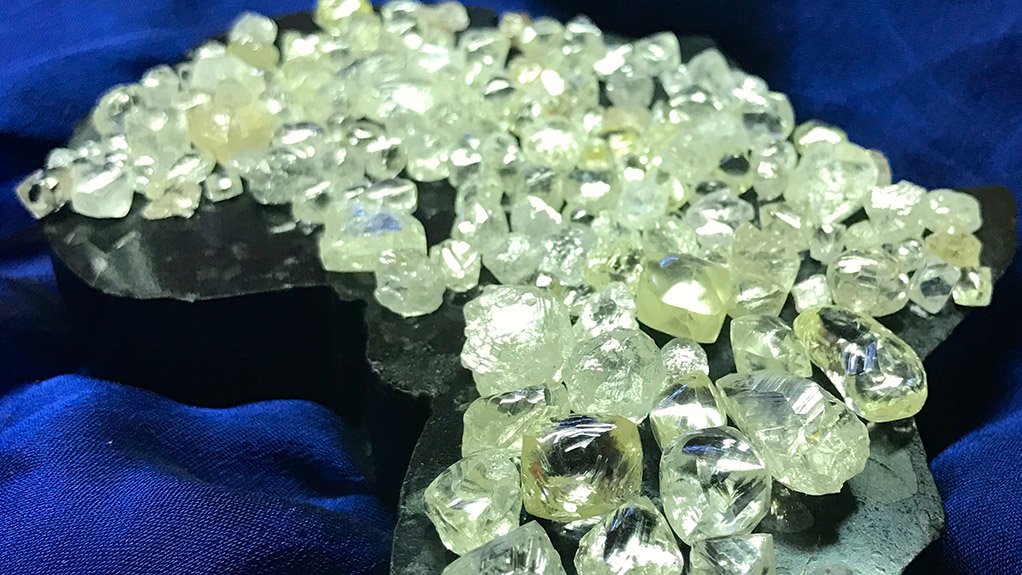
IN SEARCH OF ALLUVIALS The surveys was intended to assess the effectiveness of geophysical techniques for alluvial diamond exploration
Photo by Steyn Diamante


Ground geophysical surveys have been carried out by the Council for Geoscience (CGS) on a farm that hosts an alluvial diamond mining operation near Schweizer-Reneke, in the North West.
The North West is host to what were previously known as the Southwestern Transvaal diamond fields.
The surveys formed part of a CGS training programme and were also intended to assess the effectiveness of geophysical techniques for alluvial diamond exploration.
CGS geotechnologist Matome Sekiba elaborates that the geophysical techniques that were assessed included magnetics, radiometrics, gravity, electrical resistivity tomography (ERT), time domain electromagnetics (TDEM) and refraction seismics.
The alluvial diamonds occur in red gravels at depths varying between 1 m and 5 m, depending on the bedrock topography. These gravels overlie Swazian biotite gneiss, pegmatite and granites in the greater western portion of the farm, while, to the east, the gravels overlie Rietgat andesitic lavas, conglomerates and shales.
Sekiba says the magnetics results indicate subtle magnetic high anomalies that are likely attributable to the high concentration of iron oxides, such as magnetite and ilmenites, which are often associated with alluvial diamonds.
He comments that, based on this observation, magnetics therefore offers a quick and economic method of delineating areas that have the potential to host diamondiferous gravels.
“Gravity delineated a gravity low zone in the western portion of the study area but, considering the shallow depth of the gravels, this was not considered an economic method to apply.”
Sekiba notes that a TDEM profile carried out on fresh ground that has not yet been mined indicated a depression coinciding with the gravity low and subtle magnetic high anomalies. He says that this depression could be indicative of the old drainage system that facilitated the deposition of the alluvial gravels.
Sekiba highlights that the ERT and seismic refractions showed comparable results, but notes that the challenge with ERT is that it is not able to distinguish between the topsoil and the gravel.
Nonetheless, Sekiba states that the method is “very useful” for bedrock topography mapping, which assists in mine planning. He says that magnetics, gravity and TDEM detected near-north–south-orientated interpreted fault structures that are known to be suitable for high-yield water boreholes.
Sekiba says that these inferred structures could be a source of water for the alluvial mine. However, considering the shallow depth of the gravel occurrences, the use of ERT and seismics is not likely to be economic for exploration purposes.
“Radiometric results proved difficult to use because of the excavations that are scattered on the farms. It is recommended that magnetics be deployed as a cost-effective primary exploration tool in the area and its immediate surrounds,” he concludes.
Article Enquiry
Email Article
Save Article
Feedback
To advertise email advertising@creamermedia.co.za or click here
Research Reports

Projects


Latest Multimedia


Latest News

Showroom

We supply customers with practical affordable solutions for their testing needs. Our products include benchtop, portable, in-line process control...
VISIT SHOWROOM
CMTS is a leading, well-established EC&I contractor with 37+ years of mining and industrial experience. We execute full-scope EC&I projects with...
VISIT SHOWROOM



Announcements
What's On
Subscribe to improve your user experience...
Option 1 (equivalent of R125 a month):
Receive a weekly copy of Creamer Media's Engineering News & Mining Weekly magazine
(print copy for those in South Africa and e-magazine for those outside of South Africa)
Receive daily email newsletters
Access to full search results
Access archive of magazine back copies
Access to Projects in Progress
Access to ONE Research Report of your choice in PDF format
Option 2 (equivalent of R375 a month):
All benefits from Option 1
PLUS
Access to Creamer Media's Research Channel Africa for ALL Research Reports, in PDF format, on various industrial and mining sectors
including Electricity; Water; Energy Transition; Hydrogen; Roads, Rail and Ports; Coal; Gold; Platinum; Battery Metals; etc.
Already a subscriber?
Forgotten your password?
Receive weekly copy of Creamer Media's Engineering News & Mining Weekly magazine (print copy for those in South Africa and e-magazine for those outside of South Africa)
➕
Recieve daily email newsletters
➕
Access to full search results
➕
Access archive of magazine back copies
➕
Access to Projects in Progress
➕
Access to ONE Research Report of your choice in PDF format
RESEARCH CHANNEL AFRICA
R4500 (equivalent of R375 a month)
SUBSCRIBEAll benefits from Option 1
➕
Access to Creamer Media's Research Channel Africa for ALL Research Reports on various industrial and mining sectors, in PDF format, including on:
Electricity
➕
Water
➕
Energy Transition
➕
Hydrogen
➕
Roads, Rail and Ports
➕
Coal
➕
Gold
➕
Platinum
➕
Battery Metals
➕
etc.
Receive all benefits from Option 1 or Option 2 delivered to numerous people at your company
➕
Multiple User names and Passwords for simultaneous log-ins
➕
Intranet integration access to all in your organisation
