



Economist warns of future ‘currency wars’

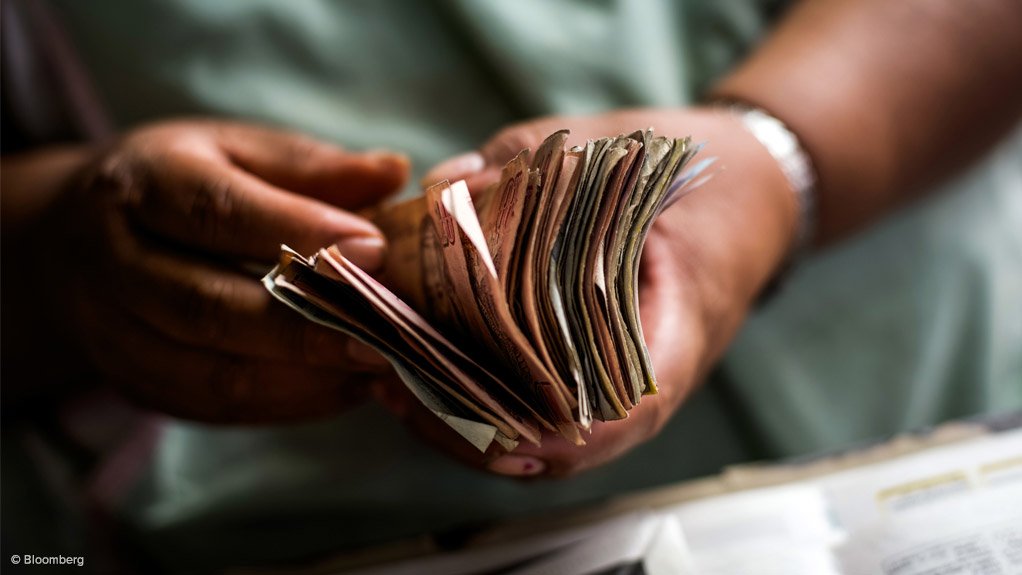



Former South African Reserve Bank economist Dawie Roodt expects a discernible feature of the impending global trading environment to be the emergence of an inter-State “currency war”, which will see each country erecting increasingly restrictive import barriers in a bid to protect its local economy against artificially weakened currencies.
In strident commentary, Roodt told the South African Association of Freight Forwarders’ yearly conference, in Johannesburg, on Tuesday, that countries would progressively work to devalue their currencies by formally setting a new fixed rate with respect to a foreign reference currency.
This would lower the price of their exports on the international market and improve their competitive advantage.
“If a currency falls in value, it makes it easier to export to the rest of the world, as the export product would be far cheaper than locally produced ones,” he asserted.
In response, importing States would elevate trade barriers and increase import levies in an effort to disable the price advantage of imported goods, while simultaneously protecting their local manufacturing sectors.
“Over the next few years, we will see the real trade wars, where most countries will try to devalue their currency, while erecting prohibitive trade barriers,” he commented.
QUANTITATIVE EASING?
The Efficient Group economist maintained that the tendency towards currency devaluation would emerge from the current trend of quantitative easing (QE), which provided artificial and “unsustainable” fiscal support to developed economies that were struggling to recover from the financial crisis.
Roodt described this monetary policy instrument – currently implemented by the US Federal Reserve Bank to stimulate its post-recessionary economy – as risky, as it had never before been implemented, and its exact impact remained unclear.
“With QE, central banks are essentially printing extra hard currency that has no real backing in terms of value. This is then force-fed into the economy through the banking sector with the hope that the private sector will borrow, lend and spend, which is slowly starting to happen in the US.
“The problem is that this can’t go on forever and no one really knows what will happen when the central bank begins to taper this funding,” he said.
LOCAL OUTLOOK
On the domestic front, Roodt held that, while the application of QE in larger economies would have a knock-on effect on the South African economy, he expected local fiscal conditions to remain largely unchanged until the end of next year.
Interest rates would likely remain stagnant over the next eighteen months or until other countries start implementing their own interest rate changes.
Describing local fiscal policy as “not great”, he cautioned taxpayers to expect an increase in value-added and personal income taxes, as government revenue remained under pressure and Finance Minister Pravin Gordhan looked to bulk up State coffers.
“This pressure on government revenue will also mean that the country’s fiscal debt will grow to beyond its current 45% of gross domestic product,” he said.
The country’s growth rate over the next year was likely stabilise at around 1.9%, but this could slump to as low as 1.5% should labour tensions continue to prevail.
FUNDAMENTAL FLAWS
Beyond the threat of currency competition, elevated trade barriers and currency devaluation, Roodt said the principal threat to the South African economy was the disruptive influence of labour interests present in government.
“One of the fundamental flaws of the economy is that we have labour in government, which is consequently regulating labour. If organised labour wants its own political party, they should go it alone,” he said, citing the South African Congress of Trade Unions as one of the sources of this disruption.
A second threat to economic stability was the South African civil service sector, which Roodt described as “collapsing under the weight of its own incompetence”.
“The South African economy is, in fact, not doing too badly when one considers that the civil service is going out of its way to undermine it, which is a problem that originates with the political leadership of this country,” he said.
Echoing this position, on Tuesday, was First National Bank chief economist Sizwe Nxedlana, who asserted that local fiscal strength remained dependent on the competitiveness of South Africa’s tradeable goods sectors, which would rely on the implementation of labour regulation and other supportive legislation by government.
While acknowledging that labour regulation and employment measures had eloquently been laid out in the National Development Plan, he stated that this strategy lacked buy-in as a result of players in government that held diametrically opposing views in terms of the direction in which the country should be driven.
“Our problem is not as much of an economic problem as it is a political and leadership one. To remedy this, we require ‘the next great compromise’ from those in power,” he commented.
Article Enquiry
Email Article
Save Article
Feedback
To advertise email advertising@creamermedia.co.za or click here
Research Reports

Projects


Latest Multimedia


Latest News


Showroom

Electrifying the world in a safe, smart, and sustainable way, ABB Electrification is a global technology leader in electrical distribution and...
VISIT SHOWROOM
Established in 1933, EKATO is the world leader in agitation technology, supplying agitators for processes and applications such as chemicals and...
VISIT SHOWROOM



Press Office
Announcements
What's On
Subscribe to improve your user experience...
Option 1 (equivalent of R125 a month):
Receive a weekly copy of Creamer Media's Engineering News & Mining Weekly magazine
(print copy for those in South Africa and e-magazine for those outside of South Africa)
Receive daily email newsletters
Access to full search results
Access archive of magazine back copies
Access to Projects in Progress
Access to ONE Research Report of your choice in PDF format
Option 2 (equivalent of R375 a month):
All benefits from Option 1
PLUS
Access to Creamer Media's Research Channel Africa for ALL Research Reports, in PDF format, on various industrial and mining sectors
including Electricity; Water; Energy Transition; Hydrogen; Roads, Rail and Ports; Coal; Gold; Platinum; Battery Metals; etc.
Already a subscriber?
Forgotten your password?
Receive weekly copy of Creamer Media's Engineering News & Mining Weekly magazine (print copy for those in South Africa and e-magazine for those outside of South Africa)
➕
Recieve daily email newsletters
➕
Access to full search results
➕
Access archive of magazine back copies
➕
Access to Projects in Progress
➕
Access to ONE Research Report of your choice in PDF format
RESEARCH CHANNEL AFRICA
R4500 (equivalent of R375 a month)
SUBSCRIBEAll benefits from Option 1
➕
Access to Creamer Media's Research Channel Africa for ALL Research Reports on various industrial and mining sectors, in PDF format, including on:
Electricity
➕
Water
➕
Energy Transition
➕
Hydrogen
➕
Roads, Rail and Ports
➕
Coal
➕
Gold
➕
Platinum
➕
Battery Metals
➕
etc.
Receive all benefits from Option 1 or Option 2 delivered to numerous people at your company
➕
Multiple User names and Passwords for simultaneous log-ins
➕
Intranet integration access to all in your organisation
