



CSIR’s rural education pilot opens possibilities for scalability

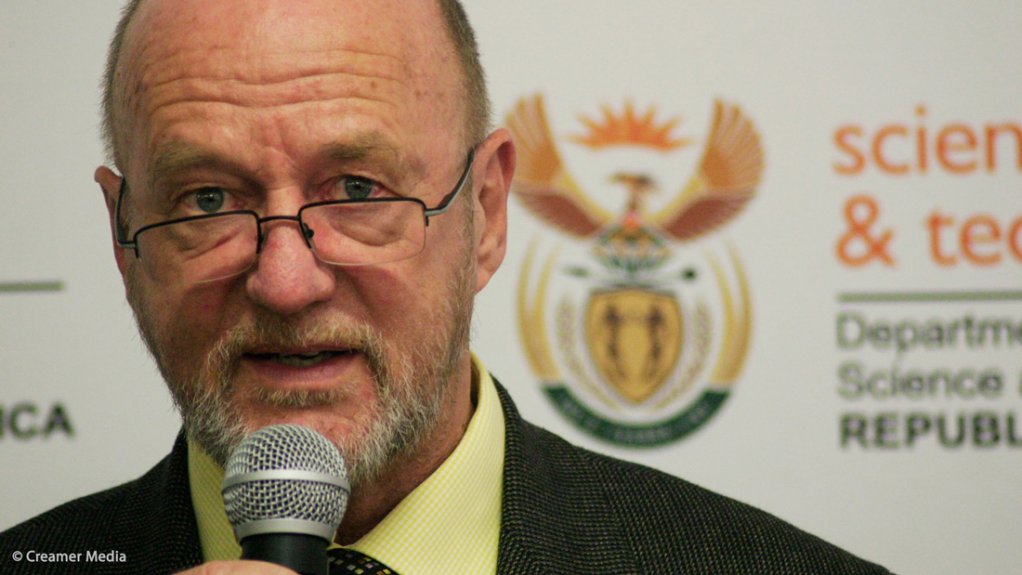



Results from the Council for Scientific and Industrial Research’s (CSIR’s) information and communications technology (ICT) arm, the Meraka Institute’s, rural education pilot programme indicated its potential sustainability and scalability.
The institute aimed to develop and apply technology-based interventions for improved education in rural areas. Many of South Africa’s estimated 26 500 schools – 17 000 of which were in rural and remote areas – were without connectively and access to the Internet, hampering access to education.
The pilot kicked off with the distribution of multimedia tablets to teachers and students of the Arthur Mfebe Senior Secondary School, in Comfivaba, in the Eastern Cape, in August last year, where the study saw 77% students matriculate in 2012, compared with 41% in 2011, Meraka ICT for education and mobile learning manager Merryl Ford said on Thursday.
The ICT for rural education development (ICT4Red) pilot project had been rolled out to support traditional teaching and learning with digital content on tablets and aimed to study the use of tablet computers and their impact on improving rural education.
To date, Meraka, in conjunction with the Department of Basic Education and Department of Science and Technology (DST), besides others, had delivered tablets to 26 Nciba Circuit schools in the Comfivaba school district, benefiting 6 500 students, 350 teachers and 16 district officials.
The ICT4Red pilot project is one of the subcomponents of the overarching Technology for Rural Education Development (Tech4Red) project.
Ford, in a progress presentation to Science and Technology Minister Derek Hanekom, said the pilot had expanded to include a further 11 schools, with the first round of training teachers to use multimedia tablets and ensuring connectively under way.
The initiative would supply tablets to a further 14 schools in 2014.
The schools were connected to the Internet through satellite and wireless mesh technologies, as Meraka moved to build “schools of the future”, incorporating both formal and informal schools and comprising an educational content platform, human language technology, real-time educational video broadcasting and accessible tutoring programmes through Dr Math, besides others.
Over 200 schools were connected through Meraka’s wireless mesh and village operator initiatives, which formed part of the institute’s 'broadband for all' ambitions and included white spaces and the South African National Research Network (Sanren) high-speed network, which was used by over 700 000 people a day.
Hundreds of research and educational sites have been connected with high-speed networks through Sanren, which aimed to narrow the digital divide between urban and remotely located institutions.
The DST earlier this year committed about R600-million over the next five years to more than double the international bandwidth of Sanren.
Another further ten schools in Cape Town had been connected to the Internet following the start of the first trial studying the effects of connecting underserviced regions to the Internet using television white spaces – unused bands of frequencies reserved for television broadcasting.
Over the next two years, the group would establish an ICT education advisory board and expand initiatives such as the ICT4Red pilot project, its Mxit-based Dr Math tutor programme, a peer-based learning programme called Mathlete and the “digital doorway” – a free-standing multimedia computer terminal with a keyboard and a touchpad embedded in a robust kiosk, accessible to the public 24 hours a day.
Hanekom praised Meraka’s advancements, saying that the institute had reported remarkable achievements, citing the education programmes, broadband developments, the progress of satellite-based earth observation science and information technologies, ICT for health projects, and the unit’s supercomputing scheme “out-compute-to-out-compete”, besides others.
Article Enquiry
Email Article
Save Article
Feedback
To advertise email advertising@creamermedia.co.za or click here
Research Reports

Projects


Latest Multimedia


Latest News

Showroom

Sulzer South Africa, established in 1922, partners with critical industries like power, oil & gas, water, mining, and chemicals to boost...
VISIT SHOWROOM
Leading condition monitoring specialists, WearCheck, help boost machinery lifespan and reduce catastrophic component failure through the scientific...
VISIT SHOWROOM



Press Office
Announcements
What's On
Subscribe to improve your user experience...
Option 1 (equivalent of R125 a month):
Receive a weekly copy of Creamer Media's Engineering News & Mining Weekly magazine
(print copy for those in South Africa and e-magazine for those outside of South Africa)
Receive daily email newsletters
Access to full search results
Access archive of magazine back copies
Access to Projects in Progress
Access to ONE Research Report of your choice in PDF format
Option 2 (equivalent of R375 a month):
All benefits from Option 1
PLUS
Access to Creamer Media's Research Channel Africa for ALL Research Reports, in PDF format, on various industrial and mining sectors
including Electricity; Water; Energy Transition; Hydrogen; Roads, Rail and Ports; Coal; Gold; Platinum; Battery Metals; etc.
Already a subscriber?
Forgotten your password?
Receive weekly copy of Creamer Media's Engineering News & Mining Weekly magazine (print copy for those in South Africa and e-magazine for those outside of South Africa)
➕
Recieve daily email newsletters
➕
Access to full search results
➕
Access archive of magazine back copies
➕
Access to Projects in Progress
➕
Access to ONE Research Report of your choice in PDF format
RESEARCH CHANNEL AFRICA
R4500 (equivalent of R375 a month)
SUBSCRIBEAll benefits from Option 1
➕
Access to Creamer Media's Research Channel Africa for ALL Research Reports on various industrial and mining sectors, in PDF format, including on:
Electricity
➕
Water
➕
Energy Transition
➕
Hydrogen
➕
Roads, Rail and Ports
➕
Coal
➕
Gold
➕
Platinum
➕
Battery Metals
➕
etc.
Receive all benefits from Option 1 or Option 2 delivered to numerous people at your company
➕
Multiple User names and Passwords for simultaneous log-ins
➕
Intranet integration access to all in your organisation
