



New technique creates carbon nanofibres for industrial and consumer products

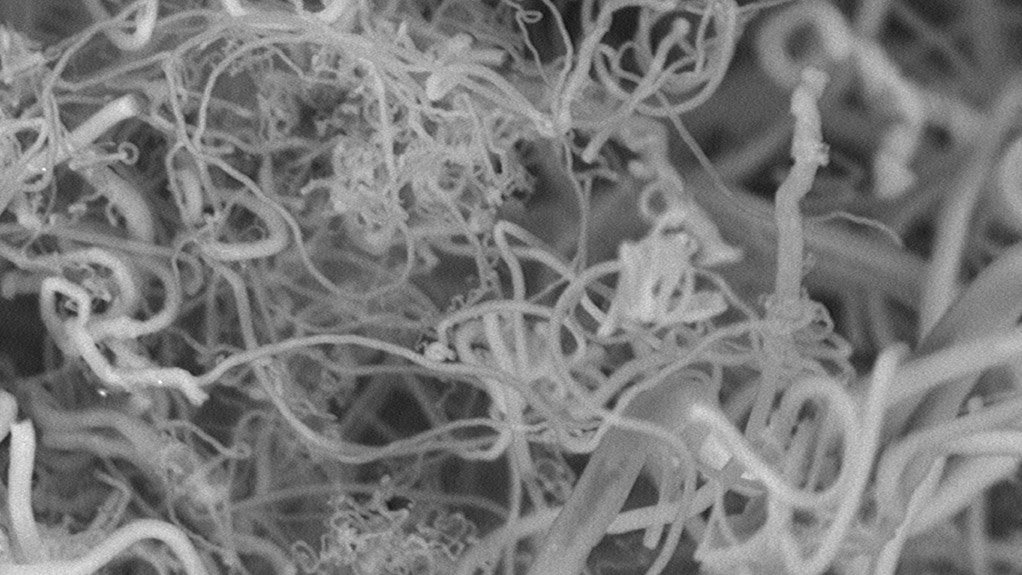

CARBON NANOFIBERS Researchers are generating carbon nanofibers from carbon dioxide by removing the greenhouse gas from the air to make products
Photo by Stuart Licht
STUART LICHT Nanofibres are used to make strong carbon composites, such as those used in the Boeing Dreamliner, as well as in high-end sports equipment and wind turbine blades



Finding technology to shift carbon dioxide (CO2), the most abundant anthropo- genic greenhouse gas, from being a climate change challenge to being a valuable commodity has long been a dream of many scientists and government officials.
To this end, a team of chemists say they have developed a way to economically convert atmospheric CO2 directly into highly valued carbon nanofibres for industrial and consumer products.
“We have found a way to use atmospheric CO2 to produce high-yield carbon nanofibres,” says George Washington University Department of Chemistry academic Professor Stuart Licht, who leads the research team. The team also includes postdoctoral fellow Jiawen Ren and graduate student Jessica Stuart.
He explains that nanofibres are used to make strong carbon composites, such as those used in the Boeing Dreamliner, as well as in high-end sports equipment, wind turbine blades and other products.
Previously, the researcher team made ferti- liser and cement without emitting CO2. Currently, the researchers are seeking to shift CO2 from being a global-warming problem to being a feedstock for the manufacture of in-demand carbon nanofibres.
Licht calls his approach “diamonds from the sky.” This refers to carbon being the material that diamonds are made of, and also hints at the high value of the products, such as the carbon nanofibres that can be made from atmospheric carbon and oxygen.
He says that, because of its efficiency, this low-energy process can be run using only a few volts of electricity, sunlight and a significant amount of CO2.
Licht explains that, at its root, the system uses electrolytic syntheses to make the nanofibres. CO2 is broken down in a high-temperature electrolytic bath of molten carbonates at 750 °C.
“Atmospheric air is added to an electrolytic cell. Once there, the CO2 dissolves when subjected to the heat and direct current through electrodes of nickel and steel. The carbon nanofibres build up on the steel electrode, where they can be removed.”
He notes that, to power the syntheses, heat and electricity are produced through a hybrid and extremely efficient concentrating solar-energy system. Licht points out that the system focuses the sun’s rays on a photovoltaic solar cell to generate electricity and on a second system to generate heat and thermal energy, which raises the temperature of the electrolytic cell.
He further estimates electrical energy costs of this “solar thermal electrochemical process” to be around $1 000/t of carbon nanofibre product, which means the cost of running the system is hundreds of times less than the value of the product output.
“We calculate that, with a physical area less than 10% the size of the Sahara Desert, our process could remove enough CO2 to decrease atmospheric levels to those of the preindustrial revolution within ten years,” Licht contends.
He emphasises that the system is currently experimental, and his biggest challenge will be to ramp up the process and gain experience to make consistently sized nanofibres.
“We are scaling up quickly and soon should be . . . making tens of grams of nanofibres an hour,” Licht states.
Article Enquiry
Email Article
Save Article
Feedback
To advertise email advertising@creamermedia.co.za or click here
Research Reports

Projects


Latest Multimedia


Latest News
Showroom
Supplier & Distributor of the Widest Range of Accurate & Easy-to-Use Alcohol Breathalysers
VISIT SHOWROOM
M and J Mining are leading suppliers of physical support systems as used by the underground mining industry. Our selection of products are not...
VISIT SHOWROOM



Press Office
Announcements
What's On
Subscribe to improve your user experience...
Option 1 (equivalent of R125 a month):
Receive a weekly copy of Creamer Media's Engineering News & Mining Weekly magazine
(print copy for those in South Africa and e-magazine for those outside of South Africa)
Receive daily email newsletters
Access to full search results
Access archive of magazine back copies
Access to Projects in Progress
Access to ONE Research Report of your choice in PDF format
Option 2 (equivalent of R375 a month):
All benefits from Option 1
PLUS
Access to Creamer Media's Research Channel Africa for ALL Research Reports, in PDF format, on various industrial and mining sectors
including Electricity; Water; Energy Transition; Hydrogen; Roads, Rail and Ports; Coal; Gold; Platinum; Battery Metals; etc.
Already a subscriber?
Forgotten your password?
Receive weekly copy of Creamer Media's Engineering News & Mining Weekly magazine (print copy for those in South Africa and e-magazine for those outside of South Africa)
➕
Recieve daily email newsletters
➕
Access to full search results
➕
Access archive of magazine back copies
➕
Access to Projects in Progress
➕
Access to ONE Research Report of your choice in PDF format
RESEARCH CHANNEL AFRICA
R4500 (equivalent of R375 a month)
SUBSCRIBEAll benefits from Option 1
➕
Access to Creamer Media's Research Channel Africa for ALL Research Reports on various industrial and mining sectors, in PDF format, including on:
Electricity
➕
Water
➕
Energy Transition
➕
Hydrogen
➕
Roads, Rail and Ports
➕
Coal
➕
Gold
➕
Platinum
➕
Battery Metals
➕
etc.
Receive all benefits from Option 1 or Option 2 delivered to numerous people at your company
➕
Multiple User names and Passwords for simultaneous log-ins
➕
Intranet integration access to all in your organisation
