



Carrim calls on MTN, Vodacom to drop MTR legal challenge

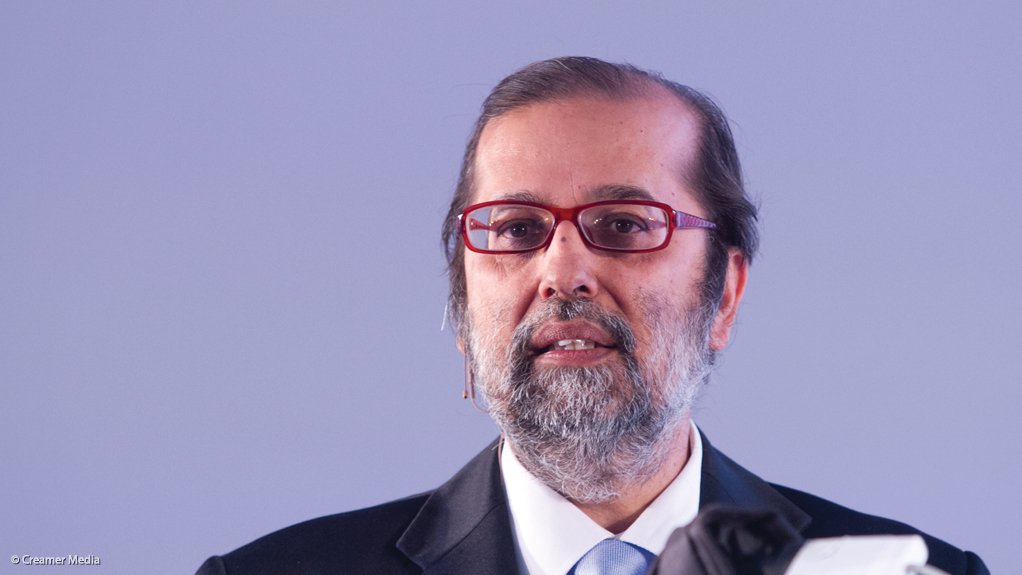



Communications Minister Yunus Carrim on Monday called on telecommunications giants MTN and Vodacom to “desist” in their opposition to have the proposed mobile termination rate (MTR) regulations scrapped.
Carrim has now joined multiple industry players, including Telkom, Cell C and Right2Know, in speaking out about the publicly debated opposition to the Independent Communication Authority of South Africa’s (Icasa’s) revised glide path by South Africa’s two largest mobile operators.
Speaking at the consultative conference on the National Integrated Information and Communication Technology (ICT) Policy Green Paper, he commented that South Africa’s cost to communicate remained “stubbornly” high and accounted for over 30% of a consumer’s average monthly income – an amount that “should be” about 2.5%.
The ICT Policy pointed out that, when compared with other African countries, South Africa’s mobile and fixed retail prices were, in many cases, ten times higher.
“The MTRs are also high by international standards, even after Icasa has forced the operators to lower their rates through a glide path [from about R1.25 in 2009] to 40c for established players and 44c for the smaller players [in 2013],” the report commented.
Icasa’s move to further lower call costs through another revised glide path – which included aggressive asymmetry rates – had attracted legal challenges from MTN and Vodacom just under a month before its implementation.
Cell C chief legal officer Graham Mackinnon previously said, should MTN and Vodacom succeed in halting the imminent termination rate cuts, it could hamper attempts to further cut the cost of communication in South Africa.
“[The legal challenge] is unacceptable,” Carrim stated.
“I wish we could be more sensible and negotiate,” he added, expressing his concern on the matter.
Carrim noted that MTN and Vodacom collectively accounted for more than 85% of market share by revenue and had distributed dividends of R15-billion and R12-billion respectively to shareholders during the last financial year.
Carrim, who believed that the two dominant operators were prepared to go to court over the MTR regulations before the final cuts were tabled, said a better balance between the needs and interests of the operators and that of the country was required.
The public debate had also seen Cell C acting CEO Jose Dos Santos and Telkom CEO Sipho Maseko speak out, calling on the duopoly to drop their cases and indicating they were not acting in the public interest.
“Today, we stand at a crossroads – you can hide behind regulations to protect profits, or we can all continue to expand access and lower costs. We have been following your public statements very closely and believe your recent actions fall short of what we can do to move the country forward,” Maseko said in an open letter to the CEOs of MTN and Vodacom over the weekend.
Citing the “excessive” prices for communications charged by MTN and Vodacom, Dos Santos believed that MTN was “not content to make [the] super-normal profits” it had over the past 15 years, while Maseko pointed out that lowering the mobile termination rates had not stopped the duoploy’s capital investment or return to shareholders.
“Dominant incumbents are typically defensive when any attempt is made to curb their otherwise abusive behaviour, but isn’t MTN taking it a bit far?” he said in an opinion piece distributed to media.
Dos Santos pointed out that MTN, with a current revenue market share of 35% in South Africa, had, along with rival Vodacom, benefitted from asymmetry for 20 years against fixed-line operator Telkom.
“In 1994, mobile termination rates were introduced as a way for Telkom to subsidise MTN and Vodacom to build your networks,” Maseko said, adding that this had amounted to over R50-billion.
However, defending MTN’s asymmetry from Telkom over the past two decades, MTN SA CEO Zunaid Bulbulia on Monday said the cost base of a mobile network was higher than a fixed network and, globally, MTRs were higher than fixed-line termination rates.
“But what is conveniently not stated is that it is a fact that mobile operators who came onto the stage later on also charged a higher MTR than it paid in fixed termination rates to Telkom,” he said.
Further, Bulbulia, who said it was a misconception that MTRs were directly linked to retail rates, questioned how “overcharging” larger operators with termination rates “four times higher” would deliver cheaper prices.
“How overcharging the larger networks’ subscribers to call smaller networks will deliver cheaper prices for all South African is something neither Icasa nor the recipient of the so-called asymmetry has managed to explain,” he said.
Bulbulia said MTN, which “refused to be drawn into a mud-slinging exercise”, had driven down the costs of telecommunications over the years without compromising or skimping on the quality of its network – even when MTRs were stable and without the need for regulatory intervention on MTRs.
This was also despite rising prices, including electricity, of which MTN was one of South Africa’s largest users, and the increasing cost of rolling out infrastructure, which was exacerbated by a worsening exchange rate and the increased costs of skilled personnel and equipment.
“However, this did not dissuade MTN from improving its network. MTN has and continues to invest extensively in its broadband network,” Bulbulia pointed out.
Article Enquiry
Email Article
Save Article
Feedback
To advertise email advertising@creamermedia.co.za or click here
Research Reports

Projects


Latest Multimedia


Latest News

Showroom

Rio Carb is an OEM (Original Equipment Manufacturer) of R-C700 Chromium Carbide (CrC) alloy clad wear plates and pipes used for heavy materials...
VISIT SHOWROOM
SmartMine IoT has been developed with the mining industry in mind, to provides our customers with powerful business intelligence and data modelling...
VISIT SHOWROOM



Announcements
What's On
Subscribe to improve your user experience...
Option 1 (equivalent of R125 a month):
Receive a weekly copy of Creamer Media's Engineering News & Mining Weekly magazine
(print copy for those in South Africa and e-magazine for those outside of South Africa)
Receive daily email newsletters
Access to full search results
Access archive of magazine back copies
Access to Projects in Progress
Access to ONE Research Report of your choice in PDF format
Option 2 (equivalent of R375 a month):
All benefits from Option 1
PLUS
Access to Creamer Media's Research Channel Africa for ALL Research Reports, in PDF format, on various industrial and mining sectors
including Electricity; Water; Energy Transition; Hydrogen; Roads, Rail and Ports; Coal; Gold; Platinum; Battery Metals; etc.
Already a subscriber?
Forgotten your password?
Receive weekly copy of Creamer Media's Engineering News & Mining Weekly magazine (print copy for those in South Africa and e-magazine for those outside of South Africa)
➕
Recieve daily email newsletters
➕
Access to full search results
➕
Access archive of magazine back copies
➕
Access to Projects in Progress
➕
Access to ONE Research Report of your choice in PDF format
RESEARCH CHANNEL AFRICA
R4500 (equivalent of R375 a month)
SUBSCRIBEAll benefits from Option 1
➕
Access to Creamer Media's Research Channel Africa for ALL Research Reports on various industrial and mining sectors, in PDF format, including on:
Electricity
➕
Water
➕
Energy Transition
➕
Hydrogen
➕
Roads, Rail and Ports
➕
Coal
➕
Gold
➕
Platinum
➕
Battery Metals
➕
etc.
Receive all benefits from Option 1 or Option 2 delivered to numerous people at your company
➕
Multiple User names and Passwords for simultaneous log-ins
➕
Intranet integration access to all in your organisation
