Business defends making Joburg partnership offer ahead of crucial elections

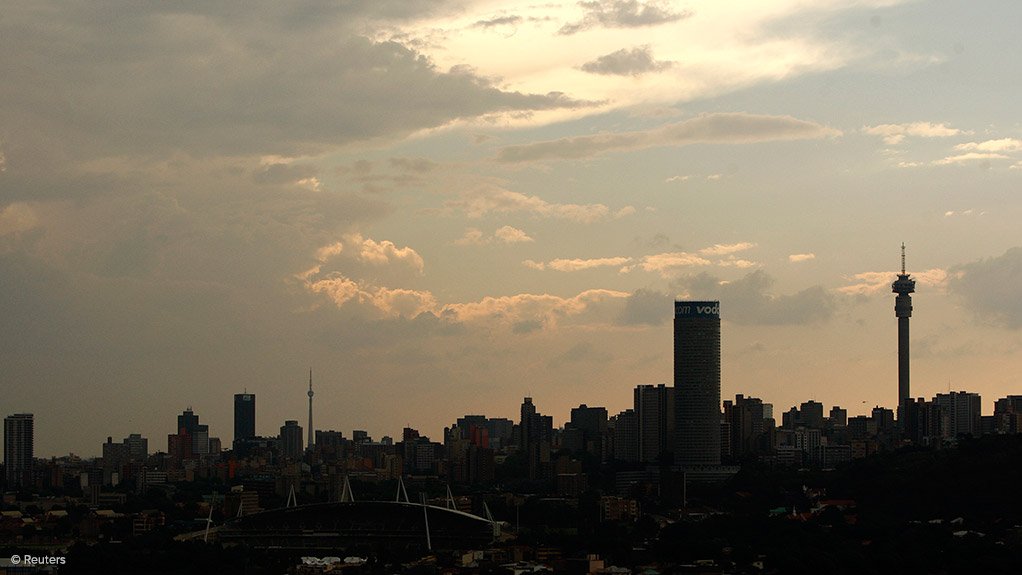



The business formations that have formally offered to extend the Government-Business Partnership model – hitherto used to tackle national crises such as loadshedding – to the City of Johannesburg have acknowledged the “sensitive” timing of the proposal in light of upcoming local government elections.
Nevertheless, they argue that the scale of the crisis has meant that the decision, which was first mooted in September last year, could not be placed on hold pending the electoral cycle. In addition, they stress that the offer is “not partisan”, as it has been addressed to all political parties.
In a joint statement, Business Unity South Africa, Business Leadership South Africa and the Business for South Africa steering committee indicated that they were prepared to deploy private-sector resources into a structured programme to support Johannesburg's recovery.
The offer was conditional, however, on having a “counterparty capable of governing scrupulously, delivering for the city, and being held to account”.
Asked by Engineering News what such a 'counterparty' would involve in practice, the organisations pointed to their experience with the national partnership, which they said had worked because it operated under the direct auspices and championship of President Cyril Ramaphosa, with committed counterparties who were decision-makers.
“That is what we mean by a counterparty: not a nominal point of contact, but accountable leadership with the authority to act, agree a programme, and be held responsible for delivery. That is the precondition for effective partnership at the city level too.”
No formal meetings had been held with the current council or Executive Mayor Dada Morero in relation to the proposal, but it was confirmed that some business leaders had engaged informally with many decision-makers over time on the potential for private-sector support.
“[But] today's statement represents the first formal, public articulation of what business is prepared to do — and under what conditions.”
The urgency of the intervention was attributed to the scale of the crisis and the importance of the city, which was in visible decline, with capital expenditure having collapsed to 6% of the city’s budget, and maintenance spending standing at 0.5% of asset value. Meanwhile, rates and service charges had increased by 124% in real terms over the past 15 years, while service quality had deteriorated.
“Johannesburg accounts for approximately 16% of national GDP — some analyses put it closer to 18% — and the Auditor-General has formally registered doubt about the City’s ability to continue as a going concern. The Minister of Finance has placed the City on notice. Eskom has indicated it may suspend supply over unpaid debt. This is not a problem that can sit on hold pending an electoral cycle.”
The crisis had been worsened by corruption, criminality and maladministration, with the Auditor-General estimating annual losses of about R12-billion through unauthorised and irregular expenditure.
NOT PARTISAN
The business formations also stressed that it was not a partisan intervention, insisting that “this is not about which party governs Johannesburg, it is about how the city is governed”.
“We have addressed this statement to all political parties, the current administration, the President, and the government of national unity. We believe that framing accountability publicly, ahead of the elections, is itself part of the solution as it gives voters and civil society a basis on which to assess commitments made by parties contesting the elections, and it signals to all parties that business is serious about holding governance to account, whoever wins.”
No fixed timeframe for implementing the partnership had been set, however.
“[Our] readiness to engage is not conditional on the election outcome or a particular calendar date. If the right governance conditions exist in a month, we'll begin then. If it takes a year, we'll begin then. What we won't do is commit resources into a vacuum.”
There was also no specific figure provided regarding the level of resources business could inject, nor who would be seconded to champion the partnership. However, Engineering News was informed that a number of CEOs had stepped forward and that their names would be announced once a formal process was in place.
“The nature and scale of resources will be determined by what the collective objectives and agreed outcomes require. What we can point to is the track record at the national level. Over the past few years, business has contributed close to R400-million in direct funding and many millions more in kind … [and] the form of contribution in Johannesburg will be scoped in partnership with the counterparty once one is in place.”
On what specific projects could fall under the partnership, the organisations stressed that business did not set policy and told Engineering News that the model would be built around helping government implement its own policies more effectively.
“Given the scale of Johannesburg's challenges, there are multiple areas where private sector capability could be deployed: financial stabilisation, water infrastructure, service delivery systems, energy and crime, corruption and maladministration and more. However, we would need to agree a specific programme with clearly defined outcomes, committed and accountable decision makers, and measurable targets before deploying any resources.”
In the joint statement the areas of infrastructure, service delivery, and fiscal stabilisation were identified as priorities.
On how potential commercial conflicts of interest would be managed should the interventions result in procurement, the organisations insisted that they would not be involved in any decisions or work streams that touched procurement.
“Our support is in the national interest, not in the commercial interests of any company. The governance model that has operated at the national level is instructive and effective. Resources seconded to government operate at arm's length, reporting into government structures, with businesses having no involvement in directing or managing that work. That separation is fundamental. We have scrupulous governance structures in place to ensure no conflict of interest arises, and the same standards would apply in Johannesburg.”
Business also insisted that decisions would not be taken in a way that bypassed or circumvented legitimate council authority.
“The intent is to strengthen governance, not to substitute for it. The city's recovery is contingent on what will need to be a stable governing arrangement emerging from the local government elections. Business is not seeking to pre-empt that process, but to be ready to support whoever forms a credible and accountable administration.”
Article Enquiry
Email Article
Save Article
Feedback
To advertise email advertising@creamermedia.co.za or click here
Research Reports
Projects


Latest Multimedia

Latest News
Showroom
Supplier & Distributor of the Widest Range of Accurate & Easy-to-Use Alcohol Breathalysers
VISIT SHOWROOM
Astore Keymak is one of South Africa’s leading suppliers of high-quality Thermoplastic Pipeline Systems, with branches in the major provinces.
VISIT SHOWROOM
Press Office
Announcements
What's On
Subscribe to improve your user experience...
Option 1 (equivalent of R125 a month):
Receive a weekly copy of Creamer Media's Engineering News & Mining Weekly magazine
(print copy for those in South Africa and e-magazine for those outside of South Africa)
Receive daily email newsletters
Access to full search results
Access archive of magazine back copies
Access to Projects in Progress
Access to ONE Research Report of your choice in PDF format
Option 2 (equivalent of R375 a month):
All benefits from Option 1
PLUS
Access to Creamer Media's Research Channel Africa for ALL Research Reports, in PDF format, on various industrial and mining sectors
including Electricity; Water; Energy Transition; Hydrogen; Roads, Rail and Ports; Coal; Gold; Platinum; Battery Metals; etc.
Already a subscriber?
Forgotten your password?
Receive weekly copy of Creamer Media's Engineering News & Mining Weekly magazine (print copy for those in South Africa and e-magazine for those outside of South Africa)
➕
Recieve daily email newsletters
➕
Access to full search results
➕
Access archive of magazine back copies
➕
Access to Projects in Progress
➕
Access to ONE Research Report of your choice in PDF format
RESEARCH CHANNEL AFRICA
R4500 (equivalent of R375 a month)
SUBSCRIBEAll benefits from Option 1
➕
Access to Creamer Media's Research Channel Africa for ALL Research Reports on various industrial and mining sectors, in PDF format, including on:
Electricity
➕
Water
➕
Energy Transition
➕
Hydrogen
➕
Roads, Rail and Ports
➕
Coal
➕
Gold
➕
Platinum
➕
Battery Metals
➕
etc.
Receive all benefits from Option 1 or Option 2 delivered to numerous people at your company
➕
Multiple User names and Passwords for simultaneous log-ins
➕
Intranet integration access to all in your organisation