



BLSA CEO urges country to shift focus to dealing with unemployment in 2022

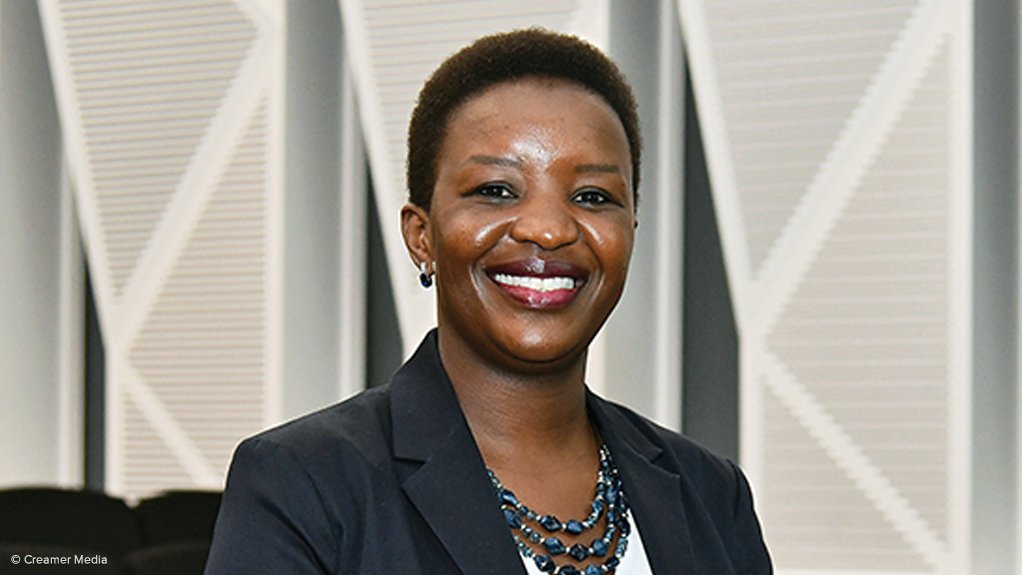



South Africa should see new energy production within the next 12 to 18 months, signalling a fundamental shift in how electricity is produced to a greener, lower-cost and more reliable future, says business organisation Business Leadership South Africa (BLSA) CEO Busi Mavuso.
Future rounds of the Renewable Energy Independent Power Producer Procurement Programme will diversify power sources substantially, which is key to long-term supply stability, she notes.
She suggests that focus should now shift to dealing with South Africa's high unemployment rate.
"I fear we are not doing enough to turn the trajectory on the unemployment figures reported for the third quarter that show almost half of the labour force out of work, on the expanded unemployment definition. Economic growth shrinking by 1.5% during the third quarter told the story behind the employment decline.
"We must return after the holidays filled with energy to take on our economic crisis and [implement] the structural reforms we need," she says.
To address the unemployment crisis, South Africa must revisit labour laws and reforms to the labour market to make it work better and deliver greater employment.
There were 660 000 fewer people employed in the third quarter of than in the third quarter of 2020. This reflects a collapse in business confidence beyond the effects of Covid-19 and unrest in July.
"Our businesses do not believe it is profitable to invest and expand, despite the solutions being recognised and largely acknowledged as such for a long time, but implementation of reforms to accelerate economic growth and create jobs has been long-delayed," Mavuso says.
Negative incentives hampering employers from expanding employment must be confronted and the structure of bargaining processes must be fixed, including the compulsory extension of agreements to employers who have not participated in negotiations, she notes.
Despite decisive steps taken against the pandemic, with the rollout of the vaccination programme, as South Africa heads into the end of the year, it will fall far short of the target set to vaccinate 70% of the adult population, as only 44% the population has been vaccinated.
"Vaccine mandates from employers are becoming more frequent and currently look to be the best tool we have to drive greater uptake. However, we need more creative interventions to get vaccines closer to people so that the cost to them to vaccinate is minimised and further incentives added, such as vouchers."
South Africa faces significant challenges in reaching more of the population. The reasons are complex including logistics, economics and attitudes, with much of the population living precarious lives in which every hour of every day is a battle and taking time out for vaccines is not feasible, Mavuso says.
Further structural changes must still be delivered, such as a fully restructured State-owned power utility Eskom and spinning out an independent system operator that can procure electricity from the lowest-cost providers
"Other reforms must be delivered, including spectrum auctions that must be concluded in the new year and visa policies that continue to make it difficult for businesses to attract the skills needed, and constrain our tourism industry. We must cut red tape that constrains businesses in many ways," she states.
"We must continue to fix our State-owned enterprises, including Transnet, which must bring private operators in to improve port and rail efficiencies. Further, we must kickstart the major infrastructure investment programme that we need, with private sector funding mobilised to invest in well-structured and bankable public infrastructure projects," Mavuso emphasises.
"Next year will be the time to capitalise on steps taken to quell the pandemic and energy crisis. Further reforms must be tackled with energy to ensure that 2022 marks a decisive point in the economic recovery. I look forward to working with counterparts in government, labour and civil society to make that happen," she says.
Article Enquiry
Email Article
Save Article
Feedback
To advertise email advertising@creamermedia.co.za or click here
Research Reports

Projects


Latest Multimedia


Latest News
Showroom
Design, Construction and Maintenance of Site Erected, Welded Bulk Storage Tanks for the Petrochemical, LNG, Ammonia and Sustainable fuel Sectors.
VISIT SHOWROOM
For over 15 years, Lilak Aluminium, a trusted leader in architectural extrusion supply, has delivered excellence to businesses like yours.
VISIT SHOWROOM



Press Office
Announcements
What's On
Subscribe to improve your user experience...
Option 1 (equivalent of R125 a month):
Receive a weekly copy of Creamer Media's Engineering News & Mining Weekly magazine
(print copy for those in South Africa and e-magazine for those outside of South Africa)
Receive daily email newsletters
Access to full search results
Access archive of magazine back copies
Access to Projects in Progress
Access to ONE Research Report of your choice in PDF format
Option 2 (equivalent of R375 a month):
All benefits from Option 1
PLUS
Access to Creamer Media's Research Channel Africa for ALL Research Reports, in PDF format, on various industrial and mining sectors
including Electricity; Water; Energy Transition; Hydrogen; Roads, Rail and Ports; Coal; Gold; Platinum; Battery Metals; etc.
Already a subscriber?
Forgotten your password?
Receive weekly copy of Creamer Media's Engineering News & Mining Weekly magazine (print copy for those in South Africa and e-magazine for those outside of South Africa)
➕
Recieve daily email newsletters
➕
Access to full search results
➕
Access archive of magazine back copies
➕
Access to Projects in Progress
➕
Access to ONE Research Report of your choice in PDF format
RESEARCH CHANNEL AFRICA
R4500 (equivalent of R375 a month)
SUBSCRIBEAll benefits from Option 1
➕
Access to Creamer Media's Research Channel Africa for ALL Research Reports on various industrial and mining sectors, in PDF format, including on:
Electricity
➕
Water
➕
Energy Transition
➕
Hydrogen
➕
Roads, Rail and Ports
➕
Coal
➕
Gold
➕
Platinum
➕
Battery Metals
➕
etc.
Receive all benefits from Option 1 or Option 2 delivered to numerous people at your company
➕
Multiple User names and Passwords for simultaneous log-ins
➕
Intranet integration access to all in your organisation
