



Agri SA beefs up capacity to tackle key issues facing farming sector

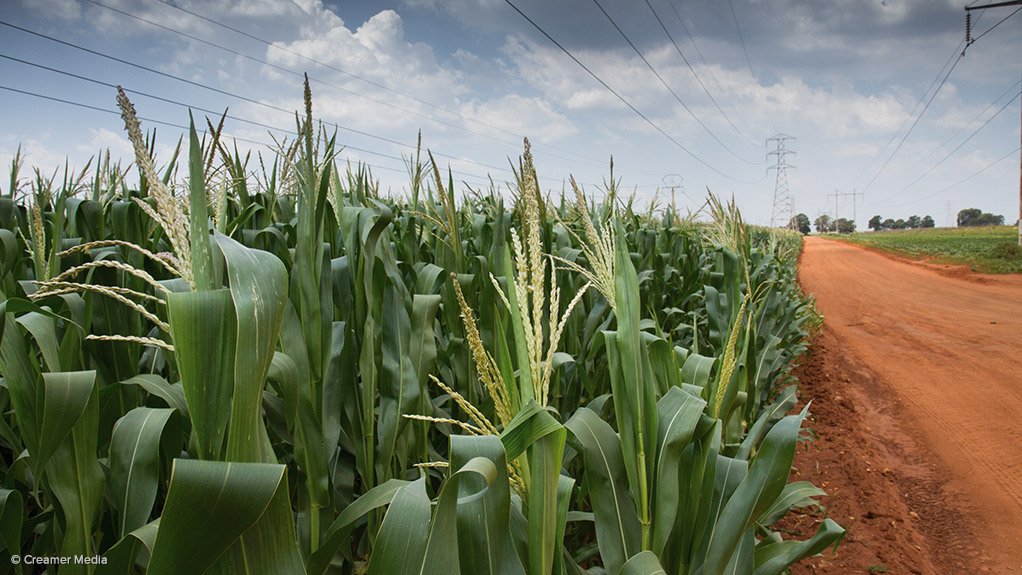



Performance and delivery on labour and land reform matters were equally important to lowering the cost of doing business and improved profitability, and were central if the agriculture sector’s growth and contributions were to be sustained, stressed Agri SA president Johannes Möller.
As such, Agri SA has decided to strengthen its capacity at executive level, where its focus will be on commercial issues that affect the viability and profitability of the sector, and the developmental and social aspects that are relevant in the transformation debate.
Agri SA announced that it had appointed Omri van Zyl designate executive director, Christo van der Rheede deputy executive director responsible for developmental and social aspects relevant to the transformation of the sector, and Thabi Nkosi senior economist, having joined Agri SA on May 1 to fill the vacancy left by Dawie Maree.
“Agri SA is at the forefront of policy developments, which pave the way for the future of the sector. These appointments bear testimony to our conviction that agriculture has a bright future, but that it also requires from us to constructively engage with others and contribute towards solutions that are required to fulfil our expectations. I want to welcome these appointees into our organisation and wish them well in serving this organisation and the agriculture sector,” said Möller.
He highlighted that farmers had identified issues, such as the labour market, land reform, the cost of doing business, market access and safety and security, as major challenges to the sustainability of their farming operations in a recent survey undertaken by Agri SA, a federation of agricultural organisations.
“The challenges faced by the [agriculture] sector are diverse and in a global trade, financial and digital environment, high-level skills are required to understand emerging challenges and, even more so, contribute towards solutions which will enhance the prospects of the sector and of those who work in it.
“What is also evident, is that the so-called soft issues – which are more than often complex challenges – have become of increasing importance to the wellbeing of the [agriculture] sector,” Möller said at a media briefing last week.
These soft issues include training, social development, conditions of employment and transformation, which have many facets. Apart from the human resources aspect, transformation encompasses land reform, farmer development and broad-based black economic empowerment.
Möller noted that, although Agri SA and its affiliates had done a lot to accelerate transformation, it had committed towards achieving even higher standards and contributions, as mandated by the organisation’s 2014 congress.
Agri SA has in the past two years assessed the changing circumstances, conditions and challenges facing the sector and embarked on a process to realign the organisation with these new realities.
“We noted the need to improve our communication with various stakeholders, which is necessary to cultivate an environment conducive for the policies we are pursuing,” Möller explained.
Agri SA was also working “extremely hard” on policy processes with other business organisations and those in agriculture to achieve high levels of consensus, which it deemed a precondition for success.
Möller further highlighted that the organisation made best use of professional advice to guide it on issues it wanted to deliberate with business and government, and its interaction in regional and global fora where agriculture, trade, environmental and labour matters were discussed.
Agri SA also advised on best practice for farmers who wanted to apply sustainable approaches with regard to the social upliftment of workers and their families, as well as on models for land reform.
The organisation worked closely with the security and safety structures of government to enhance rural safety and give support to rural communities, ensuring time and effort was spent on securing the safety of families and farming enterprises.
Article Enquiry
Email Article
Save Article
Feedback
To advertise email advertising@creamermedia.co.za or click here
Research Reports

Projects


Latest Multimedia


Latest News

Showroom

As a reticulator, Egoli Gas provides natural gas to homes and businesses via underground pipes.
VISIT SHOWROOM
For over 60 years, VEGA has provided industry-leading products for the measurement of level, density, weight and pressure. As the inventor of the...
VISIT SHOWROOM



Press Office
Announcements
What's On
Subscribe to improve your user experience...
Option 1 (equivalent of R125 a month):
Receive a weekly copy of Creamer Media's Engineering News & Mining Weekly magazine
(print copy for those in South Africa and e-magazine for those outside of South Africa)
Receive daily email newsletters
Access to full search results
Access archive of magazine back copies
Access to Projects in Progress
Access to ONE Research Report of your choice in PDF format
Option 2 (equivalent of R375 a month):
All benefits from Option 1
PLUS
Access to Creamer Media's Research Channel Africa for ALL Research Reports, in PDF format, on various industrial and mining sectors
including Electricity; Water; Energy Transition; Hydrogen; Roads, Rail and Ports; Coal; Gold; Platinum; Battery Metals; etc.
Already a subscriber?
Forgotten your password?
Receive weekly copy of Creamer Media's Engineering News & Mining Weekly magazine (print copy for those in South Africa and e-magazine for those outside of South Africa)
➕
Recieve daily email newsletters
➕
Access to full search results
➕
Access archive of magazine back copies
➕
Access to Projects in Progress
➕
Access to ONE Research Report of your choice in PDF format
RESEARCH CHANNEL AFRICA
R4500 (equivalent of R375 a month)
SUBSCRIBEAll benefits from Option 1
➕
Access to Creamer Media's Research Channel Africa for ALL Research Reports on various industrial and mining sectors, in PDF format, including on:
Electricity
➕
Water
➕
Energy Transition
➕
Hydrogen
➕
Roads, Rail and Ports
➕
Coal
➕
Gold
➕
Platinum
➕
Battery Metals
➕
etc.
Receive all benefits from Option 1 or Option 2 delivered to numerous people at your company
➕
Multiple User names and Passwords for simultaneous log-ins
➕
Intranet integration access to all in your organisation
