Affordability, scale remain key challenges to pharmaceutical localisation





South Africa’s pharmaceutical manufacturing ambitions will depend on resolving fundamental challenges around affordability, scale, procurement and regulatory coordination.
This was the overarching sentiment expressed during Trade and Industrial Policy Strategies’ (TIPS’s) Development Dialogue discussion titled “The socioeconomic realities of localising pharmaceutical production”, on June 17.
This discussion brought together representatives from government, industry and researchers to examine whether increased local pharmaceutical and vaccine manufacturing can be achieved while maintaining affordable access to healthcare.
Opening the dialogue, Department of Trade, Industry and Competition (dtic) advanced manufacturing director Swasthi Soomaroo noted that the Covid-19 pandemic had exposed weaknesses in global supply chains and highlighted the risks associated with Africa’s dependence on imported medicines.
Recalling the difficulties experienced during the pandemic, she said South Africa struggled to access basic medicines when India restricted exports.
“South Africa, at the time, was at the mercy of India [as] we could not get access to basic paracetamol,” Soomaroo said.
She also highlighted that government and industry partners were currently developing a pharmaceutical manufacturing roadmap aimed at creating a resilient, innovation-led pharmaceutical value chain that would be self-reliant, export-oriented and globally competitive.
The roadmap aligns with the Africa Union’s objective of achieving 60% local pharmaceutical and vaccine manufacturing by 2040, while South Africa is targeting 50% of its domestic market and 10% of the African market by that year.
Presenting research undertaken by TIPS, senior economist Dr Neva Makgetla argued that debates around localisation often overlook the primary affordability factor which limits access to medicines in South Africa.
“The main reason why people can’t get the medicines they need is that they can’t afford them, and government can’t afford them either,” she pointed out.
She explained that while about two-thirds of medicines used in South Africa are imported, affordability remains a more significant constraint on healthcare access than physical supply shortages.
Additionally, Makgetla cautioned against assuming that local production would automatically guarantee security of supply, noting that South Africa manufactured Covid-19 vaccines locally during the pandemic but much of the output was exported.
She also described South Africa’s pharmaceutical industry as technologically advanced but relatively small, contributing only about 0.2% of GDP. Some strengths included the formulation and fill-and-finish manufacturing, clinical research capabilities and expertise in HIV and tuberculosis-related products.
Makgetla said the industry remained heavily dependent on imported active pharmaceutical ingredients (API) and faced challenges in achieving economies of scale.
TIPS economist and researcher Sakhile Ndlovu focused on the economies of vaccine manufacturing, highlighting the substantial capital requirements associated with entering the sector.
He noted that premium vaccine production generally required yearly volumes of about ten-million doses, while mass-market vaccines required production of about 50-million doses to become cost competitive.
Although Africa’s population provides a potentially large demand base, he said fragmented procurement systems and limited fiscal capacity created significant barriers to achieving the scale needed for sustainable vaccine manufacturing.
Ndlovu used BioVac's oral cholera vaccine project as an example of both the opportunities and risks associated with localisation. While the initiative could generate employment, technology transfer benefits and foreign exchange earnings, it remained dependent on donor support and export markets.
Turning to healthcare financing, TIPS researcher Annie Parsons outlined the challenges facing government as it evaluated future vaccine funding requirements.
She noted that South Africa operated within a highly constrained fiscal environment, with many provincial health departments beginning each financial year carrying debt from previous years.
Parsons also emphasised the need to prioritise interventions that generated measurable cost savings or reductions in healthcare expenditure.
"The costs of change are mostly temporary, but we always have to pay them now. And the benefits are always deferred," she said.
Potential funding mechanisms discussed included efficiency savings, future National Health Insurance reforms, the Health Promotion Levy (also known as the sugar tax), donor funding and reserve financing arrangements for vaccines.
Industry perspectives were provided by Cipla Africa CEO Paul Miller, who argued that greater attention should be paid to the private sector's role in supporting localisation.
"I think it's time that we start putting in the right legislation and the right protection for local manufacturing," he said.
Miller pointed to Algeria as an example of a country that had successfully increased local pharmaceutical production through measures that restricted imports when sufficient domestic manufacturing capacity existed.
He argued that localisation efforts should extend beyond public-sector procurement as much of the pharmaceutical value sat within the private healthcare market.
National Department of Health senior pharmaceutical policy specialist Marion Schoenfeldt stressed that healthcare delivery remained the department's primary responsibility.
"The real issue is that the business of the Department of Health is providing health services. That is our business," she said.
While supporting local manufacturing, Schoenfeldt cautioned that localisation initiatives must remain affordable and sustainable, particularly as demand for public healthcare services continued to increase.
Participants agreed that stronger coordination between government departments, industry and regional partners would be essential if South Africa was to expand pharmaceutical manufacturing while maintaining affordable access to medicines and vaccines.
Article Enquiry
Email Article
Save Article
Feedback
To advertise email advertising@creamermedia.co.za or click here
Research Reports

Projects
Latest Multimedia
Latest News

Showroom
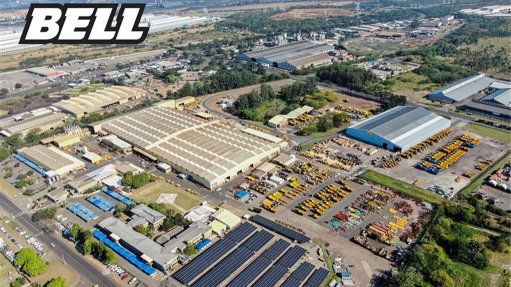
As one of South Africa's leading manufacturers, Bell Equipment distributes and exports its wide range of heavy equipment globally to mining,...
VISIT SHOWROOM
Columbus Stainless, based in Middelburg, Mpumalanga, is Africa’s only producer of stainless steel flat products. In addition, Columbus is the only...
VISIT SHOWROOM

Press Office
Announcements
What's On
Subscribe to improve your user experience...
Option 1 (equivalent of R125 a month):
Receive a weekly copy of Creamer Media's Engineering News & Mining Weekly magazine
(print copy for those in South Africa and e-magazine for those outside of South Africa)
Receive daily email newsletters
Access to full search results
Access archive of magazine back copies
Access to Projects in Progress
Access to ONE Research Report of your choice in PDF format
Option 2 (equivalent of R375 a month):
All benefits from Option 1
PLUS
Access to Creamer Media's Research Channel Africa for ALL Research Reports, in PDF format, on various industrial and mining sectors
including Electricity; Water; Energy Transition; Hydrogen; Roads, Rail and Ports; Coal; Gold; Platinum; Battery Metals; etc.
Already a subscriber?
Forgotten your password?
Receive weekly copy of Creamer Media's Engineering News & Mining Weekly magazine (print copy for those in South Africa and e-magazine for those outside of South Africa)
➕
Recieve daily email newsletters
➕
Access to full search results
➕
Access archive of magazine back copies
➕
Access to Projects in Progress
➕
Access to ONE Research Report of your choice in PDF format
RESEARCH CHANNEL AFRICA
R4500 (equivalent of R375 a month)
SUBSCRIBEAll benefits from Option 1
➕
Access to Creamer Media's Research Channel Africa for ALL Research Reports on various industrial and mining sectors, in PDF format, including on:
Electricity
➕
Water
➕
Energy Transition
➕
Hydrogen
➕
Roads, Rail and Ports
➕
Coal
➕
Gold
➕
Platinum
➕
Battery Metals
➕
etc.
Receive all benefits from Option 1 or Option 2 delivered to numerous people at your company
➕
Multiple User names and Passwords for simultaneous log-ins
➕
Intranet integration access to all in your organisation