



Absa says latest PMI decline ‘signals a slowdown in the pace of increases’


The seasonally adjusted Absa Purchasing Managers’ Index (PMI) edged down slightly to 57.4 index points in June from 57.8 in May.
All five of the headline PMI’s major subcomponents were above the neutral 50-point mark in June, the banking institution said, noting that the average reading of both the headline PMI, as well as the business activity index, was higher during the second quarter than during the first quarter.
This suggests that the sector’s output recovery was maintained in the second quarter, with another quarterly expansion likely, Absa says, adding that a significant yearly expansion is effectively guaranteed given the low base set in the second quarter of 2020.
However, the move to adjusted Alert Level 4 lockdown restrictions at the end of June, especially if sustained for longer than the initial two-week period, could stall the broader economy’s quarterly growth momentum at the start of the third quarter.
Absa notes that “this could result in a possible slowdown in the demand for selected manufactured goods and thus production”.
This follows as concerns about the magnitude of the third wave of Covid-19 infections and South Africa having already moved from Level 2 to Level 3 restrictions in mid-June. Purchasing managers’ assessment of expected business conditions have already turned less positive in June.
The index tracking expected business conditions in six months’ time declined for a second month to 59.3, thereby still signalling an anticipated improvement in business conditions, just less so than before. The move to Level 4 is likely to have soured expectations further, specifically for those businesses with close ties to the hospitality industry.
On the positive side, the outlook for manufacturers targeting the European and US export markets remains very bright, with recent international PMI readings remaining at or near record-high levels.
The June PMI results suggest that while growth in new sales orders and business activity slowed somewhat, both remained very strong, while on the demand front in particular, after dipping somewhat in May, export sales also returned to positive terrain.
At a high level, the new sales orders index has now seesawed in a relatively tight three-point range for the past four months. However, while demand slowed somewhat, the index points to continued solid growth in orders in June.
After exports dipped somewhat in May, these also rose again during June.
After declining to the lowest level in more than a year in May, the supplier deliveries index recorded a sharp increase in June, which Absa says suggests that supply chains are still not working smoothly, resulting in products being less readily available and slowing down supplier delivery times.
“This is because this index is inverted, so longer delivery times actually lift the index (as normally, in times of undisrupted supply chains, this is seen as a sign of increased demand from manufacturers),” it explains.
The quarterly Absa Manufacturing Survey for the second quarter confirms that shortages of materials and disrupted supply chains remain a hindrance, it notes.
Overall, the business activity index dipped to 56.2 index points from 58.8 in May, while sales orders declined to 57.3 from 60.5 the month before.
Another positive development was the return of the employment index to back above the neutral 50-point mark.
While there is no official employment data for the second quarter available as yet, it is noteworthy that the PMI’s employment index recorded its best quarter since 2007.
The Quarterly Employment Statistics from Statistics South Africa (Stats SA) for the first quarter showed an increase of 4 000 formal sector manufacturing jobs on a quarterly basis, but that employment was still down by 95 000 compared to the first quarter of 2020.
However, Absa says that even if this means that job losses in the sector have now stopped, the factory sector has a long way to go to regain its pre-Covid level of employment.
Following an eight-point increase in May, the business activity index lost some ground to 56.2 points in June, which Absa says “does point to another solid expansion in output growth”.
The Level 4 restrictions announced at the end of June do not directly impact manufacturing capacity, but output may well suffer if demand once again declines, Absa laments, considering that some sectors within manufacturing, most notably alcoholic beverage producers and those with close ties to the hospitality industry, will be harder hit than others.
The purchasing price index moved lower for a third consecutive month and is now back in line with February’s level.
The relatively stronger rand exchange rate is likely helping to keep import costs under control in rand terms, although this is to some extent countered by a higher (on average) Brent crude oil price.
Another diesel price increase expected next week could put renewed upward pressure on costs, Absa says, referencing Stats SA’s Producer Price Index (PPI), which tracks the yearly rise in final manufactured goods prices, and which has risen sharply in the past few months (largely owing to the low base of 2020).
In line with the PMI’s price indicator, the yearly tempo of PPI increases should moderate going forward.
In all likelihood, Absa says, the decline in the index merely signals a slowdown in the pace of increases.
The index declined to 83.6, down from March’s recent high of 89 points, but it is still about ten points above the level recorded in June 2020.
Article Enquiry
Email Article
Save Article
Feedback
To advertise email advertising@creamermedia.co.za or click here
Research Reports

Projects


Latest Multimedia


Latest News
Showroom

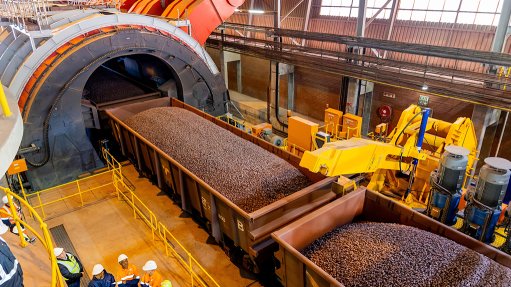
Industrial Nozzles & Systems (Pty) Ltd (Est. 2000) exclusive representative in Southern Africa for LECHLER GmbH (Est. 1879) - Europe's leading...
VISIT SHOWROOM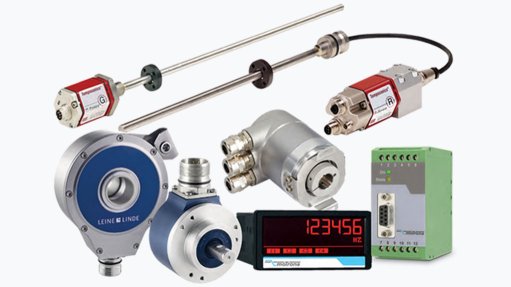
ATI systems comprises five divisions: electrical assemblies, drives and controls, feedback sensors, enclosures, and strip guiding.
VISIT SHOWROOM



Press Office
Announcements
What's On
Subscribe to improve your user experience...
Option 1 (equivalent of R125 a month):
Receive a weekly copy of Creamer Media's Engineering News & Mining Weekly magazine
(print copy for those in South Africa and e-magazine for those outside of South Africa)
Receive daily email newsletters
Access to full search results
Access archive of magazine back copies
Access to Projects in Progress
Access to ONE Research Report of your choice in PDF format
Option 2 (equivalent of R375 a month):
All benefits from Option 1
PLUS
Access to Creamer Media's Research Channel Africa for ALL Research Reports, in PDF format, on various industrial and mining sectors
including Electricity; Water; Energy Transition; Hydrogen; Roads, Rail and Ports; Coal; Gold; Platinum; Battery Metals; etc.
Already a subscriber?
Forgotten your password?
Receive weekly copy of Creamer Media's Engineering News & Mining Weekly magazine (print copy for those in South Africa and e-magazine for those outside of South Africa)
➕
Recieve daily email newsletters
➕
Access to full search results
➕
Access archive of magazine back copies
➕
Access to Projects in Progress
➕
Access to ONE Research Report of your choice in PDF format
RESEARCH CHANNEL AFRICA
R4500 (equivalent of R375 a month)
SUBSCRIBEAll benefits from Option 1
➕
Access to Creamer Media's Research Channel Africa for ALL Research Reports on various industrial and mining sectors, in PDF format, including on:
Electricity
➕
Water
➕
Energy Transition
➕
Hydrogen
➕
Roads, Rail and Ports
➕
Coal
➕
Gold
➕
Platinum
➕
Battery Metals
➕
etc.
Receive all benefits from Option 1 or Option 2 delivered to numerous people at your company
➕
Multiple User names and Passwords for simultaneous log-ins
➕
Intranet integration access to all in your organisation
