When Fraud Looks Like a Good Customer





This article has been supplied and will be available for a limited time only on this website.
By: Amritha Reddy - Senior Director of Fraud Product Management, TransUnion Africa
The most dangerous fraud today does not appear suspicious. It looks like your best customer.
For decades, fraud detection has focused on identifying behaviour that falls outside expected patterns. A new category of fraud is now rewriting that logic. Synthetic identity fraud does not break the rules. It learns them, follows them, and ultimately uses them to gain trust.
A synthetic identity is created by blending fragments of legitimate information, such as ID numbers, contact details, or other personal data with entirely fabricated attributes. These identities are then carefully developed over time. They pass onboarding checks, build transaction histories, meet obligations, and establish credibility.
By the time losses occur, the identity has already progressed through multiple layers of verification, credit exposure, and account activity. There is often no obvious victim, no reported case of identity theft and no clear warning signs until the loss becomes visible.
This is what makes the threat so complex.
Fraud Has Moved into Trusted Spaces
South Africa’s digital fraud landscape is becoming more sophisticated. TransUnion’s H1 2026 Update: Top Fraud Trends report highlights that the country recorded the highest rate of suspected digital fraud among the African countries analysed, with 3.0% of consumer transactions in 2025 flagged as potentially fraudulent. While slightly below the global average of 3.8%, the local pattern is that fraud is not declining; it is embedding itself within trusted digital environments.
Equally important is where fraud is taking place.
Consumers are no longer primarily exposed to fraud in obviously risky environments. One third of reported losses occurred through third-party sellers on legitimate e-commerce platforms. This highlights that fraud risks have moved beyond unsafe and risky parts of the digital ecosystem and are now present within the platforms consumers rely on every day.
A similar pattern is evident across the customer lifecycle, where the highest rate of suspected fraud occurs not at account creation, but at login. This marks a critical shift in the fact that fraudsters are no longer focused solely on gaining access, but on exploiting existing, trusted relationships.
Verification Cannot Stop at Onboarding
In many organisations, identity verification remains anchored at onboarding, based on the assumption that once a customer has been verified, they can be trusted. That assumption, however, no longer holds true.
In a digital economy shaped by real-time payments, seamless onboarding, and low-friction experiences, identity risk is no longer fixed. As the speed of financial transactions increases, weaknesses earlier in the customer journey are amplified. Sustaining trust, therefore, requires continuously knowing your customer at every point of interaction.
Traditional fraud models are not designed for this reality. They are calibrated to detect abnormal behaviour. Synthetic identities are designed to behave normally, often better than genuine customers. They pay on time, stay within limits and build strong reputations. When systems reward consistency without validating authenticity, good behaviour becomes the perfect disguise.
When Good Behaviour Becomes the Threat
The rise of artificial intelligence is accelerating the scale of this challenge.
AI-generated IDs, deepfake biometrics, and large-scale identity fabrication are lowering the cost and increasing the speed at which synthetic identities can be created and tested. Fraud is becoming industrialised, adaptive, and highly scalable.
The most concerning aspect of synthetic identity fraud is its invisibility. Unlike traditional fraud, there is often no clear victim. Losses are seldom identified as fraud and may instead be absorbed into credit impairments, provisioning, or operational leakage. What appears to be portfolio risk often masks identity risk beneath the surface.
This fundamentally challenges how organisations measure and manage exposure, because risks that are not clearly recognised are far harder to address.
The Hidden Cost of Misplaced Trust
Synthetic identity fraud exposes a structural gap: trust is still treated as an assumption rather than something that is actively managed.
Leaders need to ask more challenging questions:
- How many synthetic identities may already exist within your customer base?
- Where are losses being misclassified or misunderstood?
- What evidence supports the trust placed in customers, devices, and transactions?
At the same time, introducing excessive friction is not the answer. Blanket controls can undermine customer experience and weaken competitiveness. The real challenge is to be more precise, testing trust thoughtfully, at the moments that matter most.
Consumers understand this balance. In the TransUnion report, 85% of South African respondents consider the security of their personal data to be very important when choosing where to transact online. Security is no longer separate from the customer experience, forming part of the value offering.
Trust Must Become Shared Infrastructure
One of the defining challenges of synthetic identity fraud is that no single institution sees the full picture.
Banks, telecommunications providers, payment platforms, retailers, and public institutions each see different parts of the identity journey. Fraudsters exploit those silos, testing one environment, refining in another and monetising elsewhere.
Addressing synthetic identity fraud requires a shift from isolated controls to a connected approach to trust. This includes continuous identity verification across the customer lifecycle, the ability to link identities, devices and behaviours in real time, and stronger collaboration across sectors. Regulatory frameworks that support responsible data sharing are also essential.
In a real-time payments environment, prevention is critical because once funds are transferred, recovery is often no longer possible.
Reframing Trust in a Real-Time Economy
Fraud has evolved beyond exploiting system weaknesses and is now targeting the very foundation of digital commerce: trust itself.
Organisations must move beyond treating trust as a one-time checkpoint and start designing it as shared infrastructure. One that is dynamic, measurable, and continuously validated.
In a real-time economy, trust needs to move as fast as money. The greatest risk is no longer the customer you fail to onboard, but the one you continue to trust without question.
Article Enquiry
Email Article
Save Article
Feedback
To advertise email advertising@creamermedia.co.za or click here
Research Reports

Projects


Latest Multimedia

Latest News


Showroom
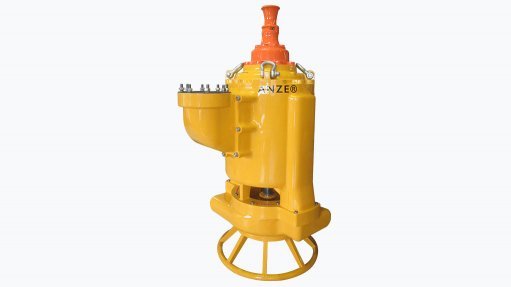
Goodwin Submersible Pumps Africa is sole distributors for Goodwin electrically driven, submersible, abrasion resistance slurry pumps.
VISIT SHOWROOM
As a reticulator, Egoli Gas provides natural gas to homes and businesses via underground pipes.
VISIT SHOWROOM


Press Office
Announcements
What's On
Subscribe to improve your user experience...
Option 1 (equivalent of R125 a month):
Receive a weekly copy of Creamer Media's Engineering News & Mining Weekly magazine
(print copy for those in South Africa and e-magazine for those outside of South Africa)
Receive daily email newsletters
Access to full search results
Access archive of magazine back copies
Access to Projects in Progress
Access to ONE Research Report of your choice in PDF format
Option 2 (equivalent of R375 a month):
All benefits from Option 1
PLUS
Access to Creamer Media's Research Channel Africa for ALL Research Reports, in PDF format, on various industrial and mining sectors
including Electricity; Water; Energy Transition; Hydrogen; Roads, Rail and Ports; Coal; Gold; Platinum; Battery Metals; etc.
Already a subscriber?
Forgotten your password?
Receive weekly copy of Creamer Media's Engineering News & Mining Weekly magazine (print copy for those in South Africa and e-magazine for those outside of South Africa)
➕
Recieve daily email newsletters
➕
Access to full search results
➕
Access archive of magazine back copies
➕
Access to Projects in Progress
➕
Access to ONE Research Report of your choice in PDF format
RESEARCH CHANNEL AFRICA
R4500 (equivalent of R375 a month)
SUBSCRIBEAll benefits from Option 1
➕
Access to Creamer Media's Research Channel Africa for ALL Research Reports on various industrial and mining sectors, in PDF format, including on:
Electricity
➕
Water
➕
Energy Transition
➕
Hydrogen
➕
Roads, Rail and Ports
➕
Coal
➕
Gold
➕
Platinum
➕
Battery Metals
➕
etc.
Receive all benefits from Option 1 or Option 2 delivered to numerous people at your company
➕
Multiple User names and Passwords for simultaneous log-ins
➕
Intranet integration access to all in your organisation