Grain SA mulls measures to appeal govt’s decision to keep wheat reference price unchanged

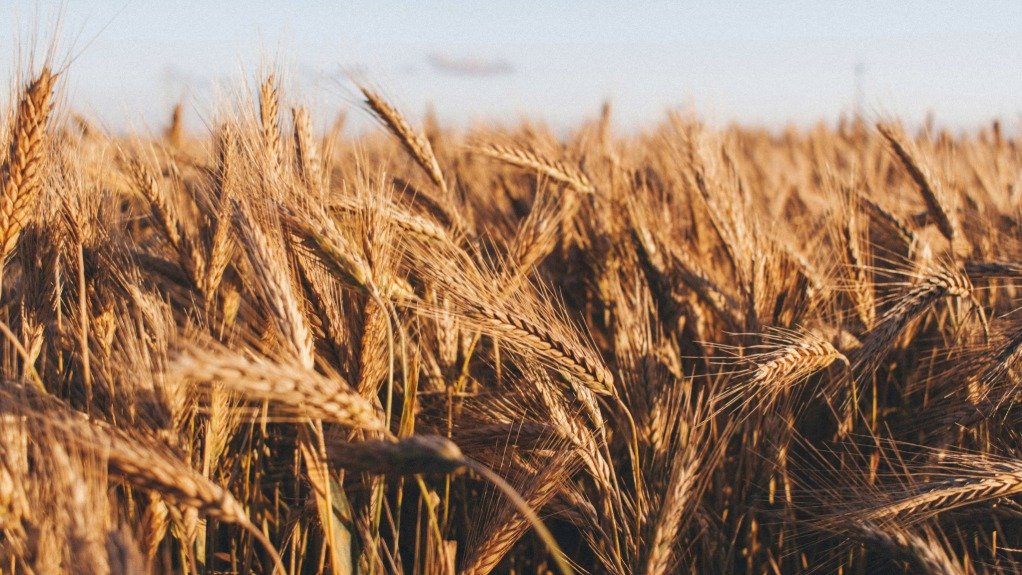


Industry body Grain SA strongly rejects the final outcome of the wheat tariff amendment investigation, following confirmation in the Government Gazette that the dollar-based reference price (DBRP) for wheat will remain unchanged at $279/t and that no automatic trigger mechanism will be implemented.
The application, submitted by Grain SA and the South African Cereals and Oilseeds Trade Association (Sacota), requested an increase in the wheat reference price from $279/t to $289/t, as well as a more efficient mechanism to address delays between tariff triggers and implementation.
None of the core requests made by the industry were approved, the organisation laments.
Grain SA regards this decision as a severe blow to wheat producers and to the long-term sustainability of South Africa’s domestic wheat industry.
“We are not satisfied with this outcome, and we do not accept the reasoning on which it is based. The decision fails to reflect the reality on wheat farms across South Africa.
“Producers are under pressure from rising input costs, volatile markets, high financing costs, logistics challenges and unfair international competition. To suggest that the current framework provides adequate protection is simply not aligned with what producers are experiencing,” says Grain SA CEO Dr Tobias Doyer.
He confirms that the organisation will now study all available avenues to challenge the decision and will continue to fight for a fair, workable and economically realistic wheat tariff dispensation.
For context, South African wheat producers are expected to compete in a global market where many international competitors benefit from substantial government support, direct and indirect subsidies, and more favourable policy environments, the organisation says.
Grain SA explains that local producers receive no comparable support, yet are expected to carry the risk of production, maintain quality standards, absorb cost increases and compete against imports priced in a heavily distorted global market.
“This decision effectively tells producers that they must continue producing under increasingly difficult conditions while receiving insufficient policy support. That is not sustainable. If South Africa wants local wheat production, then policy must recognise the realities of producing wheat in this country,” Doyer notes.
Grain SA is particularly concerned that the current policy approach undermines the very quality strategy that South Africa’s wheat industry has worked hard to maintain.
South African wheat producers produce high-quality wheat that is highly valued by millers and processors. However, the market does not reward producers adequately for that quality. Producers are expected to deliver quality, but the pricing environment does not support the additional cost and production risk associated with producing that quality.
Grain SA is particularly disappointed that the application was opposed by the National Chamber of Milling, representing an industry that depends directly on the quality wheat produced by South African farmers.
“It is deeply disappointing that the very value chain that benefits from local wheat quality would oppose a measure aimed at keeping that production viable,” says Grain SA chairperson Richard Krige.
He adds that millers value South African wheat quality, but says producers cannot continue carrying the cost and risk of that quality if the market and policy environment refuse to reward them for it.
“If quality is not valued and paid for, producers will increasingly be forced to reconsider their production strategies to survive,” Krige states.
Grain SA warns that this outcome may accelerate a shift away from high-quality wheat production, as producers are forced to prioritise yield, cultivars and production decisions that offer the best chance of financial survival.
Government, in turn, is adamant that the current DBRP continues to provide effective support, enables profitability and that the domestic wheat industry remains profitable. Grain SA strongly disputes this conclusion.
The organisation maintains that the assumptions used in the decision do not reflect the pressure at farm level.
Input costs have increased sharply over the past decade, while producer prices have failed to keep pace with the full cost of production. Costs for fertiliser, fuel, chemicals, labour, financing, mechanisation and logistics have all placed sustained pressure on wheat farming businesses.
AUTOMATION CONCERNS
Grain SA says it is also deeply disappointed that government has acknowledged delays in tariff implementation but has failed to provide a practical, immediate solution.
The gazette recognises that delays between a tariff trigger and implementation can undermine the effectiveness of the tariff and create market distortions. However, instead of approving an automatic trigger mechanism or providing a clear alternative, the final outcome refers the matter for further engagement between government departments - after the matter has already been deliberated for 19 months.
“Government acknowledges that the system is inefficient, but producers are once again left without certainty, without timelines and without a working solution. Wheat producers cannot make planting and investment decisions based on endless future consultations,” Doyer says.
He points out that a weakening domestic wheat industry will not only affect wheat farmers but also input suppliers, machinery dealers, transporters, storage facilities, millers, rural towns, workers and consumers.
“Reduced local production increases South Africa’s exposure to international price shocks, exchange-rate volatility, export restrictions and global supply disruptions,” Doyer explains.
Consumers may believe that limited tariff protection benefits them in the short term, but the long-term consequences of declining local production will ultimately be carried by the entire country, Grain SA asserts.
“The question is not whether South Africa can afford to support its wheat producers. The question is whether South Africa can afford to lose them,” Krige adds.
Grain SA will continue to advocate for a wheat tariff framework that is fair, responsive and grounded in economic reality. Grain SA will also pursue the necessary avenues to appeal or challenge the outcome and will intensify its engagement with government, industry stakeholders and producers to determine the way forward.
“Wheat producers are not asking for special treatment. They are asking for a fair chance to survive, compete and continue producing food for South Africa. Wheat farmers collectively, as Grain SA, will continue this fight for survival,” Doyer concludes.
Article Enquiry
Email Article
Save Article
Feedback
To advertise email advertising@creamermedia.co.za or click here
Research Reports

Projects

Latest Multimedia


Latest News


Showroom

The Beneficiation Academy is a certified training institution that follows all compliance legislation and is accredited with various Sector...
VISIT SHOWROOM
Sika South Africa is a trusted partner for the nation’s infrastructure, commercial, residential, and industrial sectors.
VISIT SHOWROOM


Press Office
Announcements
What's On
Subscribe to improve your user experience...
Option 1 (equivalent of R125 a month):
Receive a weekly copy of Creamer Media's Engineering News & Mining Weekly magazine
(print copy for those in South Africa and e-magazine for those outside of South Africa)
Receive daily email newsletters
Access to full search results
Access archive of magazine back copies
Access to Projects in Progress
Access to ONE Research Report of your choice in PDF format
Option 2 (equivalent of R375 a month):
All benefits from Option 1
PLUS
Access to Creamer Media's Research Channel Africa for ALL Research Reports, in PDF format, on various industrial and mining sectors
including Electricity; Water; Energy Transition; Hydrogen; Roads, Rail and Ports; Coal; Gold; Platinum; Battery Metals; etc.
Already a subscriber?
Forgotten your password?
Receive weekly copy of Creamer Media's Engineering News & Mining Weekly magazine (print copy for those in South Africa and e-magazine for those outside of South Africa)
➕
Recieve daily email newsletters
➕
Access to full search results
➕
Access archive of magazine back copies
➕
Access to Projects in Progress
➕
Access to ONE Research Report of your choice in PDF format
RESEARCH CHANNEL AFRICA
R4500 (equivalent of R375 a month)
SUBSCRIBEAll benefits from Option 1
➕
Access to Creamer Media's Research Channel Africa for ALL Research Reports on various industrial and mining sectors, in PDF format, including on:
Electricity
➕
Water
➕
Energy Transition
➕
Hydrogen
➕
Roads, Rail and Ports
➕
Coal
➕
Gold
➕
Platinum
➕
Battery Metals
➕
etc.
Receive all benefits from Option 1 or Option 2 delivered to numerous people at your company
➕
Multiple User names and Passwords for simultaneous log-ins
➕
Intranet integration access to all in your organisation