Sub-Saharan Africa's energy access lagging while almost universal elsewhere, report shows

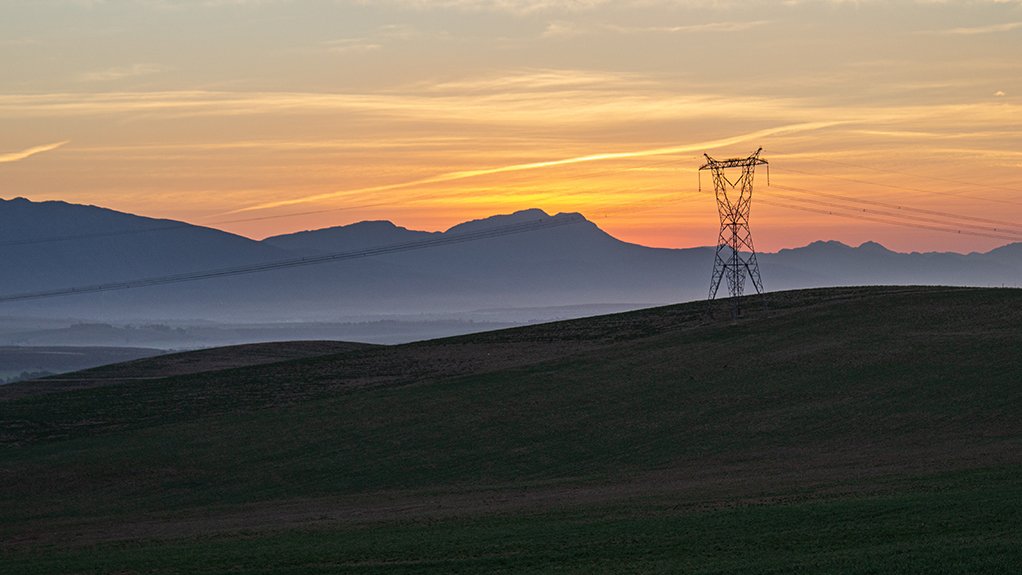



The latest edition of the yearly inter-agency publication ‘Tracking SDG 7: The Energy Progress Report’, featuring data from 2023 and 2024, shows that while most regions are nearing universal energy access, progress in sub-Saharan Africa has slowed significantly, and the pace of electrification must triple to achieve universal access by 2030.
According to the report, 560-million people in the region are without electricity and 970-million lack access to clean cooking.
However, despite these challenges, the report also highlights encouraging progress in several areas of sustainable energy.
Renewable energy continued its strong expansion, accounting for over 30% of global electricity consumption; while renewable energy generating capacity reached a global record of 544 W (enough to power a refrigerator) per person.
International public financial flows supporting clean energy in developing countries increased slightly to $24.6-billion; and improvements in global energy efficiency continued to reach 3.76 MJ/$, although this remains an insufficient pace to meet Sustainable Development Goal (SDG) 7 targets, the report points out.
It also warns that without urgent and scaled-up action, the world will fall short of achieving SDG 7 to ensure universal access to affordable, reliable, sustainable and modern energy by 2030.
Moreover, while the current global energy crisis is still unfolding, its impact on energy markets and the broader economy are expected to be significant.
Therefore, accelerating domestic renewable-energy deployment is highlighted as a means to strengthen energy security and affordability, and advance long-term climate and development objectives.
Distributed renewable energy solutions, including offgrid solar and minigrids, are posited as a cost-effective solution for electricity access.
Electric cooking, bioethanol and biogas are also gaining traction as scalable renewable energy cooking solutions, the report points out.
It notes that affordability remains a major obstacle to expanding electricity access, and even where infrastructure is available, many households cannot afford connection fees, wiring costs or basic energy services.
As countries work to reach the remaining unelectrified population, target subsidies, innovative financing mechanisms and least cost electrification solutions will be essential to ensure that no one is left behind, the report emphasises.
Financing constraints are indicated to be hampering progress, with levels either insufficient to meet the SDG 7 goals or declining altogether in the poorest countries.
International financial flows in support of clean energy to the least developed countries declined, registering $3.7-billion in 2024, an 11% decrease from 2023.
Stronger political leadership, improved cross-sector coordination, and a strategic focus on the countries and communities most at risk of being left behind remain cross-cutting priorities in the lead-up to 2030, the report outlines.
It calls for clear policy signals and sustained implementation to diversify the national energy mix, increase renewable energy, reduce dependence on fossil fuel imports and bolster macroeconomic resilience against global supply chain disruptions.
“Recent global energy shocks have made one thing clear: countries with strong renewable-energy capacity are better positioned to withstand economic and supply disruptions. Accelerating the deployment of cost-competitive domestic renewables must now be central to strengthening both energy security and economic resilience, while pursuing SDG 7.
“To achieve this, the international community must prioritise affordable and tailored financial support, particularly for least developed countries facing the greatest barriers to access,” says intergovernmental agency the International Renewable Energy Agency director-general Francesco La Camera.
The report will be presented to decision-makers at a special launch event on 8 July 2026, following the in-depth review of SDG 7 at the High-Level Political Forum on Sustainable Development in New York, which oversees progress on the SDGs.
Article Enquiry
Email Article
Save Article
Feedback
To advertise email advertising@creamermedia.co.za or click here
Research Reports

Projects

Latest Multimedia
Latest News

Showroom
The Steel Tube Export Association of South Africa was established to develop sustainable, internationally competitive carbon steel tube and pipe...
VISIT SHOWROOM
Rooted in the hearts of South Africans, combining technology and a quest for perfection to bring you a battery of peerless standing. Willard...
VISIT SHOWROOM
Press Office
Announcements
What's On
Subscribe to improve your user experience...
Option 1 (equivalent of R125 a month):
Receive a weekly copy of Creamer Media's Engineering News & Mining Weekly magazine
(print copy for those in South Africa and e-magazine for those outside of South Africa)
Receive daily email newsletters
Access to full search results
Access archive of magazine back copies
Access to Projects in Progress
Access to ONE Research Report of your choice in PDF format
Option 2 (equivalent of R375 a month):
All benefits from Option 1
PLUS
Access to Creamer Media's Research Channel Africa for ALL Research Reports, in PDF format, on various industrial and mining sectors
including Electricity; Water; Energy Transition; Hydrogen; Roads, Rail and Ports; Coal; Gold; Platinum; Battery Metals; etc.
Already a subscriber?
Forgotten your password?
Receive weekly copy of Creamer Media's Engineering News & Mining Weekly magazine (print copy for those in South Africa and e-magazine for those outside of South Africa)
➕
Recieve daily email newsletters
➕
Access to full search results
➕
Access archive of magazine back copies
➕
Access to Projects in Progress
➕
Access to ONE Research Report of your choice in PDF format
RESEARCH CHANNEL AFRICA
R4500 (equivalent of R375 a month)
SUBSCRIBEAll benefits from Option 1
➕
Access to Creamer Media's Research Channel Africa for ALL Research Reports on various industrial and mining sectors, in PDF format, including on:
Electricity
➕
Water
➕
Energy Transition
➕
Hydrogen
➕
Roads, Rail and Ports
➕
Coal
➕
Gold
➕
Platinum
➕
Battery Metals
➕
etc.
Receive all benefits from Option 1 or Option 2 delivered to numerous people at your company
➕
Multiple User names and Passwords for simultaneous log-ins
➕
Intranet integration access to all in your organisation