



Tribunal's excessive pricing judgment welcomed, but caution prevails over setting a precedent


While South Africa’s first excessive pricing case in the context of Covid-19 and under the new Competition Act amendments passed last year will potentially provide a precedent for future cases, some concerns have been raised over the market definitions and dominance applied in the matter.
The Competition Tribunal found Babelegi Workwear and Industrial Supplies guilty of excessive pricing, penalising the Pretoria-based company R76 040 on the grounds that it applied price hikes in excess of 500% between January 31 and March 5 for face masks.
On June 1, the tribunal found that Babelegi contravened Section 8(1)(a) of the Competition Act by charging excessive prices for the dust face masks that it sold to customers between January 31 and March 5.
The case progressed rapidly from first reference on April 9 by the Competition Commission to the tribunal as the first excessive pricing complaint in the context of Covid-19, with the matter heard on an urgent basis through video conferencing on April 24.
The tribunal found that Babelegi had market power during the period under review, since it behaved to an appreciable extent independently of its competitors, customers or suppliers.
“Babelegi is therefore a dominant firm during the complaint period in terms of Section 7(c) of the Competition Act,” it said at the time.
The company denied the commission’s claims against it, arguing that it did not have market power and that it was not a dominant firm in terms of Section 7(c) of the Act and that it anticipated its supplier increasing its price of masks.
The tribunal concluded that the Competition Commission established a prima facie case of abuse of dominance because Babelegi charged excessive prices for FFP1 masks during the complaint period in breach of Section 8(1)(a) of the Act.
However, a group of panellists during a webinar to unpack the findings and conclusions of the judgment, while welcoming the judgment as a significant step forward for the tribunal, grappled with questions around the market power and dominance conclusions, as well as the low penalty and price gouging and excessive pricing determinants.
Significant changes were introduced to the Competition Act and to the definition of excessive pricing, with the new law adding various other dimensions, giving the tribunal a somewhat broader scope to look into practices of excessive pricing and consider the relevant factors as in the Act, said Competition Commission deputy commissioner Hardin Ratshisusu.
It also allows the examination of other factors beyond that, he added, noting: “This is the case where the tribunal has made that clear that it has applied its discretion and has given much weight to the effects of the conduct in light of the pandemic.”
“There are issues that arise from this judgment around market power; what is market power, what is the role of market share and what do they mean in cases like this,” he said.
“The company probably has a market share of just around 5%, but what mattered in this matter was the dominance and exercise of market power that the commission alleged and the tribunal found in the commission's favour on these.”
University of Stellenbosch professor Philip Sutherland said that the issue of dominance and how dominance is determined is the most important aspect of this judgment.
“The question is to what extent the necessity, in the sense of emergency like this, can raise special issues regarding how one determines a dominance,” he said, pointing out that the dominance that was determined took place in a very short period.
The tribunal applied the arguments that a firm can be dominant if there is a surge in demand, particularly if there is also a difficulty with supply, and in this case the price was excessive.
Further, the tribunal did not do a market definition on the basis that it is difficult given the circumstances in an emergency situation. However, he said it may even be more important to look at market definition in such a case.
“As a matter of legal standard, the tribunal is required to determine the relevant market. There must be a definition of the market [before reviewing market power],” said Lawtons Africa director Nkonzo Hlatshwayo.
“I do not think you can apply the one element and completely disregard the other.”
Several considerations should be taken into account more carefully, such as the extent to which cost is determinant to increases, changes in demand, issues of detriments, and methodology around the fine, Sutherland said.
“I think from an economics perspective, there are definitely situations where you can have temporary dominance and something like a health crisis certainly gives rise to those types of issues,” said Centre for Competition Regulation and Economic Development senior researcher Pamela Mondliwa.
“When you follow the strict reading of Section 7c, you may indeed come to the conclusion that even if you have 1%, you are nevertheless dominant because of market power,” Hlatshwayo confirmed.
“That is just very, very unfortunate, as this decision stands in circumstances where when you look at the overall purpose of the provisions, you can clearly see that they were aimed at dealing with entities that were abusing their size.”
Some statements post the judgment have critiqued the move considering the fact that the firm is an unknown and that it was not an industrial giant.
“[However,] I think that this judgment makes it very clear that in Section 8, the abuse of dominance provisions apply equally to everybody in terms of Section 6 and 7 of the Act,” added Competition Commission litigation manager Candice Slump.
This could apply should a company have yearly turnover of R5-million or more and the complaint relates to a situation that you have market power, but not necessarily market share.
Further, this covers whether the company is able to control prices, exclude competition and behave as the definition in Section 8 says to an appreciable extent independently of competitors, customers or suppliers.
“You do not have to be an industrial giant. If you are a small or medium business, you are not excluded from the application of Section 8.”
“This definitely is a seminal judgment. We are going to be using this case as a point of reference for guidance in extensive competition matters going forward for many, many years,” she added.
While she noted that there is a very strong possibility that this method is going to be going on appeal, there have been no indications at this stage that there is going to be any urgent appeal that is going to be brought.
“This judgment sets the standard in respect of the manner in which the tribunal is going to interpret the recently amended provisions of the Act and the way that it will deal with excessive pricing cases in times of crisis going forward.”
Article Enquiry
Email Article
Save Article
Feedback
To advertise email advertising@creamermedia.co.za or click here
Research Reports

Projects


Latest Multimedia


Latest News
Showroom
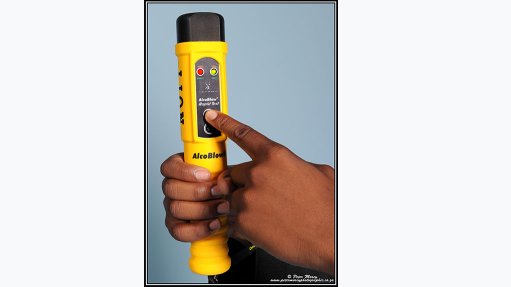
Developed to exceed the latest EN 15964 standards for police breathalysers proving that it will remain accurate and reliable for many years to come.
VISIT SHOWROOM
Rittal is a world leading provider of top-quality integrated systems for enclosures, power distribution, climate control, IT infrastructure and...
VISIT SHOWROOM



Announcements
What's On
Subscribe to improve your user experience...
Option 1 (equivalent of R125 a month):
Receive a weekly copy of Creamer Media's Engineering News & Mining Weekly magazine
(print copy for those in South Africa and e-magazine for those outside of South Africa)
Receive daily email newsletters
Access to full search results
Access archive of magazine back copies
Access to Projects in Progress
Access to ONE Research Report of your choice in PDF format
Option 2 (equivalent of R375 a month):
All benefits from Option 1
PLUS
Access to Creamer Media's Research Channel Africa for ALL Research Reports, in PDF format, on various industrial and mining sectors
including Electricity; Water; Energy Transition; Hydrogen; Roads, Rail and Ports; Coal; Gold; Platinum; Battery Metals; etc.
Already a subscriber?
Forgotten your password?
Receive weekly copy of Creamer Media's Engineering News & Mining Weekly magazine (print copy for those in South Africa and e-magazine for those outside of South Africa)
➕
Recieve daily email newsletters
➕
Access to full search results
➕
Access archive of magazine back copies
➕
Access to Projects in Progress
➕
Access to ONE Research Report of your choice in PDF format
RESEARCH CHANNEL AFRICA
R4500 (equivalent of R375 a month)
SUBSCRIBEAll benefits from Option 1
➕
Access to Creamer Media's Research Channel Africa for ALL Research Reports on various industrial and mining sectors, in PDF format, including on:
Electricity
➕
Water
➕
Energy Transition
➕
Hydrogen
➕
Roads, Rail and Ports
➕
Coal
➕
Gold
➕
Platinum
➕
Battery Metals
➕
etc.
Receive all benefits from Option 1 or Option 2 delivered to numerous people at your company
➕
Multiple User names and Passwords for simultaneous log-ins
➕
Intranet integration access to all in your organisation
