



Tongaat sugar output in recovery after two-year drought


After two consecutive years of having been impacted on by a severe drought, Tongaat Hulett’s sugar production levels across its regions are starting to recover, with the company now edging closer to its full two-million-ton-a-year capacity.
Total sugar production is expected to recover over two years to between 1.48-million tons and 1.58-million tons in 2018/19, after output dropped to 1.05-million tons in 2017 and 1.02-million tons in 2016.
The 2016 and 2017 volumes were impacted on by low cane yields, owing to the drought experienced in KwaZulu-Natal, poor growing conditions and low rainfall, as well as restricted irrigation levels in Mozambique and Zimbabwe, owing to low dam levels.
The impact of the drought and low dam levels resulted in production dropping to 500 000 t, explained CEO Peter Staude at the company’s recent results presentation.
However, an early season estimate for total sugar production in 2017/18 is between 1.17-million tons and 1.27-million tons, as the current dam levels following the “good rains at the end of 2016 into 2017” will provide full irrigation during 2017/18, which will lead to a significant crop recovery by 2018/19.
Tongaat’s South African sugar operations recovered to 353 000 t in 2017, from 323 000 t in 2016, and are expected to reach between 500 000 t and 564 000 t by 2017/18 and between 630 000 t and 680 000 t by 2018/19.
The agricultural and agroprocessing group’s Mozambique operations also recovered somewhat, despite a contraction in output from 232 000 t in 2016 to 198 000 t in 2017, and are expected to deliver between 205 000 t and 221 000 t in 2017/18 and between 265 000 t and 280 000 t in 2018/19.
Zimbabwe’s sugar production increased 10% to 454 000 t in 2017, with 2017/18 expected to net between 421 000 t and 440 000 t, increasing to 535 000 t to 570 000 t in 2018/19.
Tongaat is also undertaking programmes to enhance its yields further and recover the 500 000 t lost through intensive agricultural improvement programmes, increased hectarage under cane, irrigation efficiency and power reliability.
“Weather and growing conditions over the past two years have masked the substantial progress that is being made,” Staude pointed out.
Tongaat will continue its various programmes until it fully realises its installed milling capacity of more than two-million tons a year.
The momentum established to reduce costs has been maintained across all operations, bolstered by more effective import protection dynamics, improved local market prices and higher prices realised for exports, especially into regional African markets and the European Union.
“The decrease in costs achieved over the past four years, equivalent to some R1.45-billion in real terms, provides good momentum for the ongoing cost reduction process,” he added.
Unit costs of sugar production will reduce further with the benefit of future volume increases. The ongoing cost reduction process is focused on bought-in goods, services, transport, marketing, salaries and wages.”
Meanwhile, progress is being made in South Africa, Zimbabwe and Mozambique with regard to government support for import protection.
In South Africa, discussions are under way between the South African Sugar Association and the relevant South African government departments to increase the level of the reference price used for the import tariff determination.
“The current import tariff level is the lowest in the region and, with the volatility of the rand against the dollar, there is a risk of increased imports from overseas sources into the South African Community Union market,” Staude commented.
While the proposed sugar-sweetened beverage tax in South Africa and its socioeconomic impact are being assessed and debated, they are likely to have a limited effect on total local sugar demand.
In Zimbabwe and Mozambique, sugar refining issues are being dealt with, which should lead to the replacement of imported industrial white sugar.
Article Enquiry
Email Article
Save Article
Feedback
To advertise email advertising@creamermedia.co.za or click here
Research Reports

Projects


Latest Multimedia


Latest News


Showroom

Industrial Nozzles & Systems (Pty) Ltd (Est. 2000) exclusive representative in Southern Africa for LECHLER GmbH (Est. 1879) - Europe's leading...
VISIT SHOWROOM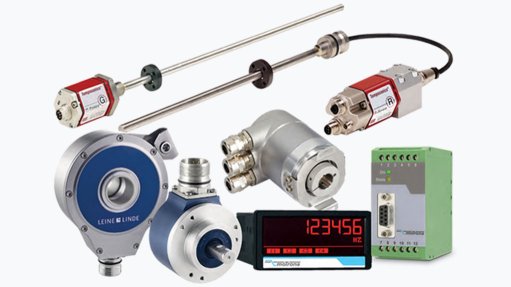
ATI systems comprises five divisions: electrical assemblies, drives and controls, feedback sensors, enclosures, and strip guiding.
VISIT SHOWROOM



Announcements
What's On
Subscribe to improve your user experience...
Option 1 (equivalent of R125 a month):
Receive a weekly copy of Creamer Media's Engineering News & Mining Weekly magazine
(print copy for those in South Africa and e-magazine for those outside of South Africa)
Receive daily email newsletters
Access to full search results
Access archive of magazine back copies
Access to Projects in Progress
Access to ONE Research Report of your choice in PDF format
Option 2 (equivalent of R375 a month):
All benefits from Option 1
PLUS
Access to Creamer Media's Research Channel Africa for ALL Research Reports, in PDF format, on various industrial and mining sectors
including Electricity; Water; Energy Transition; Hydrogen; Roads, Rail and Ports; Coal; Gold; Platinum; Battery Metals; etc.
Already a subscriber?
Forgotten your password?
Receive weekly copy of Creamer Media's Engineering News & Mining Weekly magazine (print copy for those in South Africa and e-magazine for those outside of South Africa)
➕
Recieve daily email newsletters
➕
Access to full search results
➕
Access archive of magazine back copies
➕
Access to Projects in Progress
➕
Access to ONE Research Report of your choice in PDF format
RESEARCH CHANNEL AFRICA
R4500 (equivalent of R375 a month)
SUBSCRIBEAll benefits from Option 1
➕
Access to Creamer Media's Research Channel Africa for ALL Research Reports on various industrial and mining sectors, in PDF format, including on:
Electricity
➕
Water
➕
Energy Transition
➕
Hydrogen
➕
Roads, Rail and Ports
➕
Coal
➕
Gold
➕
Platinum
➕
Battery Metals
➕
etc.
Receive all benefits from Option 1 or Option 2 delivered to numerous people at your company
➕
Multiple User names and Passwords for simultaneous log-ins
➕
Intranet integration access to all in your organisation
