



The successful project sponsor


By: Willem Louw
One often hears this statement: “I do not only want to know what a project sponsor should do – it is even more important for me to know how I should behave to be successful as a project sponsor.”
To a great extent, this is indicative of and corroborates the notion that, for a role as crucial as that of the sponsor of a capital project, there is very little material available to support and guide such individuals in doing their job to the best of their ability.
Definition of ‘Project Sponsor’
In an article on this topic, titled ‘Success and the sponsor’ and written by Virginia Fairweather and published in the Executive Guide to Project Management of the Project Management Institute (PMI) in 2006, Terence J Cooke-Davies, then executive chairperson of London-based Human Systems International, defines a project sponsor as a member of the executive team responsible for projects on behalf of the organisation, whose primary job is governance, to ensure that projects meet the organisation’s goals and comply with its policies.
Successful Executive Sponsor
In the Fairweather article, Lynn Crawford, then professor of project management at the ESC Lille Graduate School of Management, in Lille, France, distinguishes between external and internal projects and differentiates between executive sponsors responsible for internal efforts, such as restructuring the company, developing an innovative product or constructing a new capital asset – rather than an external job for a client. For the purpose of this article, the ‘what’ and ‘how’ of an execu- tive sponsor will focus on the development and implementation of a capital asset for a client and is thus externally focused.
Also in the Fairweather article, Shelley Gaddie, president of Project Corps, of the US, states that there are responsibilities and qualities that contribute significantly to the success of a sponsor on a given project. These include:
- accountability for delivering both project and postproject benefits to the owner;
- regular reporting of tangible evidence of progress and the postproject benefits to a higher authority;
- assurance that time (personal and organi- sational) and a budget are available to the project team;
- authority to investigate and resolve issues that arise during the project; and
- responsibility to identify and actively manage all project risks.
According to Gaddie, specifics of ‘how’ to be a successful sponsor start entering the equation at this juncture through the following dimensions:
- Successful executive sponsors must be politically connected throughout the organisation and be willing and able to engage in regular dialogue with project team members and stakeholders.
- They need to go beyond ‘management by report’.
- They should benefit significantly from the value the project will provide by having a stake in the delivery of the project.
- They must be willing to hand over sponsorship to someone else or even ‘kill’ the project, if necessary. This is something that does not come easily for an individual that does not have the ability to interpret the ‘bigger picture’ in the organisational context.
With value in mind, executive sponsors’ duties start with making the business case highly visible and obvious to other executive team members. This rationale should continuously be focused on the balance between the justification for the project in terms of return on investment, as well as on the company’s policies and goals (read strategy).
The executive sponsor is the critical link between senior executives and the project team, consistently ensuring that all parties understand why the project is important and why scarce resources should be allocated to it.
According to Fairweather, the executive sponsor must be a superlative strategist who monitors project scope to ensure that the end-result will deliver strategic benefits. The executive sponsor is responsible for ensuring strategic alignment and must make sure that executive peers and the project team understand the value of the project to the entire organisation and to its goals and vision for the future.
Common Mistakes
If the project has suffered because of an ineffective executive sponsor, analysis shows that there are a number of common mistakes that would have been made. These are typically found in this checklist and are quoted verbatim from the Fairweather article: managing from behind the desk, assuming other executives support the project, abdicating responsibility, neglecting the potential downside, micromanaging and passivity.
Checklist for a Successful Executive Sponsor
To be a successful executive sponsor on a capital project, the following list, compiled by Yugoslav project management consultant Miroslav Jankovic, may be a useful point of departure:
- fully appreciate the complexity of the project and how it interrelates with other projects;
- establish priorities on the project within its environment;
- broadcast the strategy of the organisation and how the project contributes to its goals;
- display and demonstrate buy-in and commitment to fundamental project principles;
- empower the project manager to make authoritative team decisions;
- approve and sign key project planning deliverables and documents in a timely manner;
- promote performance visibility of the project within the organisation to all stakeholders and potential and interested clients;
- review the project’s status and progress regularly so issues do not surprise you;
- ascertain that the right project manager and functional/technical discipline team members are selected; and
- ensure that project risks are determined and managed.
Conclusion
The bottom line to being successful as a sponsor is that ‘emotional’ leadership needs to be displayed by an executive sponsor at three levels. This is distinctly achievable if the above guidelines are followed. Sponsors must focus on the task, manage relationships and examine their own attitude and values. They have to convey a passionate belief in the project. Success will then follow.
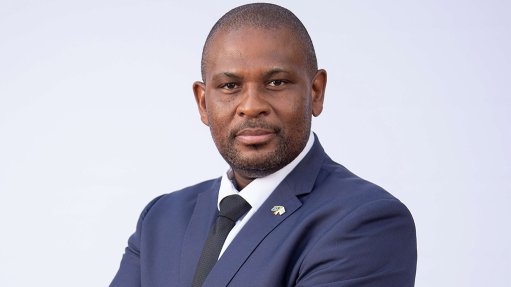
Louw is director of the Centre for Business Management of Projects at University of Stellenbosch Business School Executive Development (USB-ED). Prior to joining USB-ED, he was at the helm of Sasol's technology business unit - WillemLouw@usb-ed.com
Article Enquiry
Email Article
Save Article
Feedback
To advertise email advertising@creamermedia.co.za or click here
Research Reports

Projects


Latest Multimedia


Latest News
Showroom

Design, Construction and Maintenance of Site Erected, Welded Bulk Storage Tanks for the Petrochemical, LNG, Ammonia and Sustainable fuel Sectors.
VISIT SHOWROOM
ISO-certified Condra manufactures overhead cranes, portal cranes, cantilever cranes and crane components: hoists, drives, end-carriages, brakes and...
VISIT SHOWROOM



Press Office
Announcements
What's On
Subscribe to improve your user experience...
Option 1 (equivalent of R125 a month):
Receive a weekly copy of Creamer Media's Engineering News & Mining Weekly magazine
(print copy for those in South Africa and e-magazine for those outside of South Africa)
Receive daily email newsletters
Access to full search results
Access archive of magazine back copies
Access to Projects in Progress
Access to ONE Research Report of your choice in PDF format
Option 2 (equivalent of R375 a month):
All benefits from Option 1
PLUS
Access to Creamer Media's Research Channel Africa for ALL Research Reports, in PDF format, on various industrial and mining sectors
including Electricity; Water; Energy Transition; Hydrogen; Roads, Rail and Ports; Coal; Gold; Platinum; Battery Metals; etc.
Already a subscriber?
Forgotten your password?
Receive weekly copy of Creamer Media's Engineering News & Mining Weekly magazine (print copy for those in South Africa and e-magazine for those outside of South Africa)
➕
Recieve daily email newsletters
➕
Access to full search results
➕
Access archive of magazine back copies
➕
Access to Projects in Progress
➕
Access to ONE Research Report of your choice in PDF format
RESEARCH CHANNEL AFRICA
R4500 (equivalent of R375 a month)
SUBSCRIBEAll benefits from Option 1
➕
Access to Creamer Media's Research Channel Africa for ALL Research Reports on various industrial and mining sectors, in PDF format, including on:
Electricity
➕
Water
➕
Energy Transition
➕
Hydrogen
➕
Roads, Rail and Ports
➕
Coal
➕
Gold
➕
Platinum
➕
Battery Metals
➕
etc.
Receive all benefits from Option 1 or Option 2 delivered to numerous people at your company
➕
Multiple User names and Passwords for simultaneous log-ins
➕
Intranet integration access to all in your organisation
