The Red Seal scandal that nobody in government wants to talk about





Imagine training for four years. Early mornings, physical labour, classroom theory, practical assessments, and thousands of hours of hands-on experience. Then imagine passing your trade test – only to discover that your career is placed on hold because your Red Seal certificate never arrives.
For thousands of South African artisans, that is the reality. The nationally recognised Red Seal certificate unlocks better pay, formal employment, professional recognition and opportunities across borders. Yet many qualified artisans wait months – and sometimes years – to receive it.
What the Red Seal Means
Administered through the Department of Higher Education and Training (DHET) and the relevant Sector Education and Training Authorities (SETAs), the Red Seal is the official proof that an artisan meets the national standard required under the Artisans Regulations of 2013.Without it, artisans may have completed every requirement but still struggle to prove their qualifications to employers, register with professional bodies, bid for certain contracts or perform regulated work independently. In today’s labour market, the difference between being qualified and being recognized as qualified has significant financial consequences.
Training provider Artisan Training Institute spoke to graduates across trades including electrical, plumbing, boilermaking and fitting and turning who waited anywhere from six months to two years for their certificates.
The pattern is familiar. The trade test is completed, results are submitted and acknowledged by the SETA – then communication stops and responsibility is passed between SETAs and the DHET while qualified artisans remain unable to prove their status.
One electrician lost an opportunity with a multinational company because the employer required the physical certificate before making a formal appointment. Another qualified fitter and turner missed out on work in Namibia, where South African Red Seal qualifications are recognised, because the certificate had not yet been issued.These are symptoms of a systemic failure.
Bureaucratic Bottleneck
The administrative process between trade test centres, SETAs and the DHET remains fragmented and inconsistently digitised. Multiple verification stages create backlogs, while staff shortages slow processing even further.
Although DHET guidelines refer to certificates being issued within a “reasonable period”, no legal timeframe exists and there are no consequences when delays stretch on indefinitely.
Funding constraints, institutional uncertainty and a lack of political urgency have compounded the problem. While South Africa urgently needs skilled artisans, those who have already qualified remain trapped in administrative limbo.
The consequences extend far beyond frustration.
A newly qualified electrician earning R20 000 a month could qualify for a R28 000 position once their Red Seal is issued. A 12-month delay therefore represents R96 000 in lost income.
Multiply that across thousands of artisans and the economic cost becomes enormous. Employers delay appointments, projects requiring certified artisans slow down, and valuable skills remain underutilized.
The long-term damage is equally serious. Young people hear these stories and begin questioning whether pursuing a trade is worth the effort, weakening South Africa’s future artisan pipeline.
A Better Way
Many countries have solved this problem.
Australia issues digital trade qualifications within about 30 days of assessment, with physical certificates following later. Germany typically issues its journeyman certificates within four to six weeks through clearly accountable systems. In the UK, digital credentials are often available within days of results being confirmed.
South Africa already has the technical infrastructure through the National Learner Records Database, but the missing ingredient is implementation.
Straightforward Solution
Digital certificates should be issued within 30 days of a successful trade test and carry the same legal status as physical certificates. DHET should introduce enforceable turnaround standards, clear existing backlogs through a dedicated task team and publish quarterly performance reports showing certificate turnaround times by SETA and trade.
Artisans also need a formal complaints process with clear accountability instead of being passed endlessly between departments.
Artisan Training Institute remains committed to supporting learners beyond the classroom and advocating for meaningful reform of South Africa’s certificate issuance process. We urge government, employers, industry bodies and training providers to work together to ensure qualified artisans receive the recognition they have earned without unnecessary delay.
Article Enquiry
Email Article
Save Article
Feedback
To advertise email advertising@creamermedia.co.za or click here
Research Reports

Projects


Latest Multimedia

Latest News

Showroom

Supplier & Distributor of the Widest Range of Accurate & Easy-to-Use Alcohol Breathalysers
VISIT SHOWROOM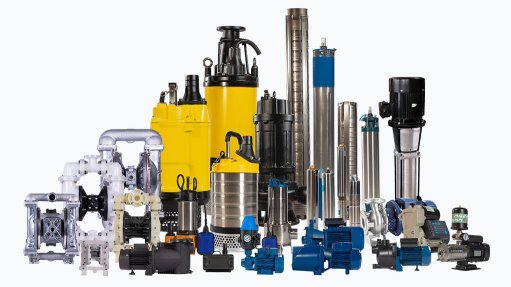
AxFlow AQS Liquid Transfer (Pty) Ltd is an Importer and Distributor of Pumps in Southern Africa
VISIT SHOWROOM


Press Office
Announcements
What's On
Subscribe to improve your user experience...
Option 1 (equivalent of R125 a month):
Receive a weekly copy of Creamer Media's Engineering News & Mining Weekly magazine
(print copy for those in South Africa and e-magazine for those outside of South Africa)
Receive daily email newsletters
Access to full search results
Access archive of magazine back copies
Access to Projects in Progress
Access to ONE Research Report of your choice in PDF format
Option 2 (equivalent of R375 a month):
All benefits from Option 1
PLUS
Access to Creamer Media's Research Channel Africa for ALL Research Reports, in PDF format, on various industrial and mining sectors
including Electricity; Water; Energy Transition; Hydrogen; Roads, Rail and Ports; Coal; Gold; Platinum; Battery Metals; etc.
Already a subscriber?
Forgotten your password?
Receive weekly copy of Creamer Media's Engineering News & Mining Weekly magazine (print copy for those in South Africa and e-magazine for those outside of South Africa)
➕
Recieve daily email newsletters
➕
Access to full search results
➕
Access archive of magazine back copies
➕
Access to Projects in Progress
➕
Access to ONE Research Report of your choice in PDF format
RESEARCH CHANNEL AFRICA
R4500 (equivalent of R375 a month)
SUBSCRIBEAll benefits from Option 1
➕
Access to Creamer Media's Research Channel Africa for ALL Research Reports on various industrial and mining sectors, in PDF format, including on:
Electricity
➕
Water
➕
Energy Transition
➕
Hydrogen
➕
Roads, Rail and Ports
➕
Coal
➕
Gold
➕
Platinum
➕
Battery Metals
➕
etc.
Receive all benefits from Option 1 or Option 2 delivered to numerous people at your company
➕
Multiple User names and Passwords for simultaneous log-ins
➕
Intranet integration access to all in your organisation