The most expensive weld is the one you have to do twice



This article has been supplied.
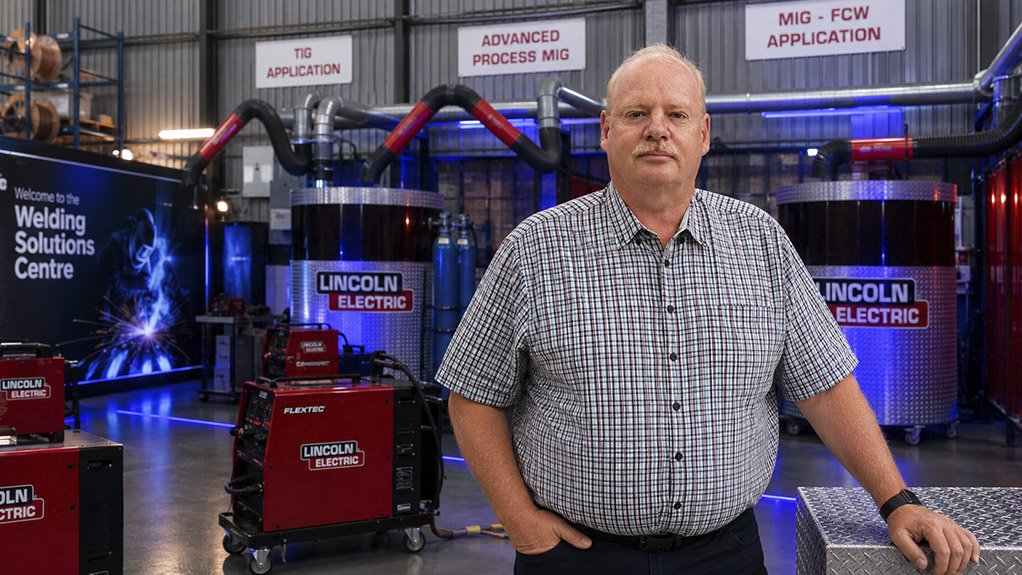
By Hendrik du Toit, Managing Director: Plant Services, Babcock
In fabrication, maintenance and manufacturing environments, one of the most expensive activities is often the one that was never planned.
Rework.
Whether it involves repairing a failed weld, correcting a fabrication defect, repeating an inspection process or addressing a quality issue after installation, rework consumes time, materials, labour and production capacity that can never be recovered.
This is why the most expensive weld is often the one that has to be done twice.
For many years, productivity in welding operations was measured primarily through output. How many metres were welded? How quickly could a job be completed? How much material could be processed within a shift?
While these measures remain important, they tell only part of the story.
Increasingly, organisations are recognising that true productivity is not simply about welding faster. It is about getting the weld right the first time.
In manufacturing terms, this is about improving first-pass yield: the ability to complete work correctly the first time, without repair, rework or repeated inspection.
Across industries such as mining, power generation, manufacturing, petrochemicals and infrastructure development, quality failures can have significant consequences. A welding defect identified during fabrication may result in additional labour and consumable costs. A defect discovered during commissioning can delay project schedules. A failure identified in service can lead to unplanned downtime, safety risks and substantial repair costs.
In critical applications, welding quality is not only a productivity issue; it is a safety and reliability issue.
The further a defect progresses through the production process, the more expensive it becomes to correct.
This is why leading fabricators and maintenance teams are increasingly shifting their focus from productivity alone to quality-driven productivity.
The objective is no longer simply to increase welding speed or throughput. It is to reduce rework, improve first-pass yield and ensure that every welding operation contributes to the overall efficiency of the project or facility.
This shift is particularly relevant in today's operating environment.
Across many sectors, organisations are facing pressure to do more with existing resources. Skilled labour remains in high demand, project schedules are becoming increasingly demanding and customers continue to expect higher levels of quality, reliability and performance.
In this environment, rework represents a cost that few businesses can afford.
Achieving consistent welding quality requires more than skilled operators alone.
Successful welding operations depend on a combination of factors, including the correct welding procedures, appropriate consumable selection, equipment performance, operator competence and technical support. Each element plays a critical role in ensuring that quality is built into the process rather than inspected into the final product.
Importantly, advances in welding technology are also helping organisations improve quality outcomes. Modern welding equipment offers greater process control, consistency and repeatability, while developments in consumables continue to support improved weld performance across a wide range of applications.
However, technology on its own is not the answer.
Even the most advanced welding system cannot compensate for poor procedures, inadequate training or a lack of application knowledge. This is why technical expertise remains such an important component of successful welding operations.
Increasingly, organisations are recognising the value of working with partners who can provide not only equipment and consumables, but also technical guidance, application support and skills development.
At Babcock, we see this every day across the industries we support. Whether working with customers in fabrication, maintenance, mining, power generation or manufacturing, the most successful projects are typically those where quality is considered from the outset rather than addressed after problems occur.
Through our partnership with Lincoln Electric, combined with our local technical expertise, welding consumables, equipment solutions, repair services and training capabilities, we support customers in achieving higher levels of quality, productivity and operational performance.
Importantly, these outcomes are not achieved by working faster. They are achieved by working smarter.
The welding industry is undergoing significant change as organisations seek new ways to improve efficiency, reduce costs and remain competitive. Yet despite advances in automation, digital technologies and equipment performance, one principle remains unchanged.
Quality is still the foundation of productivity.
The organisations that will achieve the greatest success in the years ahead will not necessarily be those that weld the fastest. They will be those that minimise rework, maximise quality and consistently deliver right-first-time outcomes.
Because in welding, as in business, the most expensive job is often the one that has to be done twice.
Article Enquiry
Email Article
Save Article
Feedback
To advertise email advertising@creamermedia.co.za or click here
Research Reports

Projects

Latest Multimedia

Latest News

Showroom
M and J Mining are leading suppliers of physical support systems as used by the underground mining industry. Our selection of products are not...
VISIT SHOWROOM
Virtual Gas Network supplies compressed natural gas via a virtual gas distribution network.
VISIT SHOWROOM
Press Office
Announcements
What's On
Subscribe to improve your user experience...
Option 1 (equivalent of R125 a month):
Receive a weekly copy of Creamer Media's Engineering News & Mining Weekly magazine
(print copy for those in South Africa and e-magazine for those outside of South Africa)
Receive daily email newsletters
Access to full search results
Access archive of magazine back copies
Access to Projects in Progress
Access to ONE Research Report of your choice in PDF format
Option 2 (equivalent of R375 a month):
All benefits from Option 1
PLUS
Access to Creamer Media's Research Channel Africa for ALL Research Reports, in PDF format, on various industrial and mining sectors
including Electricity; Water; Energy Transition; Hydrogen; Roads, Rail and Ports; Coal; Gold; Platinum; Battery Metals; etc.
Already a subscriber?
Forgotten your password?
Receive weekly copy of Creamer Media's Engineering News & Mining Weekly magazine (print copy for those in South Africa and e-magazine for those outside of South Africa)
➕
Recieve daily email newsletters
➕
Access to full search results
➕
Access archive of magazine back copies
➕
Access to Projects in Progress
➕
Access to ONE Research Report of your choice in PDF format
RESEARCH CHANNEL AFRICA
R4500 (equivalent of R375 a month)
SUBSCRIBEAll benefits from Option 1
➕
Access to Creamer Media's Research Channel Africa for ALL Research Reports on various industrial and mining sectors, in PDF format, including on:
Electricity
➕
Water
➕
Energy Transition
➕
Hydrogen
➕
Roads, Rail and Ports
➕
Coal
➕
Gold
➕
Platinum
➕
Battery Metals
➕
etc.
Receive all benefits from Option 1 or Option 2 delivered to numerous people at your company
➕
Multiple User names and Passwords for simultaneous log-ins
➕
Intranet integration access to all in your organisation