



The Banking Association of South Africa's Cas Coovadia on SA's 20 years of democracy

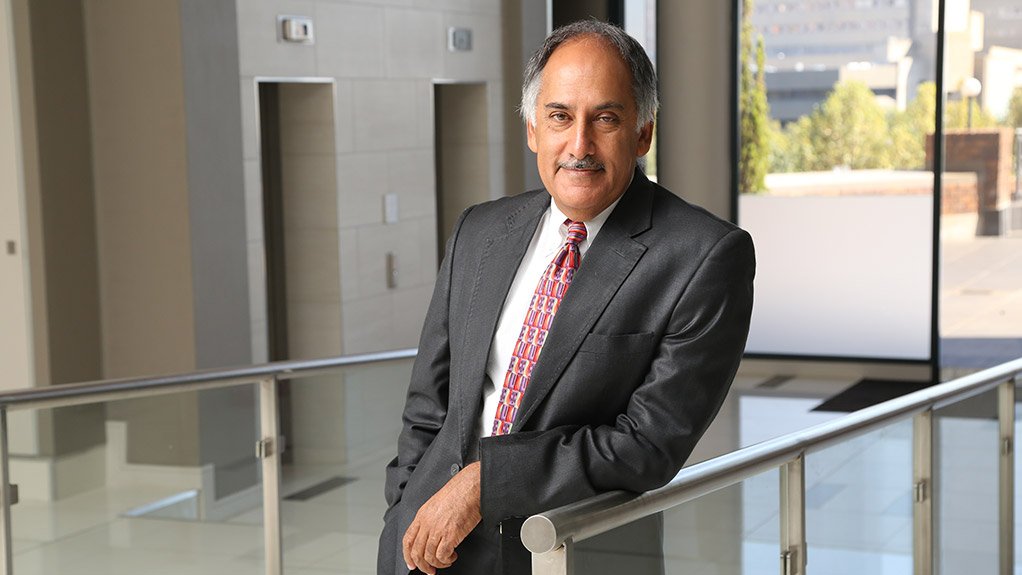



There is absolutely no doubt that South Africa is a better place to live in 20 years into our democracy.
The banking industry has made strides in conjunction with government in addressing inequities in economic access and economic control. Through the Finance Linked Individual Subsidy Programme (FLISP) and other government initiatives, over two-million houses have been provided for low-income people in the 20 years of our democracy, more than any other nation coming out of repression into democracy. We have worked with others to put Africa, our continent, on the global map and we have built an economy in South Africa that has the potential to grow and contribute to the ongoing growth of the continent.
The banking industry has played a critical role in socioeconomic transformation and growth through the Financial Sector Code and other initiatives, leading to increasing financial inclusion. The banking sector has, through its performance under the Financial Sector Code up to December 2008, had the following successes:
- Housing finance to black people
- SME finance to black people
- Percentage of black people in junior, middle and senior management respectively
- Percentage of ownership of banks by black people
The banking sector has grown significantly in the last 20 years. Aggregate bank assets in December 1995 amounted to R401,8-billion. Bank assets in December 2012 amounted to R3,5-trillion. The sector has also become global in its nature, with numerous South African banks having a presence in different parts of the world. The sector has also grown its African footprint substantially.
However, the financial crisis in the US and parts of Europe in 2008 led to a significant tightening up of legislation, with increases in regulations. Although South African banks were resilient throughout the crisis, and continue to be so, we have been subject to global regulatory changes. These include the BASEL regulatory changes, treating customers fairly regulations and the 'Twin Peaks' regime being introduced in South Africa. This makes banking more complex and expensive, which inhibits efforts at financial inclusion. The 2013 Finscope results show 76% of bankable people are banked. This is a far cry from the early nineties!
The banking sector, together with the broader business sector, is committed to concretising the National Development Plan (NDP). Thus, we will, in the next few years, devote abouth 30% of the sectors time ti developing programmes we can implement, as informed by the NDP, in consultation with government on the legislative and regulatory issues, and other business groupings. We will also concentrate our efforts on human settlements, including working with government to address the spatial development challenge, the promotion of SMEs which will also assist with the issue of unemployment, especially youth unemployment, infrastructure finance and financial inclusion.
South Africa has undoubtedly changed for the better in the 20 years of democracy. We have a robust democracy, a Constitution respected globally and institutional structures to protect the Constitution and our hard-won democracy.
However, we also have significant problems:
- Inequality in conditions of living, access to employment and services and opportunity is still stark
- There are uncomfortable signs that some forces, through their conduct, could threaten our Constitution and the institutions established to protect it
- Corruption, in all sectors of society, is becoming ingrained
- We are failing to promote a meritocracy in government,
- There are severe problems in critical areas of service delivery. These capacity issues and a culture of rewarding mediocrity include our education system, health system, municipal government and housing
All South Africans must address these problems jointly. We must develop leadership across critical stakeholders that will be ready to put a national interest agenda on the table, talk about these hard issues and make the necessary compromises in the long-term national interest.
The banking sector is ready to play its role in this broader initiative!
Article Enquiry
Email Article
Save Article
Feedback
To advertise email advertising@creamermedia.co.za or click here
Research Reports

Projects

Latest Multimedia

Latest News

Showroom

The SAIMM started as a learned society in 1894 after the invention of the cyanide process that saved the South African gold mining industry of the...
VISIT SHOWROOM
ECG provides specialised electrical engineering services to the Mining, Utilities, Materials Handling and Industrial industries, with extensive and...
VISIT SHOWROOM

Press Office
Announcements
What's On
Subscribe to improve your user experience...
Option 1 (equivalent of R125 a month):
Receive a weekly copy of Creamer Media's Engineering News & Mining Weekly magazine
(print copy for those in South Africa and e-magazine for those outside of South Africa)
Receive daily email newsletters
Access to full search results
Access archive of magazine back copies
Access to Projects in Progress
Access to ONE Research Report of your choice in PDF format
Option 2 (equivalent of R375 a month):
All benefits from Option 1
PLUS
Access to Creamer Media's Research Channel Africa for ALL Research Reports, in PDF format, on various industrial and mining sectors
including Electricity; Water; Energy Transition; Hydrogen; Roads, Rail and Ports; Coal; Gold; Platinum; Battery Metals; etc.
Already a subscriber?
Forgotten your password?
Receive weekly copy of Creamer Media's Engineering News & Mining Weekly magazine (print copy for those in South Africa and e-magazine for those outside of South Africa)
➕
Recieve daily email newsletters
➕
Access to full search results
➕
Access archive of magazine back copies
➕
Access to Projects in Progress
➕
Access to ONE Research Report of your choice in PDF format
RESEARCH CHANNEL AFRICA
R4500 (equivalent of R375 a month)
SUBSCRIBEAll benefits from Option 1
➕
Access to Creamer Media's Research Channel Africa for ALL Research Reports on various industrial and mining sectors, in PDF format, including on:
Electricity
➕
Water
➕
Energy Transition
➕
Hydrogen
➕
Roads, Rail and Ports
➕
Coal
➕
Gold
➕
Platinum
➕
Battery Metals
➕
etc.
Receive all benefits from Option 1 or Option 2 delivered to numerous people at your company
➕
Multiple User names and Passwords for simultaneous log-ins
➕
Intranet integration access to all in your organisation
