Sub-Saharan Africa may well become world’s solution to agriculture land shortages, BMI says

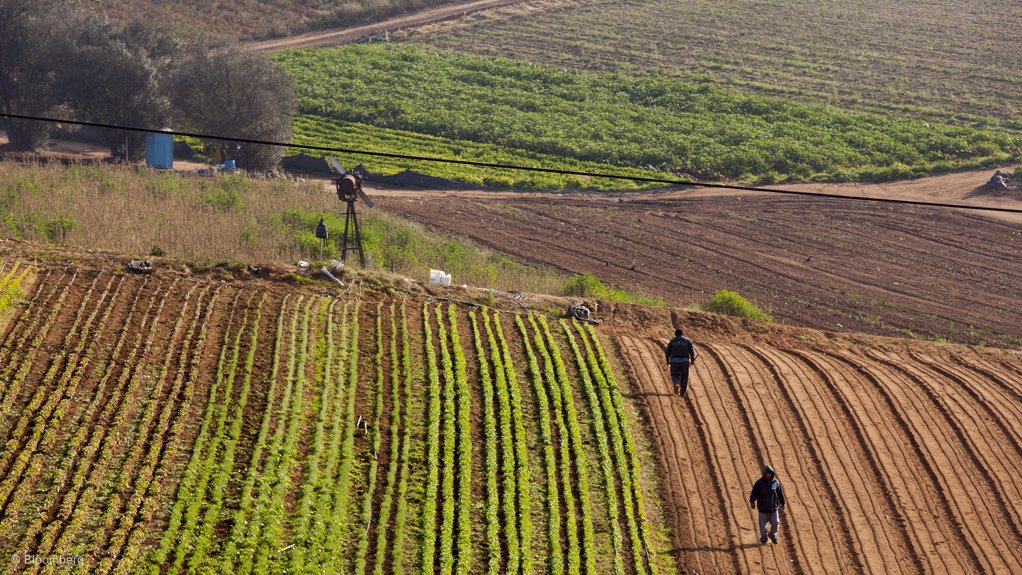


Sub-Saharan Africa remains one of the world’s most important future sources of agriculture supply growth, with the region holding about 60% of the world’s uncultivated arable land.
According to research agency BMI, sub-Saharan Africa has robust acreage potential, with an estimated expansion potential of about 200-million hectares; however, substantial productivity gaps remain within existing farmland – yields are often well below global averages for key crops such as rice and other grains.
Other factors hampering growth in sub-Saharan African agriculture include minimal irrigation coverage, low fertiliser use and rain-fed agriculture, in addition to the global climate risk that will disproportionately impact this region.
BMI commodities analyst Bin Hui Ong says improved farming practices, input use and infrastructure can translate into meaningful production gains in sub-Saharan Africa. “Securing land tenure, expanding access to finance, building logistics and irrigation infrastructure and strengthening institutional frameworks are crucial,” she adds.
Ong emphasises that sub-Saharan Africa’s underutilised land is an increasingly important consideration for global supply. “The region’s long-term importance to global agriculture supply is difficult to ignore but growing output in the region is a multi-decade proposition,” she states.
Sharing BMI’s view in general about the global agriculture sector, she points out that agriculture systems are being asked to support food security, decarbonisation and energy security objectives, which is creating new competition for land, water and feedstock through to 2050.
For example, biofuel mandates in countries such as Brazil, India and Indonesia are raising demand for crops such as corn, soybean, palm oil and sugarcane.
BMI says the food/energy/land competition is expected to constrain global agriculture output over the coming decade.
Indonesia’s pursuit of ambitious biofuel mandates, for one, has increased domestic demand for palm oil, challenging food stock expansion. Meeting the “B50 mandate” would require substantial volumes of palm oil, potentially reducing exportable volumes.
Domestic policy decisions in large palm oil producing markets can have significant implications for global agriculture balances. Ong says the challenge is one of allocation rather than production, as agriculture systems must balance food security, energy security and biofuel objectives.
Another global trend is that of a shrinking available labour pool in many markets owing to rural to urban migration, aging populations and the declining attractiveness of agriculture work.
Ong says the average age of farmers already exceeds 55 and demographic trends suggest these pressures are likely to intensity. In this regard, AI and automation are expected to play an increasingly important role in alleviating labour shortages, but access to these technologies will be unevenly distributed.
More factors shaping crop demand through 2050 are shifts in consumer preferences, Ong explains, citing a particular shift in consumer preferences toward protein-rich foods and sustainability.
She highlights that pulse consumption has trended upwards, with broad shifts in consumer preferences toward alternatives to traditional carbohydrates and sugars. Certain medications are also driving demand for protein-dense and nutrient-rich alternatives, reinforcing trends towards protein crops and legumes.
While climate change is a dominating factor in discussions affecting agriculture through to 2050, the defining story is one of adaptation across all megatrends affecting the sector.
Ong explains that markets with abundant resources, strong institutions, modern infrastructure and the ability to deploy new technologies will be best positioned to capture opportunities.
In turn, markets characterised by chronic water stress, weak infrastructure and low adaptive capacity will likely face the greatest challenges.
BMI ultimately finds a growing divergence between agriculture “winners and losers”. There is a slowing yield growth for major crops, a decline in agriculture land use and increasing exposure to climate-related risks globally, however, certain regions such as Canada and Russia can potentially benefit from improved crop suitability with changing weather patterns.
Regions such as sub-Saharan Africa, North Africa and the Middle East, however, face significant challenges owing to low irrigation rates and slower adoption of climate-resistant technologies such as drought-tolerant crop varieties and gene editing.
“The ability to adapt to these changes will be crucial for future agriculture resilience,” BMI concludes.
Article Enquiry
Email Article
Save Article
Feedback
To advertise email advertising@creamermedia.co.za or click here
Research Reports
Projects

Latest Multimedia


Latest News


Showroom

Sulzer South Africa, established in 1922, partners with critical industries like power, oil & gas, water, mining, and chemicals to boost...
VISIT SHOWROOM
We at Hawk High Pressure Pumps specialise in industrial pumps and pumping systems. Our high pressure washing equipment is locally manufactured and...
VISIT SHOWROOM



Announcements
What's On
Subscribe to improve your user experience...
Option 1 (equivalent of R125 a month):
Receive a weekly copy of Creamer Media's Engineering News & Mining Weekly magazine
(print copy for those in South Africa and e-magazine for those outside of South Africa)
Receive daily email newsletters
Access to full search results
Access archive of magazine back copies
Access to Projects in Progress
Access to ONE Research Report of your choice in PDF format
Option 2 (equivalent of R375 a month):
All benefits from Option 1
PLUS
Access to Creamer Media's Research Channel Africa for ALL Research Reports, in PDF format, on various industrial and mining sectors
including Electricity; Water; Energy Transition; Hydrogen; Roads, Rail and Ports; Coal; Gold; Platinum; Battery Metals; etc.
Already a subscriber?
Forgotten your password?
Receive weekly copy of Creamer Media's Engineering News & Mining Weekly magazine (print copy for those in South Africa and e-magazine for those outside of South Africa)
➕
Recieve daily email newsletters
➕
Access to full search results
➕
Access archive of magazine back copies
➕
Access to Projects in Progress
➕
Access to ONE Research Report of your choice in PDF format
RESEARCH CHANNEL AFRICA
R4500 (equivalent of R375 a month)
SUBSCRIBEAll benefits from Option 1
➕
Access to Creamer Media's Research Channel Africa for ALL Research Reports on various industrial and mining sectors, in PDF format, including on:
Electricity
➕
Water
➕
Energy Transition
➕
Hydrogen
➕
Roads, Rail and Ports
➕
Coal
➕
Gold
➕
Platinum
➕
Battery Metals
➕
etc.
Receive all benefits from Option 1 or Option 2 delivered to numerous people at your company
➕
Multiple User names and Passwords for simultaneous log-ins
➕
Intranet integration access to all in your organisation