



Square Kilometre Array project, South Africa and Australia


Name and Location
Square Kilometre Array (SKA) project, South Africa and Australia.
Client
The international SKA project is run by the UK-based SKA Organisation. The project in South Africa is the responsibility of a separate, local organisation, SKA SA.
Project Description
The aim of the project is to construct an SKA, which will be an interferometric array of individual antenna stations, synthesising an aperture, with a diameter of up to several thousand kilometres.
The SKA will operate over a range of frequencies from about 100 MHz to 25 GHz.
The radio telescope array will deploy a total collecting area of 1 km2 and will comprise a very large number of elements.
It will consist of 3 000 radio telescope dishes, each 12 m to 15 m in diameter and other hybrid technologies.
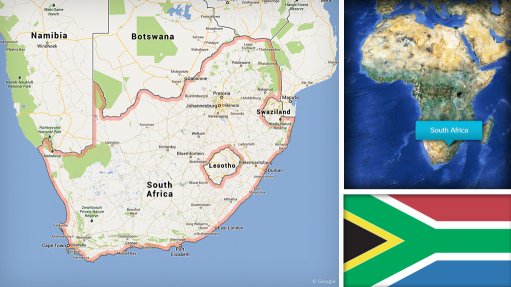
Three-quarters of the SKA project will be hosted in South Africa and will be located at a remote site 80 km from Carnarvon, in the Northern Cape; with three antenna stations in Namibia, four in Botswana and one each in Mozambique, Mauritius, Madagascar, Ghana, Kenya and Zambia. Each antenna will comprise about 30 to 40 antennas, which will be synchronised to a data-processing facility through a data communications network.
The balance of the SKA will be hosted in Australia.
The array requires high-quality imaging of low brightness emission, also high angular resolution and milliarc second-scale imaging capability.
The array configuration will include a compact core. About 50% of the collecting area is within 5 km, an extended array containing about 75% of the collecting area is within 150 km, and the rest of the array configuration in various distant stations up to a few thousand kilometres away.
The MeerKAT radio telescope array is intended as a precursor to the SKA radio telescope. MeerKAT derives its name from the prototype South African radio telescope array, Karoo Array Telescope (KAT-7). The numeral seven indicates the number of dishes comprising the instrument) and “meer” being the Afrikaans word for more.
Value
SKA was initially expected to cost €1.5-billion to build and between €150-million and €200-million a year to operate and maintain; however, the project is now expected to cost more, with South Africa and Australia to host the project.
The SKA will be funded by an international consortium comprising 67 organisations in 20 different countries.
A newly established SKA Founding Board has agreed to work together to secure funding for the next phase of the project.
Duration
The decision on where to site the SKA was made in May 2012.
Construction of Phase 1 is due to start in 2019. The SKA is expected be fully operational by 2024.
Latest Developments
The costs of the construction phases of SKA are likely to be capped to ensure that the international programme remains affordable for the participating countries.
“The full SKA costs will have to be revised,” states SKA South Africa director Dr Bernie Fanaroff. He adds that it will be more than the original estimate of €1.5-billion: “But how much more, we don’t know.”
Nevertheless, Fanaroff has guessed that the total cost is going to exceed €3-billion.
The SKA is currently in its preconstruction phase.
The preconstruction phase will run from this year until 2016, followed by the construction Phase 1 (from 2016 to 2020) and construction Phase 2 (2020 to 2024).
Fanaroff says that the funding available for the SKA preconstruction phase is likely to exceed the budget. He suggests a possible Phase 1 costs cap of €400-million to €450-million.
The work required to create the SKA will be divided into work packages. These will include the dish array, the low-frequency aperture array, the central-signal processor, the science data processing, the signal data transport, synchronisation and timing, the telescope manager and the power work packages.
Each work package is the responsibility of a consortium of scientific institutions and industries. Each consortium will be led by one or two countries. Thus, the dish array consortium will be co-led by South Africa and Australia, while the central-signal processing consortium will probably be led by Canada. However, all the consortiums will be international, and South Africa will be involved in several of them.
The establishment of these consortiums is part of the preconstruction phase.
South African companies interested in participating are advised to approach SKA South Africa and register on its supplier database.
Key Contracts and Suppliers
Neotel/Broadband Infraco joint venture, or JV (bandwidth network); Eskom (electricity); Telkom (telecommunications); and Nokia Siemens Networks, Intel, Seacom, Dimension Data, Microsoft and IBM (connectivity support).
On Budget and on Time?
The project is reportedly on course, with the initial phases scheduled to go ahead in 2013.
Contact Details for Project Information
Council for Scientific and Industrial Research general and technical enquiries, Tendani Tsedu, tel +27 12 841 3417.
SKA South Africa, tel +27 11 442 2434, fax +27 11 442 2454 or email tcheetham@ska.ac.za.
Article Enquiry
Email Article
Save Article
To advertise email advertising@creamermedia.co.za or click here
Research Reports

Projects

Latest Multimedia
Latest News


Showroom

At Airshrink - CiP, we surpass customer expectations with innovative MV and LV cable accessories, including heat shrink joints, terminations,...
VISIT SHOWROOM
AirNox (Pty) Ltd is a level 1 BBBEE manufacturer of complete AdBlue® solutions for operators of SCR diesel engines and AUS40 across South Africa...
VISIT SHOWROOM


Press Office
Announcements
What's On
Subscribe to improve your user experience...
Option 1 (equivalent of R125 a month):
Receive a weekly copy of Creamer Media's Engineering News & Mining Weekly magazine
(print copy for those in South Africa and e-magazine for those outside of South Africa)
Receive daily email newsletters
Access to full search results
Access archive of magazine back copies
Access to Projects in Progress
Access to ONE Research Report of your choice in PDF format
Option 2 (equivalent of R375 a month):
All benefits from Option 1
PLUS
Access to Creamer Media's Research Channel Africa for ALL Research Reports, in PDF format, on various industrial and mining sectors
including Electricity; Water; Energy Transition; Hydrogen; Roads, Rail and Ports; Coal; Gold; Platinum; Battery Metals; etc.
Already a subscriber?
Forgotten your password?
Receive weekly copy of Creamer Media's Engineering News & Mining Weekly magazine (print copy for those in South Africa and e-magazine for those outside of South Africa)
➕
Recieve daily email newsletters
➕
Access to full search results
➕
Access archive of magazine back copies
➕
Access to Projects in Progress
➕
Access to ONE Research Report of your choice in PDF format
RESEARCH CHANNEL AFRICA
R4500 (equivalent of R375 a month)
SUBSCRIBEAll benefits from Option 1
➕
Access to Creamer Media's Research Channel Africa for ALL Research Reports on various industrial and mining sectors, in PDF format, including on:
Electricity
➕
Water
➕
Energy Transition
➕
Hydrogen
➕
Roads, Rail and Ports
➕
Coal
➕
Gold
➕
Platinum
➕
Battery Metals
➕
etc.
Receive all benefits from Option 1 or Option 2 delivered to numerous people at your company
➕
Multiple User names and Passwords for simultaneous log-ins
➕
Intranet integration access to all in your organisation
