South Africa's Special Economic Zones could unlock the country's industrial renaissance





This article has been supplied.
By: Ockert Berry - Director of Manufacturing: Ford Motor Company of Southern Africa
For around the past decade, many South Africans with a stake in business have returned to one question: how to stop deindustrialisation. We've debated policy while factories close, investment flow elsewhere and manufacturing's contribution to GDP steadily dwindles, all while global uncertainly continues. At the time of writing this, the war in the Middle East that’s already ended nearly 40 times faces another lapsed ceasefire and the crucial Strait of Hormuz remains the world’s most Schrödinger-esque waterway, both closed and open: clopen, if you like.
This dims the rest of year’s outlook, geopolitically and socioeconomically, globally and locally. But as we move into the second half of 2026, we in South Africa have – without any Pollyanna-ish self-delusion – a few reasons for muted cheer: Loadshedding has, thankfully, become the exception rather than the rule. Logistics reforms are gradually taking effect. The government shows a greater willingness to work alongside the private sector instead of trying to do everything itself.
More than that, we have independent, objective confirmation that South Africa already has an opportunity to accelerate industrial growth using a policy tool that's already delivered impressive results around the world: Special Economic Zones, or SEZs.
SEZs risk being seen as little more than industrial parks offering tax breaks. That sells them short: At their best, they're complete industrial ecosystems where manufacturers, suppliers, logistics companies and specialist service providers operate alongside one another, creating synergies not possible when businesses are scattered. At scale, the benefits can be substantial: Lower production costs, stronger supply chains, increased exports, technology transfer and, ultimately, sustainable job creation.
What's particularly encouraging is that proponents of the SEZ model no longer have to rely anecdotal or even empirical evidence of its efficacy: A recent World Bank study found that the South Africa already has the institutional capacity, legal framework and infrastructure needed to build a globally competitive SEZ programme as a catalyst for growth and that it’s has already generated about R14.8 billion in revenue and created more than 30,000 jobs.
The World Bank does make a few recommendations, all achievable: Extend the preferential 15% corporate tax rate to all qualifying SEZs, provide long-term infrastructure funding, improve coordination across government departments and encourage private-sector participation. Implemented, these steps could significantly improve South Africa's appeal to global investors.
The Tshwane Automotive Special Economic Zone (TASEZ) offers a glimpse of that potential: Built around Ford Motor Company of Southern Africa's manufacturing plant in Silverton, it’s become a fully integrated automotive manufacturing cluster where component suppliers, logistics providers and specialist manufacturers all operate within a closely connected production ecosystem, with suppliers located close to assembly plants, so that transport costs fall, production becomes more efficient and local procurement naturally increases. Smaller manufacturers gain access to global value chains that would otherwise be unreachable, while investors benefit from world-class infrastructure and a more predictable operating environment. The result is a virtuous cycle of investment, localisation and job creation, creating a halo-effect of livelihoods, dignity and breaking free of multigenerational poverty.
Ford Motor Company of Southern Africa has invested heavily in local production while building one of the country's strongest dealer networks and supply chains. Its ability to provide reliable after-sales service, distribute vehicles efficiently and source components through an established supplier base gives it competitive advantages that imported brands struggle to match. The surrounding SEZ reinforces those strengths by bringing suppliers closer to production, lowering costs and encouraging further investment.
The impact of the TAZEZ also highlights why and how South Africa can avert further deindustrialisation and how its automotive sector – both OEMs and the broader supply-chain – can remain competitive, even as imported vehicles, particularly from China and India, continue to gain market share.
SEZs offer an industrial ecosystem that South Africa can replicate across multiple sectors, especially now, as the African Continental Free Trade Area (AfCFTA) is gradually implemented, allowing manufacturers access to arguably the most significant export opportunity in decades. As tariffs reduce and trade barriers fall away, businesses will have access to a rapidly expanding continental market. South Africa already produces globally competitive vehicles, machinery, processed foods, chemicals, pharmaceuticals and mining equipment. The issue isn't whether we have the capability, but whether we can grasp the opportunity. Well-functioning can SEZs help ensure that.
Encouragingly, progress is also becoming evident in another area that's constrained industry for years: logistics. The government's decision to increase private-sector participation in freight infrastructure, together with improvements in rail performance, ports and freight corridors, signals an important shift in economic policy.
None of this is to suggest that the country's challenges have disappeared. Electricity is more reliable, but also more expensive. Municipal infrastructure continues to deteriorate in many industrial centres, skills shortages remain a serious constraint, while regulatory complexity still discourages investment. Those are real problems that require sustained attention. But instead of constantly reacting to crises, South Africa must put in place the conditions needed for long-term industrial growth. Logistics reforms must gain momentum. Public-private partnerships must find fresh investment. We must grasp the export opportunities of the AfCFTA. Manufacturers must explore expanding production despite difficult global conditions.
But industrial success rarely springs from grand announcements or short-term stimulus packages. It's built by creating competitive manufacturing ecosystems that attract investment, generate exports and create sustainable employment. Importantly, it’s built by demolishing silos and pursuing common outcomes. That can require asking oneself and other stakeholders hard questions and shedding thick skins.
The World Bank roundly endorses the country's SEZ framework – with some tweaks – while the Tshwane Automotive SEZ has shown what's possible when good policy, modern infrastructure and private investment align. The next steps are straightforward: The government must implement the World Bank's recommendations, expand successful SEZ models, continue modernising logistics infrastructure and position South African manufacturers to take full advantage of the opportunities created by the AfCFTA.
SEZs can be engines of South Africa's next industrial renaissance, attracting investment, creating jobs, expanding exports and helping restore manufacturing to its rightful place as one of the country's vital drivers of long-term economic prosperity.
Article Enquiry
Email Article
Save Article
Feedback
To advertise email advertising@creamermedia.co.za or click here
Research Reports

Projects


Latest Multimedia

Latest News

Showroom
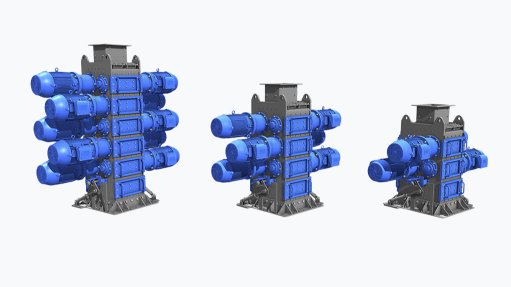
Energy and Densification Systems (EDS) has developed equipment for crushing, milling, blending and densifying products. Based on its globally...
VISIT SHOWROOM
At Airshrink - CiP, we surpass customer expectations with innovative MV and LV cable accessories, including heat shrink joints, terminations,...
VISIT SHOWROOM
Press Office
Announcements
What's On
Subscribe to improve your user experience...
Option 1 (equivalent of R125 a month):
Receive a weekly copy of Creamer Media's Engineering News & Mining Weekly magazine
(print copy for those in South Africa and e-magazine for those outside of South Africa)
Receive daily email newsletters
Access to full search results
Access archive of magazine back copies
Access to Projects in Progress
Access to ONE Research Report of your choice in PDF format
Option 2 (equivalent of R375 a month):
All benefits from Option 1
PLUS
Access to Creamer Media's Research Channel Africa for ALL Research Reports, in PDF format, on various industrial and mining sectors
including Electricity; Water; Energy Transition; Hydrogen; Roads, Rail and Ports; Coal; Gold; Platinum; Battery Metals; etc.
Already a subscriber?
Forgotten your password?
Receive weekly copy of Creamer Media's Engineering News & Mining Weekly magazine (print copy for those in South Africa and e-magazine for those outside of South Africa)
➕
Recieve daily email newsletters
➕
Access to full search results
➕
Access archive of magazine back copies
➕
Access to Projects in Progress
➕
Access to ONE Research Report of your choice in PDF format
RESEARCH CHANNEL AFRICA
R4500 (equivalent of R375 a month)
SUBSCRIBEAll benefits from Option 1
➕
Access to Creamer Media's Research Channel Africa for ALL Research Reports on various industrial and mining sectors, in PDF format, including on:
Electricity
➕
Water
➕
Energy Transition
➕
Hydrogen
➕
Roads, Rail and Ports
➕
Coal
➕
Gold
➕
Platinum
➕
Battery Metals
➕
etc.
Receive all benefits from Option 1 or Option 2 delivered to numerous people at your company
➕
Multiple User names and Passwords for simultaneous log-ins
➕
Intranet integration access to all in your organisation