



South Africans want to reconcile, survey finds

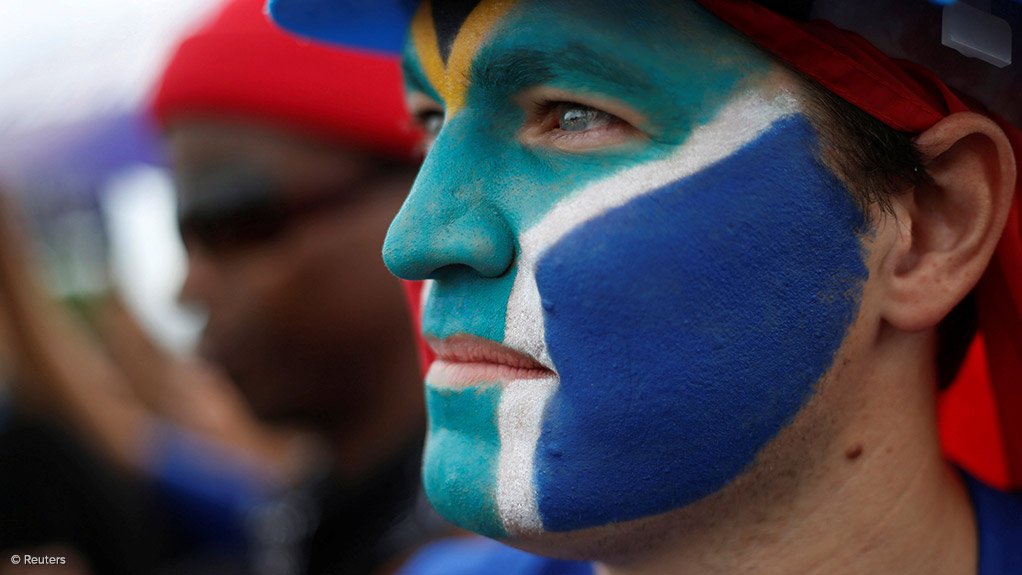



South Africans want reconciliation - but achieving this is proving to be a challenge.
This is one of the key findings of the South African Reconciliation Barometer (SARB), a public opinion survey by the Institute for Justice and Reconciliation. The findings were published on Thursday.
In its 16th round, the survey provides insight into the perceptions of ordinary South Africans on the country's progress with reconciliation.
The SARB's lead author, Elnari Potgieter, said in a statement that despite 25 years of democracy, the report highlighted several themes that spoke to historical legacies and current issues that prevented true reconciliation in the country.
"Some of the major themes that arose from key indicators in the report include safety and violence, democratic political culture and socio-economic circumstances and social justice."
Biggest issues
She said during the fieldwork, which took place between July and August this year, some of the biggest issues raised by the 2 400 respondents included gender-based violence, xenophobia, perceptions of safety, socio-economic inclusion and exclusion, confidence in institutions, corruption and inter-personal trust.
The SARB painted a mixed picture in terms of where most South Africans stood when it came to reconciliation and the barriers preventing this from happening.
Some of its key findings are:
- The vast majority (77%) of South Africans agree that South Africa still needs reconciliation, although only about half report that they have experienced reconciliation (51%) or believe that South Africa has made progress with reconciliation (57%).
- Most South Africans agree that reconciliation is impossible as long as corruption continues in our country (84%); political parties sow division (74%); those who were affected by apartheid continue to be poor (73%); gender-based violence continues in our country (72%); we continue to use racial categories to measure transformation (73%), and racism remains unaddressed in our society (66%).
- Most South Africans also reported that the involvement of various stakeholders is important for reconciliation, in particular, their and their families' and friend's involvement, while many understand that responsibility for reconciliation lies both with those who were oppressed and who were not oppressed during apartheid (56%).
- A vast majority of South Africans were proud to be South African (eight in 10) and associated positively with national symbols such as the current South African flag, according to the SARB's findings.
"Most South Africans also want unity (78%) and think it is possible (71%) - with this year showing the greatest optimism in this regard since the inception of the SARB. These findings bode well for building cohesion among South Africans," Potgieter said.
However, challenges to these hopes persist in the form of historical confrontation - such as with regard to whether or not the old South African flag should be banned - and pervasive sources of division such as inequality and differences between people from different race groups and political parties.
"It should also be kept in mind that support for a national identity should not again be to the exclusion of others, with negative attitudes towards people from other countries living in South Africa presenting its own challenges," said Potgieter.
The survey also showed a decrease in confidence in key state institutions from 2006 to 2019, although with some increase in confidence from 2017 to 2019 - most notably in the president.
"These findings highlight the need for responsive, transparent and accountable political leadership as an essential part of democratic political culture," Potgieter added.
Perceptions of safety and violence also impact how South Africans interact with each other, she said.
"South Africans want reconciliation, and they want unity. But the country has a long way to go in addressing the many limiting factors that would help facilitate reconciliation, social-cohesion and unity processes in the eyes of South Africans," says Potgieter.
Article Enquiry
Email Article
Save Article
Feedback
To advertise email advertising@creamermedia.co.za or click here
Research Reports

Projects


Latest Multimedia


Latest News


Showroom
Astore Keymak is one of South Africa’s leading suppliers of high-quality Thermoplastic Pipeline Systems, with branches in the major provinces.
VISIT SHOWROOM




Press Office
Announcements
What's On
Subscribe to improve your user experience...
Option 1 (equivalent of R125 a month):
Receive a weekly copy of Creamer Media's Engineering News & Mining Weekly magazine
(print copy for those in South Africa and e-magazine for those outside of South Africa)
Receive daily email newsletters
Access to full search results
Access archive of magazine back copies
Access to Projects in Progress
Access to ONE Research Report of your choice in PDF format
Option 2 (equivalent of R375 a month):
All benefits from Option 1
PLUS
Access to Creamer Media's Research Channel Africa for ALL Research Reports, in PDF format, on various industrial and mining sectors
including Electricity; Water; Energy Transition; Hydrogen; Roads, Rail and Ports; Coal; Gold; Platinum; Battery Metals; etc.
Already a subscriber?
Forgotten your password?
Receive weekly copy of Creamer Media's Engineering News & Mining Weekly magazine (print copy for those in South Africa and e-magazine for those outside of South Africa)
➕
Recieve daily email newsletters
➕
Access to full search results
➕
Access archive of magazine back copies
➕
Access to Projects in Progress
➕
Access to ONE Research Report of your choice in PDF format
RESEARCH CHANNEL AFRICA
R4500 (equivalent of R375 a month)
SUBSCRIBEAll benefits from Option 1
➕
Access to Creamer Media's Research Channel Africa for ALL Research Reports on various industrial and mining sectors, in PDF format, including on:
Electricity
➕
Water
➕
Energy Transition
➕
Hydrogen
➕
Roads, Rail and Ports
➕
Coal
➕
Gold
➕
Platinum
➕
Battery Metals
➕
etc.
Receive all benefits from Option 1 or Option 2 delivered to numerous people at your company
➕
Multiple User names and Passwords for simultaneous log-ins
➕
Intranet integration access to all in your organisation
