South Africa must not miss gas-to-power opportunity – Marokane

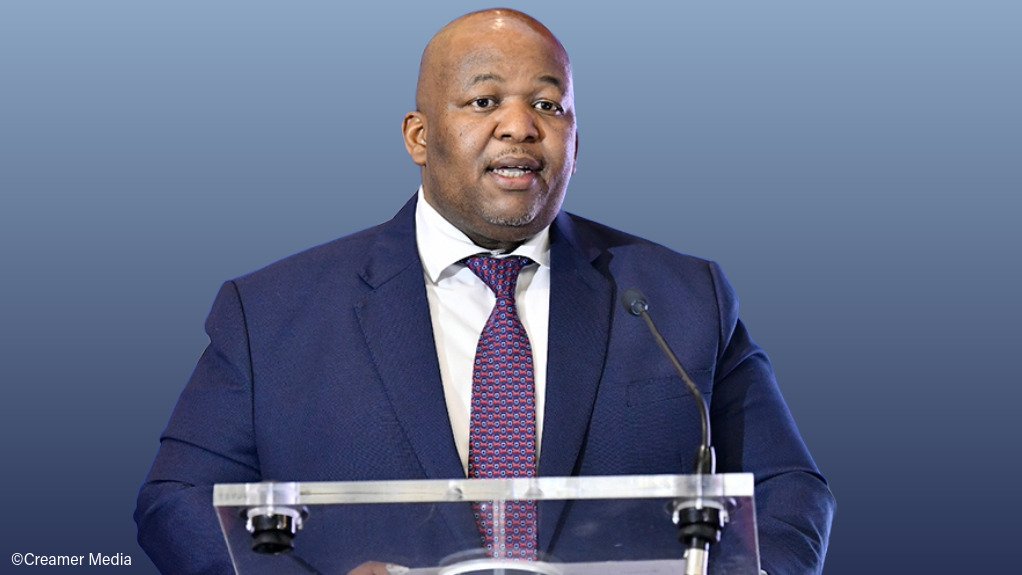


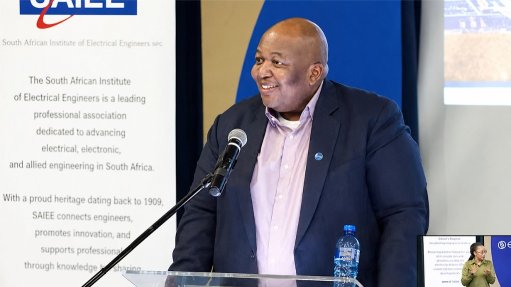
South Africa is closer than ever to getting gas-to-power projects off the ground, Eskom CEO Dan Marokane said on Tuesday, arguing that the country has a unique opportunity to use gas to strengthen energy security, support industrial growth and accelerate the expansion of renewable energy.
Speaking at the Africa Energy Forum in Cape Town, he said a combination of policy alignment, infrastructure planning and growing recognition of gas's role in modern electricity systems had created conditions that were more favourable than in previous attempts to establish a gas-to-power industry.
“This is the closest we have ever been to having a perfect opportunity of landing gas-to-power in the country,” Marokane said.
"It has been tried many times, and the conditions and the thinking were not ideal. We really have a lot of things on our side this time, and we dare not lose the moment.”
The optimism was echoed by Independent Power Producer Office head Precious Edward, who reported strong investor interest in South Africa's inaugural gas-to-power procurement programme.
Edward said the first procurement round attracted four bids representing 2 813 MW of capacity against a target of 2 000 MW.
The bids were submitted under the first bid window of South Africa's gas-to-power independent power producer programme, which forms part of the country's plans to diversify its electricity mix and introduce flexible generation capacity to complement renewable energy.
Edward said the response was encouraging given the complexity of gas-to-power developments.
“Gas-to-power is not just a simple electricity procurement programme,” she said.
Unlike renewable-energy projects, which primarily require generation facilities and grid connections, gas projects require an entire value chain to be developed simultaneously, including fuel supply arrangements, import and storage infrastructure, transportation networks, environmental approvals, grid access and long-term commercial agreements.
“The challenge is ensuring that all of these components progress at a synchronised pace so that the project remains viable and bankable.”
She added that the programme had highlighted the importance of providing investors with regulatory certainty, predictability and sufficient time to develop robust proposals.
South Africa's Integrated Resource Plan 2025 calls for 6 000 MW of gas-to-power capacity by 2030, with 3 000 MW expected to come from independent power producers (IPPs) and a further 3 000 MW from Eskom.
Alongside the IPP programme, Marokane said Eskom was advancing its own gas-to-power plans and had recently signed a heads of agreement linked to the proposed Richards Bay gas development.
The project is expected to become one of the country's most important gas infrastructure developments and forms part of Eskom's plans to introduce gas-fired generation capacity over the coming decade.
Marokane said gas should not be viewed merely as a backup fuel for renewable energy.
“There were some thoughts earlier on with the development of renewable energy that suggested gas is a backup plan for renewable-energy expansion,” he said.
“But what is true, based on what we saw in Australia and in Spain, is that gas is the backbone of expansion of renewable energy in terms of penetration in the energy mix.”
He argued that gas would play an increasingly important role as South Africa added more renewable-energy capacity to the grid.
While technologies capable of providing long-duration storage and dispatchable capacity continued to evolve, many remained economically challenging at scale. Gas-fired generation could therefore provide the flexible, dispatchable power required to stabilise the grid as variable wind and solar generation expanded.
Eskom currently relies on diesel-fired open-cycle gas turbines during periods of system stress, but Marokane argued that gas offered a significantly cheaper and more sustainable long-term fuel source.
"We do have peakers at the moment running on diesel. They come in very handy when we need to use them, but we need to go into a much cheaper fuel source, and this is where gas comes in," he said.
Marokane also argued that gas-to-power projects could unlock broader industrial and economic opportunities by creating anchor demand for gas infrastructure and supporting manufacturing activity.
"Gas-to-power provides anchor demand to also solve the gas cliff that you're worried about," he said.
South Africa is facing declining supply from the mature gas fields in Mozambique that currently underpin most pipeline imports, increasing the focus on alternative supply arrangements, including liquefied natural gas imports.
Marokane said a gas import and distribution network centred on Richards Bay could support industries in KwaZulu-Natal that rely on gas feedstock while creating the foundation for a broader regional gas economy.
"Mozambique is endowed with gas for centuries," he said. "And so is South Africa in terms of potential resources.
"What we need are policies that are going to enable us to exploit our natural resources."
He argued that Southern Africa's geography and resource base created a significant opportunity to develop a regional gas economy capable of supporting both electricity generation and industrial development.
The Richards Bay project is expected to become one of the country's most significant gas infrastructure developments. Eskom has previously indicated that electricity generation from the project could begin from 2031, while Marokane highlighted the need to move quickly on key procurement decisions, including the ordering of long-lead equipment such as gas turbines.
Marokane used the forum to outline a broader vision for Eskom's future role in South Africa's energy transition, insisting that the utility would remain central to the country's electricity system.
“The State is not retreating," he said. “Eskom is not about to shrink.”
He said the utility was increasingly focused on affordability after restoring generation performance and improving energy availability.
“We are now focusing on the affordability issue, because it is really on available and affordable electricity that we are able to stimulate economic growth.”
Reflecting on the country's recent energy progress, Marokane argued that South Africa had a clear strategy and improved execution capability. "Our plans are solid, very clear," he said. "We just have to deliver."
Article Enquiry
Email Article
Save Article
Feedback
To advertise email advertising@creamermedia.co.za or click here
Research Reports

Projects
Latest News
Showroom

Iritron delivers advanced automation, control, and optimisation solutions to the Mining, Minerals & Metals, Consumer Package Goods and...
VISIT SHOWROOM
Rentech provides renewable energy products and services to the local and selected African markets. Supplying inverters, lithium and lead-acid...
VISIT SHOWROOM
Announcements
What's On
Subscribe to improve your user experience...
Option 1 (equivalent of R125 a month):
Receive a weekly copy of Creamer Media's Engineering News & Mining Weekly magazine
(print copy for those in South Africa and e-magazine for those outside of South Africa)
Receive daily email newsletters
Access to full search results
Access archive of magazine back copies
Access to Projects in Progress
Access to ONE Research Report of your choice in PDF format
Option 2 (equivalent of R375 a month):
All benefits from Option 1
PLUS
Access to Creamer Media's Research Channel Africa for ALL Research Reports, in PDF format, on various industrial and mining sectors
including Electricity; Water; Energy Transition; Hydrogen; Roads, Rail and Ports; Coal; Gold; Platinum; Battery Metals; etc.
Already a subscriber?
Forgotten your password?
Receive weekly copy of Creamer Media's Engineering News & Mining Weekly magazine (print copy for those in South Africa and e-magazine for those outside of South Africa)
➕
Recieve daily email newsletters
➕
Access to full search results
➕
Access archive of magazine back copies
➕
Access to Projects in Progress
➕
Access to ONE Research Report of your choice in PDF format
RESEARCH CHANNEL AFRICA
R4500 (equivalent of R375 a month)
SUBSCRIBEAll benefits from Option 1
➕
Access to Creamer Media's Research Channel Africa for ALL Research Reports on various industrial and mining sectors, in PDF format, including on:
Electricity
➕
Water
➕
Energy Transition
➕
Hydrogen
➕
Roads, Rail and Ports
➕
Coal
➕
Gold
➕
Platinum
➕
Battery Metals
➕
etc.
Receive all benefits from Option 1 or Option 2 delivered to numerous people at your company
➕
Multiple User names and Passwords for simultaneous log-ins
➕
Intranet integration access to all in your organisation