Science Month aims to be a broader, sustained science engagement programme


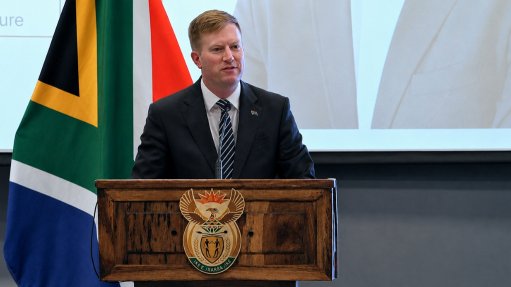
The National Science Month (NSM) initiative, launched by Science, Technology and Innovation Deputy Minister Dr Nomalungelo Gina on July 4, is intended to create a broader and more sustained science engagement programme.
Science, technology and innovation are increasingly central to addressing the complex challenges facing the world, she said in a prepared speech.
“Science is more than a driver of discovery. It is also a powerful engine of economic transformation, industrialisation and national competitiveness. Around the world, countries that have successfully advanced to high-income status have done so by placing science, research and innovation at the centre of government policy, industry and education.”
While South Africa has world-class scientists and globally recognised research institutions, its investment in research and development remains low, at about 0.61% of GDP.
“This level of investment is significantly below the National Development Plan target of 1.5% and far behind leading innovation economies. South Korea invests more than 4.5% of GDP in research and development, Israel invests more than 5%, while the average for member countries of the Organisation for Economic Cooperation and Development is about 2.7%,” Gina noted.
The Department of Science, Technology and Innovation (DSTI) must significantly raise public awareness of the value of science in everyday life, while elevating science, technology and innovation as key drivers of South Africa’s socioeconomic development.
To achieve this, NSM was introduced as an expanded and more inclusive platform for public engagement with science, she said.
NSM aims to promote informed decision-making and public access to scientific knowledge, and instil a culture of deliberate knowledge exchange between scientists and the public.
It also aims to demonstrate the power of science as a tool for understanding the natural and social world, as well as its role to create and harness new technologies to resolve societal challenges, such as social inequality, social justice and ecological sustainability, she said.
NSM aims to be a comprehensive, month-long programme of meaningful public engagement with science.
“We must use NSM to inspire our learners and young people to pursue careers in science, technology and innovation with confidence. By doing so, we can help South Africa develop more scientists, researchers and innovators in the fields that are most critical to our country’s future growth and development,” said Gina.
For example, Professor Mashudu Tshifularo and his team at the University of Pretoria pioneered the use of 3D-printed titanium implants to reconstruct the broken bones of the middle ear and restore a patient’s hearing, she pointed out.
Additionally, the Council for Scientific and Industrial Research's Dr Sandile Ngcobo invented a digital laser, which enabled researchers to control the shape of a laser beam digitally, rather than by manually adjusting physical mirrors, she said.
Meanwhile, the inaugural NSM has a broad range of themes, including technology and innovation, health, environmental management, service delivery, education, journalism, human rights, climate change, space science, decolonising knowledge systems, science diplomacy, decision-making, public awareness of research institutions and youth engagement.
“Let us take the message to every town and village that science, technology and innovation are for everyone,” Gina said.
Since 2000, the DSTI has implemented National Science Week as South Africa's premier science engagement programme, and which has made important progress in advancing its Science Engagement Strategy.
Article Enquiry
Email Article
Save Article
Feedback
To advertise email advertising@creamermedia.co.za or click here
Research Reports

Projects
Latest Multimedia
Latest News

Showroom
Astore Keymak is one of South Africa’s leading suppliers of high-quality Thermoplastic Pipeline Systems, with branches in the major provinces.
VISIT SHOWROOM
Axiom Hydraulics is a trusted leader in South Africa’s hydraulic industry, delivering world-class components, systems, and engineering expertise...
VISIT SHOWROOM

Press Office
Announcements
What's On
Subscribe to improve your user experience...
Option 1 (equivalent of R125 a month):
Receive a weekly copy of Creamer Media's Engineering News & Mining Weekly magazine
(print copy for those in South Africa and e-magazine for those outside of South Africa)
Receive daily email newsletters
Access to full search results
Access archive of magazine back copies
Access to Projects in Progress
Access to ONE Research Report of your choice in PDF format
Option 2 (equivalent of R375 a month):
All benefits from Option 1
PLUS
Access to Creamer Media's Research Channel Africa for ALL Research Reports, in PDF format, on various industrial and mining sectors
including Electricity; Water; Energy Transition; Hydrogen; Roads, Rail and Ports; Coal; Gold; Platinum; Battery Metals; etc.
Already a subscriber?
Forgotten your password?
Receive weekly copy of Creamer Media's Engineering News & Mining Weekly magazine (print copy for those in South Africa and e-magazine for those outside of South Africa)
➕
Recieve daily email newsletters
➕
Access to full search results
➕
Access archive of magazine back copies
➕
Access to Projects in Progress
➕
Access to ONE Research Report of your choice in PDF format
RESEARCH CHANNEL AFRICA
R4500 (equivalent of R375 a month)
SUBSCRIBEAll benefits from Option 1
➕
Access to Creamer Media's Research Channel Africa for ALL Research Reports on various industrial and mining sectors, in PDF format, including on:
Electricity
➕
Water
➕
Energy Transition
➕
Hydrogen
➕
Roads, Rail and Ports
➕
Coal
➕
Gold
➕
Platinum
➕
Battery Metals
➕
etc.
Receive all benefits from Option 1 or Option 2 delivered to numerous people at your company
➕
Multiple User names and Passwords for simultaneous log-ins
➕
Intranet integration access to all in your organisation