Engineering concrete for durability in aggressive wastewater environments





This article has been supplied and will be available for a limited time only on this website.
By: Carl White - Managing Director of Spraylock Africa
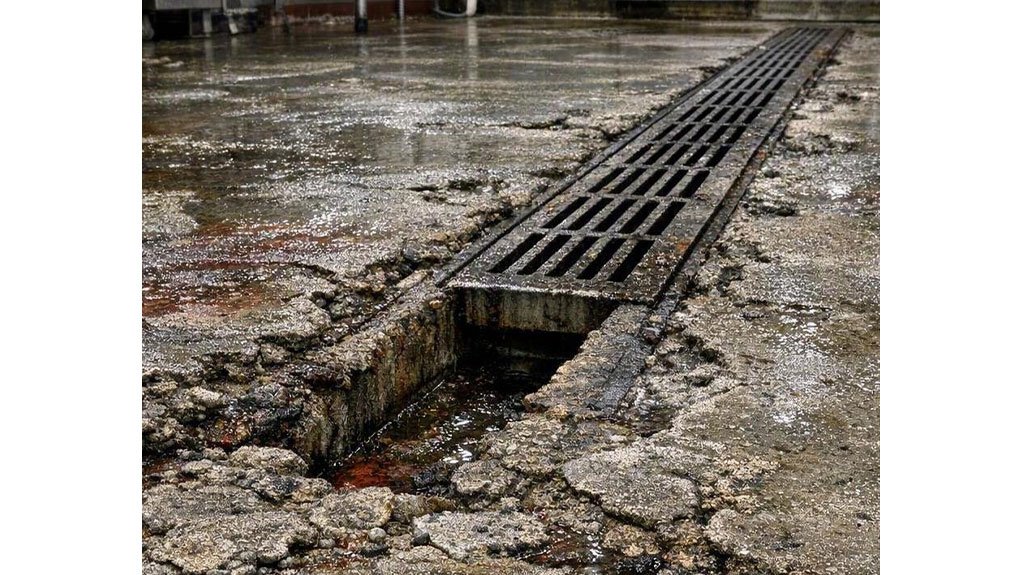
Across South Africa and many other parts of the world, wastewater infrastructure is deteriorating well before reaching its intended design life. The problem is often not inadequate structural design or poor workmanship, but the aggressive environments in which these structures operate.
Among the most destructive deterioration mechanisms affecting wastewater infrastructure is biogenic sulfuric acid attack (BSA). Unlike conventional chemical attack, BSA is driven by naturally occurring micro-organisms that generate sulphuric acid directly on concrete surfaces.
A biological process with devastating consequences
BSA begins beneath the wastewater surface where oxygen levels are extremely low. Under these anaerobic conditions, sulphate-reducing bacteria (SRB) convert naturally occurring sulphates into dissolved sulphides, producing hydrogen sulphide (H₂S) gas as a by-product.
H₂S gas migrates into the airspace above wastewater and dissolves into the thin moisture film covering concrete surfaces such as sewer crowns, manholes, pump stations and treatment structures. Here, a second group of micro-organisms – sulphur-oxidising bacteria (SOB) – uses the H₂S as an energy source, converting it into sulphuric acid directly on the concrete surface.
Unlike conventional acid attack, where aggressive chemicals are introduced from an external source, BSA produces acid in situ. As sulphuric acid accumulates, the concrete surface pH can fall from its normal alkaline level of around 12.5 to values approaching pH 1. These increasingly acidic conditions favour highly acid-tolerant bacteria, creating a self-accelerating cycle in which greater bacterial activity produces more acid and increasingly rapid deterioration.
Areas most severely affected are those above the wastewater level where moisture, oxygen and H₂S combine to create ideal conditions for bacterial growth. Sewer crowns, wet wells and digester roofs are therefore particularly vulnerable to attack.
Why BSA is so destructive
To understand why BSA is so destructive, it is necessary to examine the chemistry of hardened concrete.
The principal binding phase in Portland cement concrete is calcium silicate hydrate (C-S-H), which provides the material with its strength. Cement hydration also produces calcium hydroxide (CH), or portlandite, which maintains the highly alkaline environment that protects embedded reinforcing steel.
When sulphuric acid comes into contact with concrete, CH is the first hydration product to react, forming gypsum (calcium sulphate dihydrate). This reaction progressively consumes concrete's alkaline reserve, allowing the acid to penetrate deeper into the cement matrix.
The gypsum then reacts with calcium aluminate hydrates to form secondary ettringite, an expansive crystalline compound. As ettringite develops, it generates internal stresses that exceed the relatively low tensile strength of concrete, producing microscopic cracking throughout the cement paste.
Once cracking begins, deterioration accelerates. The newly formed cracks provide additional pathways for sulphuric acid to penetrate the concrete, producing more gypsum and more ettringite. Over time, the cement paste softens, surface material begins to scale and spall, and aggregate particles lose their bond with the surrounding matrix.
Eventually, sulphuric acid begins attacking the C-S-H itself. This process, known as decalcification, removes calcium from the C-S-H structure, leaving behind a weak, porous silica-rich skeleton with little mechanical strength. As the cement paste progressively disintegrates, reinforcement becomes exposed, significantly increasing the risk of steel corrosion and structural deterioration.
Permeability – the key to long-term durability
Although sulphuric acid initiates the deterioration process, permeability largely determines how rapidly it progresses.
Concrete is not a solid material but a porous composite containing an interconnected network of capillary pores through which water, dissolved chemicals and aggressive ions can migrate. The more continuous this pore network, the easier it is for sulphuric acid to penetrate the concrete and attack the cement matrix.
Particularly important is the Interfacial Transition Zone (ITZ) – the thin layer surrounding each aggregate particle. Because this region contains higher porosity and larger CH crystals than the surrounding cement paste, it is often the weakest part of hardened concrete and provides a preferential pathway for moisture and chemical ingress.
For this reason, modern durability engineering increasingly focuses on permeability rather than compressive strength alone. Two concretes may achieve identical structural strengths yet perform very differently in aggressive environments depending on the quality of their microstructure. Reducing the connectivity of capillary pores and strengthening the ITZ are therefore fundamental to extending the service life of concrete exposed to wastewater environments.
Engineering a denser, more durable concrete
This is where colloidal silica offers a significant advantage.
Unlike conventional supplementary cementitious materials, colloidal silica consists of ultra-fine amorphous silicon dioxide (SiO₂) particles suspended in water. These particles are thousands of times smaller than a typical cement grain, enabling them to penetrate and modify the cement matrix at a microscopic scale.
Its effectiveness is based on two complementary mechanisms.
The first is a pozzolanic reaction. During cement hydration, CH is produced alongside C-S-H. While CH contributes to concrete's alkalinity, it offers little structural strength and is particularly vulnerable to acid attack.
Reactive silica combines with CH to form additional C-S-H. This reaction has two important benefits. It reduces the amount of CH available for sulphuric acid to attack. This, while simultaneously increasing the quantity of C-S-H – the primary binding phase responsible for concrete's strength and durability.
The second mechanism is microstructural refinement. The nano-sized particles fill and refine capillary pores while promoting additional C-S-H formation throughout the cement matrix. This produces a denser, less permeable concrete with fewer interconnected pathways for water, acids and dissolved ions.
Equally important is the effect on the ITZ. Research has shown that colloidal silica refines this naturally porous region by reducing the formation of large CH crystals and promoting a denser distribution of C-S-H around aggregate particles. The result is a stronger aggregate-paste bond, reduced crack initiation and fewer preferential pathways for aggressive substances.
Rather than acting as a surface barrier, colloidal silica improves the concrete itself. This distinction is important because durability is enhanced throughout the material rather than relying solely on the integrity of an external coating.
Evidence from research
The benefits of colloidal silica are supported by an increasing body of laboratory and field research.
Scanning Electron Microscopy studies consistently demonstrate a denser cement matrix with reduced capillary porosity following the incorporation of colloidal silica. Chemical analyses have also confirmed lower calcium-to-silica ratios within the hydrated cement paste, reflecting the continued formation of secondary C-S-H and the consumption of CH.
Studies report reductions in concrete permeability of more than 80%, while concrete incorporating approximately 3% nano-silica has demonstrated around 68% lower mass loss following sulphuric exposure compared with untreated concrete. Other investigations have reported significant reductions in chloride ingress and improved resistance to aggressive chemical environments.
Strengthening new and existing concrete
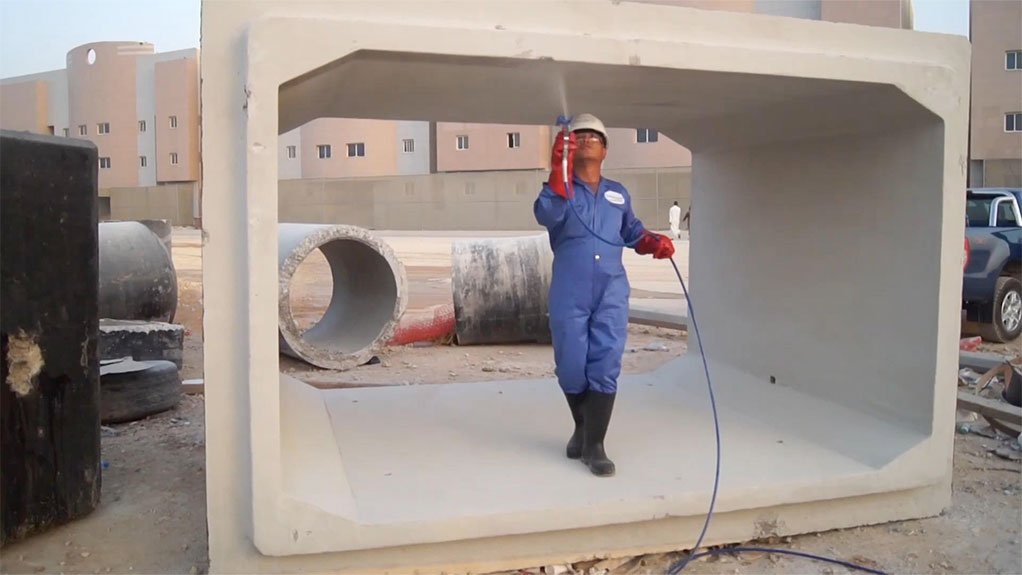
For new construction, colloidal silica can be incorporated directly into the concrete mix as an admixture. Existing structures may also benefit through penetrating surface treatments that react with available calcium hydroxide within the near-surface concrete. This refines the pore structure and improves durability without significantly altering the appearance of the structure.
However, colloidal silica should not be regarded as a substitute for good engineering practice. Its performance depends on appropriate mix design, low water-cement ratios, effective curing and sound construction techniques. Like all durability technologies, it delivers the greatest benefits when incorporated as part of a comprehensive asset protection strategy.
Article Enquiry
Email Article
Save Article
Feedback
To advertise email advertising@creamermedia.co.za or click here
Research Reports

Projects


Latest Multimedia


Latest News

Showroom

We partner growth of our select clients through our comprehensive and competitive integrated international logistics, trade finance and information...
VISIT SHOWROOM
We at Hawk High Pressure Pumps specialise in industrial pumps and pumping systems. Our high pressure washing equipment is locally manufactured and...
VISIT SHOWROOM



Announcements
What's On
Subscribe to improve your user experience...
Option 1 (equivalent of R125 a month):
Receive a weekly copy of Creamer Media's Engineering News & Mining Weekly magazine
(print copy for those in South Africa and e-magazine for those outside of South Africa)
Receive daily email newsletters
Access to full search results
Access archive of magazine back copies
Access to Projects in Progress
Access to ONE Research Report of your choice in PDF format
Option 2 (equivalent of R375 a month):
All benefits from Option 1
PLUS
Access to Creamer Media's Research Channel Africa for ALL Research Reports, in PDF format, on various industrial and mining sectors
including Electricity; Water; Energy Transition; Hydrogen; Roads, Rail and Ports; Coal; Gold; Platinum; Battery Metals; etc.
Already a subscriber?
Forgotten your password?
Receive weekly copy of Creamer Media's Engineering News & Mining Weekly magazine (print copy for those in South Africa and e-magazine for those outside of South Africa)
➕
Recieve daily email newsletters
➕
Access to full search results
➕
Access archive of magazine back copies
➕
Access to Projects in Progress
➕
Access to ONE Research Report of your choice in PDF format
RESEARCH CHANNEL AFRICA
R4500 (equivalent of R375 a month)
SUBSCRIBEAll benefits from Option 1
➕
Access to Creamer Media's Research Channel Africa for ALL Research Reports on various industrial and mining sectors, in PDF format, including on:
Electricity
➕
Water
➕
Energy Transition
➕
Hydrogen
➕
Roads, Rail and Ports
➕
Coal
➕
Gold
➕
Platinum
➕
Battery Metals
➕
etc.
Receive all benefits from Option 1 or Option 2 delivered to numerous people at your company
➕
Multiple User names and Passwords for simultaneous log-ins
➕
Intranet integration access to all in your organisation