Co-location of utility-scale solar with batteries emerging as ‘default configuration’

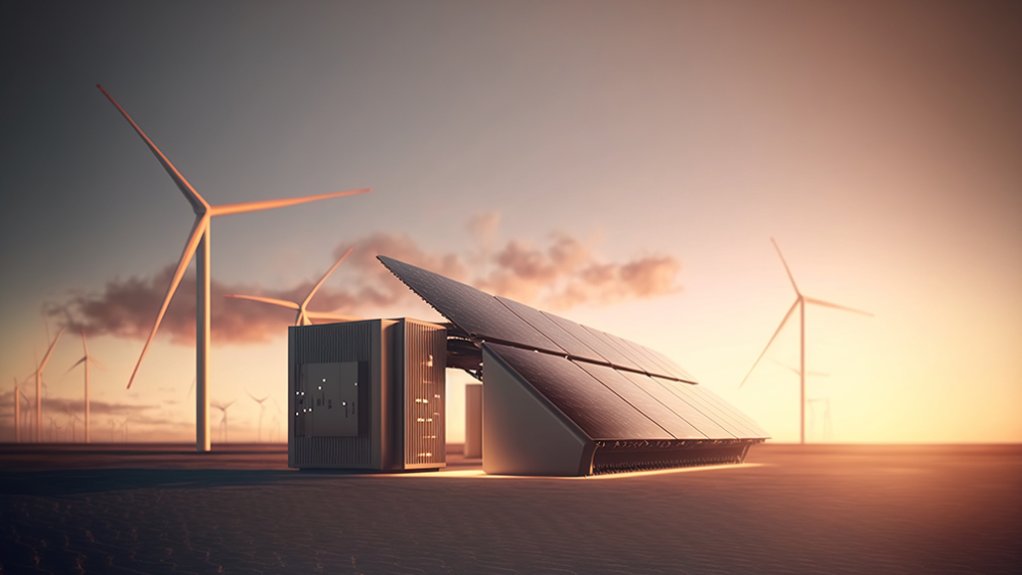



Rapid declines in battery costs are transforming the economics of renewable power, a new report by the International Renewable Energy Agency (Irena) asserts, adding that the co-location of batteries with new utility-scale solar PV is emerging as the default configuration.
In 2025, battery costs fell faster than those of any other energy technology, with Irena estimating the installed cost of a four-hour utility-scale battery at $140/kWh – a decrease of close to 30% in a single year and around 95% since 2010.
Global battery deployments rose strongly to between 108 GW and 112 GW last year, representing a 40% to 48% year-on-year increase, with falling battery costs driving the rapid growth of hybrid solar-plus-storage systems.
“As storage has become more affordable, solar and wind projects are increasingly being paired with battery energy storage systems,” the Renewable Power Generation Costs in 2025 report states.
About one-quarter of all utility-scale solar PV commissioned globally in 2025 had been paired with battery storage, which Irena calculates to be a roughly sixfold rise in the share of co-location since 2020.
Co-location, the report adds, has moved from a niche option to the default configuration for new utility-scale solar, with the best hybrid sites now delivering ‘firm’ around-the-clock power at below $85/MWh.
“This is improving the utilisation of grid connections, shifting generation to periods of higher demand and reducing exposure to low or volatile electricity prices.”
Irena says two forces have been driving this shift, including:
- lower project costs, with shared grid connections, land and balance-of-plant systems reducing capital costs by around one-fifth relative to building the two assets separately; and
- changing market conditions, whereby the rising number of hours of zero or negative wholesale prices in high-penetration markets such as Europe and Australia has eroded the revenues of standalone solar, while the addition of storage shifts output to higher-value hours.
“This trend [of co-location] reflects growing pressure on standalone solar projects in some markets, where declining daytime prices and increasing curtailment have reduced the value of generation during peak production periods.”
Irena forecasts that the costs of hybrid systems should keep falling over the next five years, but warns that the decline will be slower and uneven across various regions.
“The costs of mature technologies, such as solar PV and onshore wind, are plateauing, while batteries and long-duration storage are expected to see further cost reductions as deployment increases.”
Overall renewable power costs remained low last year, with Irena estimating that more than 90% of the utility-scale renewable capacity added during the year was cheaper than the lowest-cost new fossil alternative.
“In 2025, solar PV remained at its 2024 level of $44/MWh, while wind continued to improve, with onshore wind falling by 4% to $33/MWh and offshore wind by 3% to $78/MWh,” the report states.
However, Irena highlights that clean-tech manufacturing investment has halved, from a quarterly peak of $70-billion in 2023 to $35-billion by the end of 2025, while China is reorganising its renewables industry amid input price increases.
“These developments, combined with a shifting trade and tariff landscape, are likely to exert upward pressure on total installed costs throughout this year.”
Over the longer term, however, Irena's outlook suggests that costs will continue to decline through to 2035, though far more slowly than before. Since 2010, the cost of solar PV has fallen by 89%, while onshore wind costs have declined by 71%.
Despite the plateau, Irena expects renewables to retain a cost advantage over fossil fuels, given that the cost of new fossil fuel-fired generation continued to rise in 2025, partly owing to a gas-turbine shortage driven by surging data-centre demand.
Article Enquiry
Email Article
Save Article
Feedback
To advertise email advertising@creamermedia.co.za or click here
Research Reports

Projects


Latest Multimedia

Latest News


Showroom

ESAB South Arica, the leading supplier of high-end welding and cutting products to the Southern African industrial market is based in...
VISIT SHOWROOM
Electrifying the world in a safe, smart, and sustainable way, ABB Electrification is a global technology leader in electrical distribution and...
VISIT SHOWROOM



Press Office
Announcements
What's On
Subscribe to improve your user experience...
Option 1 (equivalent of R125 a month):
Receive a weekly copy of Creamer Media's Engineering News & Mining Weekly magazine
(print copy for those in South Africa and e-magazine for those outside of South Africa)
Receive daily email newsletters
Access to full search results
Access archive of magazine back copies
Access to Projects in Progress
Access to ONE Research Report of your choice in PDF format
Option 2 (equivalent of R375 a month):
All benefits from Option 1
PLUS
Access to Creamer Media's Research Channel Africa for ALL Research Reports, in PDF format, on various industrial and mining sectors
including Electricity; Water; Energy Transition; Hydrogen; Roads, Rail and Ports; Coal; Gold; Platinum; Battery Metals; etc.
Already a subscriber?
Forgotten your password?
Receive weekly copy of Creamer Media's Engineering News & Mining Weekly magazine (print copy for those in South Africa and e-magazine for those outside of South Africa)
➕
Recieve daily email newsletters
➕
Access to full search results
➕
Access archive of magazine back copies
➕
Access to Projects in Progress
➕
Access to ONE Research Report of your choice in PDF format
RESEARCH CHANNEL AFRICA
R4500 (equivalent of R375 a month)
SUBSCRIBEAll benefits from Option 1
➕
Access to Creamer Media's Research Channel Africa for ALL Research Reports on various industrial and mining sectors, in PDF format, including on:
Electricity
➕
Water
➕
Energy Transition
➕
Hydrogen
➕
Roads, Rail and Ports
➕
Coal
➕
Gold
➕
Platinum
➕
Battery Metals
➕
etc.
Receive all benefits from Option 1 or Option 2 delivered to numerous people at your company
➕
Multiple User names and Passwords for simultaneous log-ins
➕
Intranet integration access to all in your organisation