SA’s infrastructure revival now hinges on how projects are delivered



This article has been supplied and will be available for a limited time only on this website.
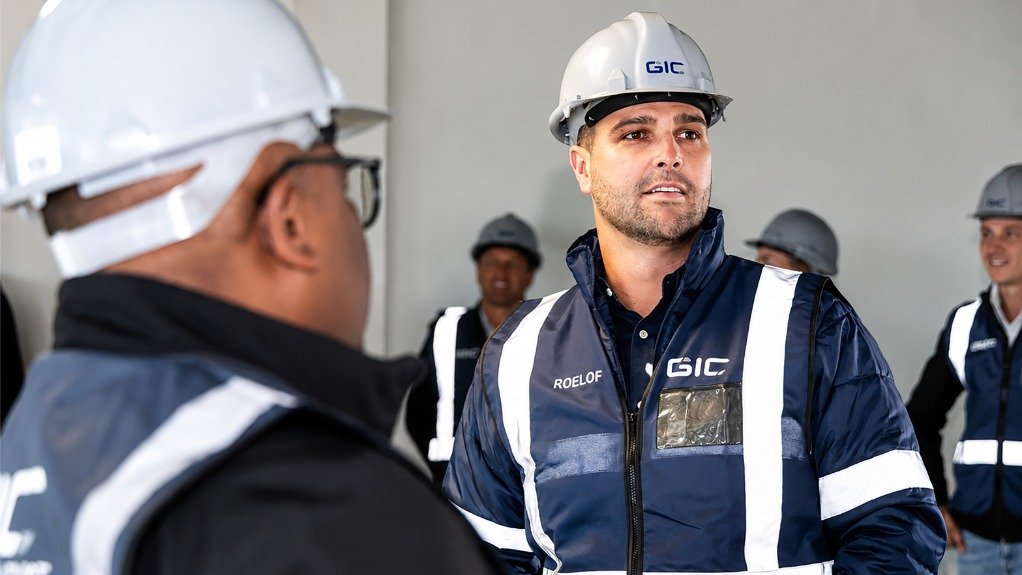
By: Roelof van den Berg - CEO of Gap Infrastructure Corporation (GIC)
South Africa’s public sector committed R1 trillion to infrastructure development nearly a year and a half ago. This commitment carried into the 2026 Budget Review with a clear national intention move from policy to cranes and steel across then South African skyline. As the country moves into a more delivery-focused phase, attention is shifting from allocation to execution. Private sector partners positioned to advance this effort are strengthening execution frameworks to build a sustainable pipeline capable of driving this infrastructure revival forward at full pace.
The national grid has already moved from crisis to reasonable stability. Over a year has passed without load-shedding, restoring industrial and investor confidence and laying the foundation for a broader infrastructure push. Much of this reliability comes from optimising existing plants, but the next phase requires faster expansion of generation capacity and transmission systems.
South Africa’s logistics and water corridors will similarly benefit from this momentum, having received the largest budget allocations of R402 billion for roads and R156.3 billion for water and sanitation. SANRAL is also expected to spend R100 billion on the national road network, while provincial departments will reseal more than 16,000 lane-kilometres.
The funding has been committed, more projects are being packaged, and some large projects have started moving, but consistent delivery outcomes will depend on stronger technical precision across the project lifecycle. This places greater emphasis on how projects are prepared, structured, and executed to ensure these high-value logistics and utility networks are delivered on time and within the specified performance parameters.
Long-life assets demand stronger front-end planning
South Africa’s infrastructure pipeline will need stronger technical discipline before projects are treated as ready for delivery, with technical integration and lifecycle cost modelling brought into the front end of planning rather than applied as corrective measures once work has already begun.
Capital allocations only create public value when projects are designed around the full network they serve, their operating conditions, and the cost of keeping them functional long after construction teams have left site. Technical integration must therefore begin before procurement locks the project into a fixed scope.
Roads, water systems, sanitation plants, transmission assets, and logistics corridors are rarely isolated builds, yet they are still too often packaged around individual construction outputs rather than the broader systems they connect into. Early technical input can identify where design, land access, services, approvals, materials, phasing, contractor capacity, and operational handover need to be aligned before a project reaches site.
This becomes especially important where infrastructure must remain active while upgrades are underway. A road corridor cannot be treated only as a surface to be widened if traffic must continue moving through it during construction. A water or sanitation project cannot be planned only around civil works if the treatment process, pumping capacity, electricity supply, maintenance access, and downstream network are not aligned from the start. These details determine whether a project can be delivered without avoidable disruption, redesign, or cost escalation.
Lifecycle cost modelling is a further crucial piece of the puzzle. A lower upfront construction cost can become an expensive public liability if build materials turn out to be suboptimal for the completed structure, maintenance needs exceed municipal capacity, or future expansion might necessitate major rework. Long-life infrastructure must therefore be assessed against its operating burden, replacement cycles, maintenance intensity, and ability to absorb demand over time.
For private sector partners, this requires a wider delivery role than traditional contracting allows. Delivering on this next phase necessitates closer alignment between public sector objectives and private sector technical expertise, with implementing agents and construction partners supporting public clients to interrogate projects earlier in the lifecycle. This will ensure that technical assumptions, cost models, operating requirements, and network dependencies are tested while changes can still be made efficiently.
This is how large capital allocations will move beyond expenditure and become functioning infrastructure capable of supporting economic activity, service reliability, and long-term public value.
South Africa’s infrastructure revival will ultimately be judged at the point of use. As this delivery phase accelerates, success will depend on execution models that prioritise long-term asset performance alongside construction progress. The focus must now shift from getting projects off the ground to ensuring they stand the test of time.
Article Enquiry
Email Article
Save Article
Feedback
To advertise email advertising@creamermedia.co.za or click here
Research Reports
Projects


Latest Multimedia

Latest News

Showroom

Sweet-Orr, established in 1871, is a global leader in superior protective workwear, known for quality, innovation, and performance.
VISIT SHOWROOM
Supplier & Distributor of the Widest Range of Accurate & Easy-to-Use Alcohol Breathalysers
VISIT SHOWROOM


Press Office
Announcements
What's On
Subscribe to improve your user experience...
Option 1 (equivalent of R125 a month):
Receive a weekly copy of Creamer Media's Engineering News & Mining Weekly magazine
(print copy for those in South Africa and e-magazine for those outside of South Africa)
Receive daily email newsletters
Access to full search results
Access archive of magazine back copies
Access to Projects in Progress
Access to ONE Research Report of your choice in PDF format
Option 2 (equivalent of R375 a month):
All benefits from Option 1
PLUS
Access to Creamer Media's Research Channel Africa for ALL Research Reports, in PDF format, on various industrial and mining sectors
including Electricity; Water; Energy Transition; Hydrogen; Roads, Rail and Ports; Coal; Gold; Platinum; Battery Metals; etc.
Already a subscriber?
Forgotten your password?
Receive weekly copy of Creamer Media's Engineering News & Mining Weekly magazine (print copy for those in South Africa and e-magazine for those outside of South Africa)
➕
Recieve daily email newsletters
➕
Access to full search results
➕
Access archive of magazine back copies
➕
Access to Projects in Progress
➕
Access to ONE Research Report of your choice in PDF format
RESEARCH CHANNEL AFRICA
R4500 (equivalent of R375 a month)
SUBSCRIBEAll benefits from Option 1
➕
Access to Creamer Media's Research Channel Africa for ALL Research Reports on various industrial and mining sectors, in PDF format, including on:
Electricity
➕
Water
➕
Energy Transition
➕
Hydrogen
➕
Roads, Rail and Ports
➕
Coal
➕
Gold
➕
Platinum
➕
Battery Metals
➕
etc.
Receive all benefits from Option 1 or Option 2 delivered to numerous people at your company
➕
Multiple User names and Passwords for simultaneous log-ins
➕
Intranet integration access to all in your organisation