



Salga concerned over lack of coalition govt framework

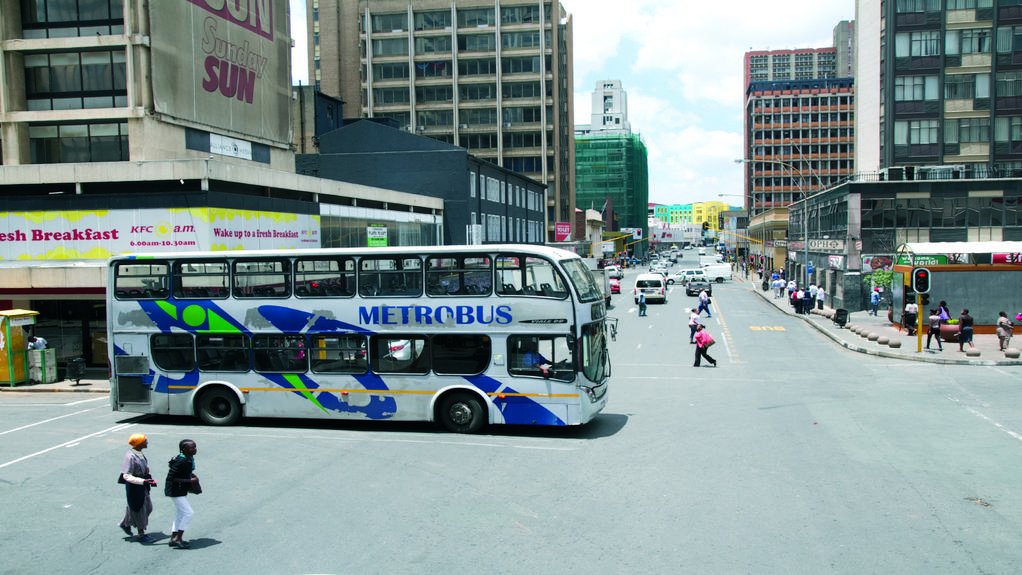


Although South Africa has been easing into what is increasingly coalition rule at local government level since the elections held in November 2021, coalition governments have not become institutionalised and remain without a proper guideline, the South African Local Government Association (Salga) has said.
The organisation highlighted during its five-year provincial conference hosted on February 8 that there were no rules in the Constitution or legislation that define the principles, rules, procedures or sanctions that apply to the political parties and independent councillors that attempt to govern together.
This has resulted in coalition agreements often being vague, often not translating into a programme for the incoming government, often not being tailored to that municipality and its community and often being undermined by coalition parties in practice.
Presenting Salga’s concerns on the matter, Salga National Executive Committee representative Xola Pakati mentioned that Salga had drafted a coalition government framework, in collaboration with members of executive councils and tertiary institutions in November 2021, which would hopefully make its way to promulgation.
The 2021 local government elections resulted in 66 hung councils, meaning they were left without outright majority party rule and required the formation of a coalition. This was more than double the number of hung councils in the 2016 local government elections.
Pakati mentioned that the low voter turnout in the 2021 local government elections was a concern for the organisation. Only 12-million voters turned up at the ballots, out of 26-million registered voters, to elect representation in South Africa’s eight metropolitan, 44 district and 226 local municipalities.
Some of the many challenges municipalities experienced in the fourth term – the five years from 2016 to 2021 – were the continued struggle to deliver clean audits, high senior management level vacancies and budget constraints as a result of the civil unrest experienced in July last year, particularly in the Gauteng municipalities.
Gauteng municipalities struggled to deliver clean audits in the fourth government term.
Outgoing Salga provincial chairperson Aletta Mashigo said many Gauteng municipalities were left with income gaps, racial divides, lower property prices and the realisation of failed security systems following the unrest.
She added that Covid-19 had impacted on municipalities’ service delivery, owing to redirected monies for infection mitigation, and the period saw an increase in unlawful occupations, and in turn higher costs for municipalities.
A continued challenge for municipalities had been Eskom’s tariff increases, resulting in municipalities having to offer unaffordable packages to its communities, and not having an opportunity to take part in tariff negotiations between the State-owned power utility and the National Energy Regulator of South Africa.
Mashigo assured that Salga would continue lobbying for lower tariffs.
Another electricity challenge Pakati discussed was that of Eskom supplying electricity to customers directly, sidestepping the municipalities. In 2019, municipalities lost out on about R162-billion of revenue owing to this dual electricity distribution system.
To this end, Salga was seeking a High Court order to declare that municipalities have an exclusive executive authority to reticulate electricity within their jurisdictions.
Eskom and some private distributors were opposing the Salga application.
Should Salga’s legal bid be successful, the municipalities would not necessarily take over the distribution in the Eskom areas, but may levy a surcharge on Eskom tariffs.
Additionally, Eskom would be required to obtain a service delivery agreement with each municipality in which it directly supplied customers.
TRANSPORT CONCERNS
Pakati noted that there were certain Constitutional problems with the National Land Transport Amendment Bill, which almost made its way into promulgation, before being referred back to Parliament to debate its Constitutionality.
Section 11 of the existing National Land Transport Act, a 2009 law, set out the respective responsibilities of the three spheres of government – national, provincial and local – regarding national land transport.
Clause 7 of the new Bill sought to amend that section and, in doing so, would alter the statutory responsibilities of the three spheres of government, particularly the extent to which municipalities could initiate contracts.
Pakati said the Bill was finalised in Parliament without due regard to Salga’s concerns in the first time round and the organisation hoped it would be amended accordingly soon.
Article Enquiry
Email Article
Save Article
Feedback
To advertise email advertising@creamermedia.co.za or click here
Research Reports

Projects


Latest Multimedia

Latest News
Showroom
The SAIMM started as a learned society in 1894 after the invention of the cyanide process that saved the South African gold mining industry of the...
VISIT SHOWROOM
ECG provides specialised electrical engineering services to the Mining, Utilities, Materials Handling and Industrial industries, with extensive and...
VISIT SHOWROOM



Press Office
Announcements
What's On
Subscribe to improve your user experience...
Option 1 (equivalent of R125 a month):
Receive a weekly copy of Creamer Media's Engineering News & Mining Weekly magazine
(print copy for those in South Africa and e-magazine for those outside of South Africa)
Receive daily email newsletters
Access to full search results
Access archive of magazine back copies
Access to Projects in Progress
Access to ONE Research Report of your choice in PDF format
Option 2 (equivalent of R375 a month):
All benefits from Option 1
PLUS
Access to Creamer Media's Research Channel Africa for ALL Research Reports, in PDF format, on various industrial and mining sectors
including Electricity; Water; Energy Transition; Hydrogen; Roads, Rail and Ports; Coal; Gold; Platinum; Battery Metals; etc.
Already a subscriber?
Forgotten your password?
Receive weekly copy of Creamer Media's Engineering News & Mining Weekly magazine (print copy for those in South Africa and e-magazine for those outside of South Africa)
➕
Recieve daily email newsletters
➕
Access to full search results
➕
Access archive of magazine back copies
➕
Access to Projects in Progress
➕
Access to ONE Research Report of your choice in PDF format
RESEARCH CHANNEL AFRICA
R4500 (equivalent of R375 a month)
SUBSCRIBEAll benefits from Option 1
➕
Access to Creamer Media's Research Channel Africa for ALL Research Reports on various industrial and mining sectors, in PDF format, including on:
Electricity
➕
Water
➕
Energy Transition
➕
Hydrogen
➕
Roads, Rail and Ports
➕
Coal
➕
Gold
➕
Platinum
➕
Battery Metals
➕
etc.
Receive all benefits from Option 1 or Option 2 delivered to numerous people at your company
➕
Multiple User names and Passwords for simultaneous log-ins
➕
Intranet integration access to all in your organisation
