Recycling associations call for intervention from Competition Commission on scrap metal policy

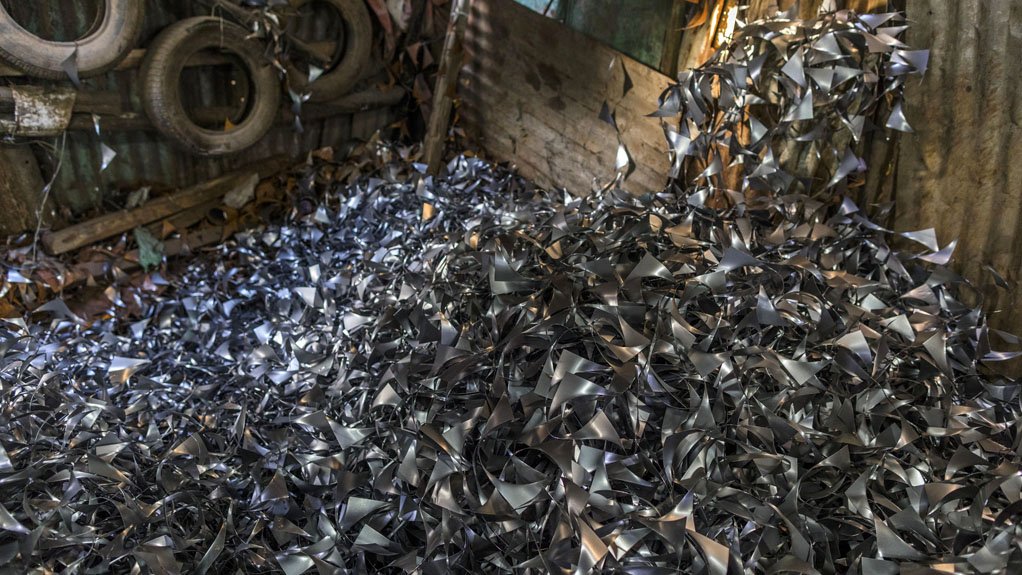



While South Africa’s scrap metal recycling sector continues to play a vital part in the circular economy, the sector is being held back by the Price Preference System (PPS) policy for scrap metals export, Recycling Association of South Africa (RASA) chairperson Geoff Borrajeiro says.
In a joint press release on behalf of the RASA, the Metal Recyclers Association (MRA) and the Scrap Recycling Coalition (SRC), he notes that, on November 24, 2025, representatives of the RASA and the MRA met with International Trade Administration Commission of South Africa’s (Itac’s) PPS Technical Team to examine data on export permit applications.
“We wanted to understand whether safeguards exist to prevent dominant domestic buyers from abusing the system,” he says.
He says the 2015 memorandum of understanding (MoU) between Itac and the commission explicitly requires cooperation on trade measures that could have anti-competitive effects, joint impact assessments and mutual advice on policy design and administration.
He expresses that the commission has repeatedly warned, since 2014, about the high risk of collusion inherent in the PPS mechanism.
“Most recently, the Department of Trade, Industry and Competition (dtic) itself publicly acknowledged systematic manipulation of the PPS and recommended it should be set aside pending an independent investigation,” says Borrajeiro.
Despite these red flags, he says, Itac continues to administer the PPS without any meaningful competition law oversight.
He notes that domestic buyers – often dominant steel producers – receive scrap at a significant discount before any export is permitted.
In practice, he says, this has enabled “blocking offers”, non-genuine bids, uniform low pricing across regions, preferential sale agreements to select sellers and seller-funded transport costs that distort the market and foreclose independent recyclers and exporters.
“The consequences are severe,” he says.
“This predatory practice disproportionately burdens waste pickers, who collect and sort ferrous scrap for minimal returns, only to see their efforts devalued as costs cascade through the supply chain. Independent scrap dealers and exporters are squeezed out.
“Recycling volumes that could support downstream manufacturing and exports are suppressed.”
Meanwhile, Borrajeiro adds that the February dawn raids by the commission on major scrap buyers, for alleged price-fixing of shredded and processed scrap, underscore that buyer-side anti-competitive risks in this sector are not theoretical.
“What makes the situation even more alarming is that the PPS itself appears to have been developed off the blueprint of cartel conduct,” he says.
He says the PPS was introduced with the stated aim of promoting domestic beneficiation, investment and employment in the steel value chain.
He posits that evidence has since shown it protects 5% of the steel value chain while overlooking the other 95%.
“Industrial policy should never come at the expense of fair competition, small business participation, or the broader circular economy.
“When a policy intended to support local industry instead entrenches dominance and invites abuse, it undermines its own objectives and harms the very economy it seeks to build.”
Borrajeiro says the 2015 MoU between Itac and the commission exists precisely to prevent such outcomes.
“Itac’s admitted lack of safeguards and its practice of simply referring complaints elsewhere represent a material failure to honour that agreement. This cannot continue.
Borrajeiro, therefore, notes that the parties call on the commission to act urgently by opening a formal investigation into the systemic manipulation acknowledged by the dtic; and supporting the dtic in its recommendation for suspension of the PPS, pending an independent investigation.
“South Africa cannot afford a scrap metal policy that protects dominant players while crippling smaller participants and the informal sector,” he says, arguing for a system that is transparent, monitored for anti-competitive effects and genuinely balanced.
He argues that releasing the long-awaited independent studies on the socioeconomic impact of the PPS and scrap metal duty would be a constructive first step.
“The recycling industry stands ready to provide data, meeting records and constructive input.
“The time for deflection and delay is over. The commission has both the mandate and the expertise to restore fairness to this critical sector. South Africans – from township collectors to downstream manufacturers – deserve nothing less.”
Article Enquiry
Email Article
Save Article
Feedback
To advertise email advertising@creamermedia.co.za or click here
Research Reports

Projects


Latest News


Showroom


ZF Aftermarket is the after-sales division of the world-renowned German ZF group, a global leader in mobility technology.
VISIT SHOWROOM


Announcements
What's On
Subscribe to improve your user experience...
Option 1 (equivalent of R125 a month):
Receive a weekly copy of Creamer Media's Engineering News & Mining Weekly magazine
(print copy for those in South Africa and e-magazine for those outside of South Africa)
Receive daily email newsletters
Access to full search results
Access archive of magazine back copies
Access to Projects in Progress
Access to ONE Research Report of your choice in PDF format
Option 2 (equivalent of R375 a month):
All benefits from Option 1
PLUS
Access to Creamer Media's Research Channel Africa for ALL Research Reports, in PDF format, on various industrial and mining sectors
including Electricity; Water; Energy Transition; Hydrogen; Roads, Rail and Ports; Coal; Gold; Platinum; Battery Metals; etc.
Already a subscriber?
Forgotten your password?
Receive weekly copy of Creamer Media's Engineering News & Mining Weekly magazine (print copy for those in South Africa and e-magazine for those outside of South Africa)
➕
Recieve daily email newsletters
➕
Access to full search results
➕
Access archive of magazine back copies
➕
Access to Projects in Progress
➕
Access to ONE Research Report of your choice in PDF format
RESEARCH CHANNEL AFRICA
R4500 (equivalent of R375 a month)
SUBSCRIBEAll benefits from Option 1
➕
Access to Creamer Media's Research Channel Africa for ALL Research Reports on various industrial and mining sectors, in PDF format, including on:
Electricity
➕
Water
➕
Energy Transition
➕
Hydrogen
➕
Roads, Rail and Ports
➕
Coal
➕
Gold
➕
Platinum
➕
Battery Metals
➕
etc.
Receive all benefits from Option 1 or Option 2 delivered to numerous people at your company
➕
Multiple User names and Passwords for simultaneous log-ins
➕
Intranet integration access to all in your organisation